If You're Curious About These Questions...
You should listen to this audiobook
- What drove a 21-year-old to embark on a decade-long campaign to conquer the known world?
- How did one man's military genius create an empire that shaped the course of history for centuries?
- What secrets can Alexander's leadership style teach us about achieving our own goals and building a lasting legacy?
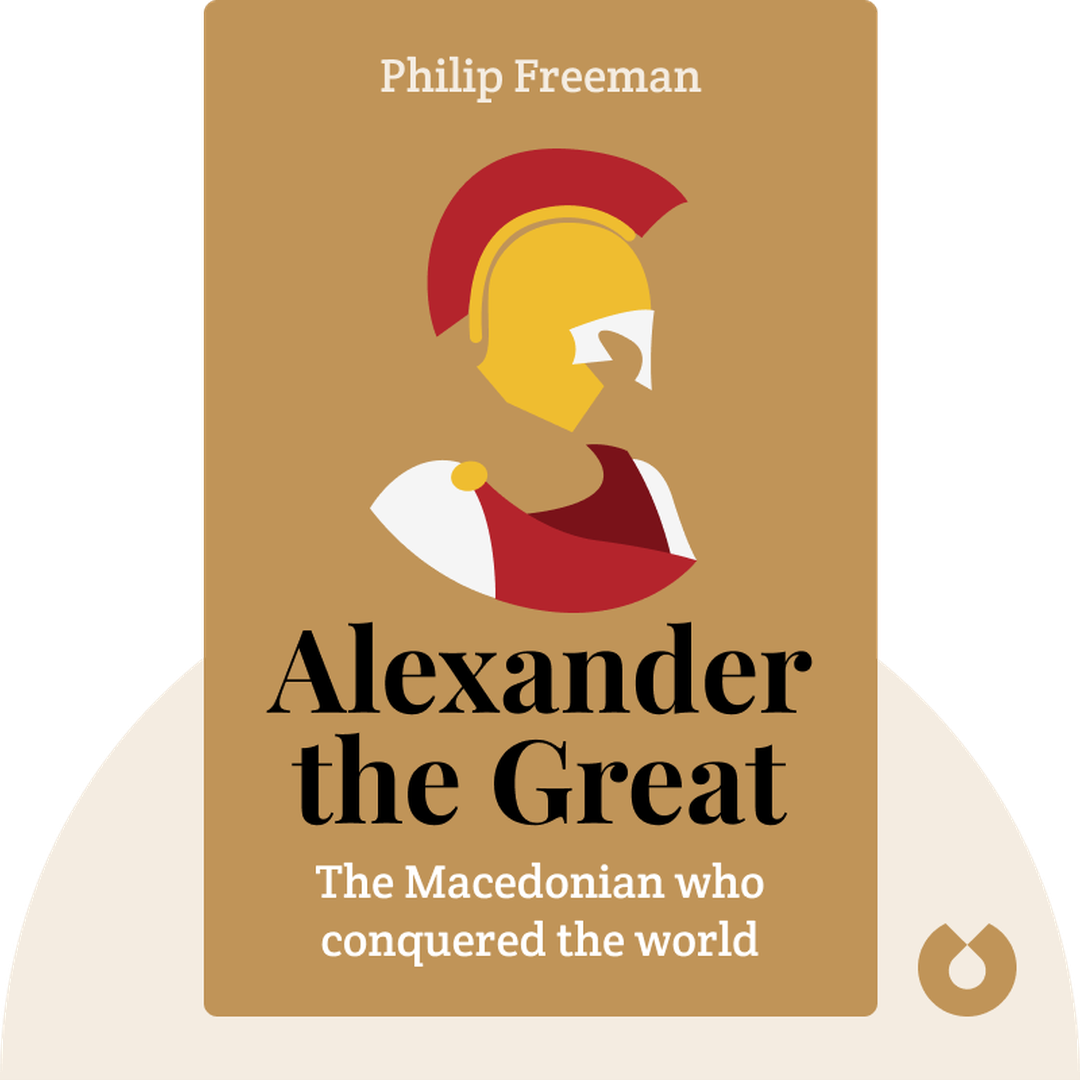
Listen to Alexander the Great — Cinematic Audio Edition
Loading player...
Key Takeaways from Alexander the Great
- Discover how a young Alexander used keen observation and problem-solving to tame the legendary horse Bucephalus.
- Learn why Alexander ruthlessly destroyed the rebellious city of Thebes to set a violent example that successfully secured his absolute power in Greece.
- Understand how Alexander achieved stunning military victories against the Persians by trusting his own strategic intuition and defying the conventional advice of his senior generals.
- Find out how Alexander neutralized the superior Persian navy not by fighting them at sea, but by strategically conquering the Mediterranean coastline to eliminate their ports.
- Explore the highly unconventional tactics Alexander employed to capture enemy cities, including pushing campaigns through harsh winters and using disguised dancers as undercover assassins.
Learning Tools
Reinforce what you learned from Alexander the Great
Mind Map
Alexander the Great
Early Life & Ascension+
The Persian Campaign Begins+
The Battle of Issus+
Conquest of Egypt+
Fall of the Persian Empire+
The Eastern Frontier+
Death & Legacy+
Quiz — Test Your Understanding
Question 1 of 10
How did a young Alexander successfully tame the famously untameable horse, Bucephalus?
Question 2 of 10
Why did Alexander order the total destruction of the southern Greek city of Thebes?
Question 3 of 10
What unconventional strategy did Alexander use to defeat the Persian navy after taking the city of Miletus?
Question 4 of 10
How did Alexander handle the generous peace treaty offered by King Darius after the Battle of Issus?
Question 5 of 10
What inspired Alexander to choose the specific location for the city of Alexandria in Egypt?
Question 6 of 10
What clever tactical maneuver did Alexander use to break through the Persian lines at the Battle of Gaugamela?
Question 7 of 10
Why did Alexander allow his soldiers to pillage the Persian capital of Persepolis?
Question 8 of 10
What ultimately caused Alexander to halt his eastward expansion and turn back toward home?
Question 9 of 10
What were Alexander's dying words when asked who should succeed him as ruler of his massive empire?
Question 10 of 10
According to the text, how did Alexander's conquests inadvertently play a major role in the spread of Christianity?
Alexander the Great — Full Chapter Overview
- 1Recommendation
- 2Born into Macedonia’s royal family, Alexander the Great’s talents were recognized early.
- 3After securing his rule in Greece, Alexander set out to invade Persia.
- 4Alexander’s sharp military mind helped him advance quickly through Asia Minor.
- 5Sudden illness and death dramatically altered the course of history.
- 6Alexander first faced Darius at the Battle of Issus in November 333 BC.
- 7Alexander’s time in Egypt became a major turning point in his life.
- 8After defeating Darius again, Alexander captured the ancient Mesopotamian city of Babylon.
- 9After a humiliating setback, Alexander finally conquered Persepolis, Persia’s capital.
- 10While pursuing Bessus, Alexander began a dangerous march that would eventually lead him to India.
- 11Alexander reached the banks of the Ganges in India before realizing his soldiers could go no farther.
- 12Alexander died at 32, before he could carry out his future campaign plans.
- 13Alexander’s legacy would have far-reaching effects on the world.
- 14Final summary
Alexander the Great Summary & Overview
The eponymous hero of Alexander the Great (2011) is remembered as one of the greatest military commanders who ever lived. Setting out from Greece at the age of 21, Alexander waged a ten-year campaign, during which he defeated the Persian Achaemenids and, in so doing, created the largest empire the world had ever seen. By spreading Greek culture and language throughout Eurasia, his legacy remained influential for centuries after.
Who Should Listen to Alexander the Great?
- People interested in how Greek culture became so dominant
- History buffs interested in military strategy
- Students of ancient history
Books Similar to Alexander the Great
Readers who enjoyed this also liked these titles.