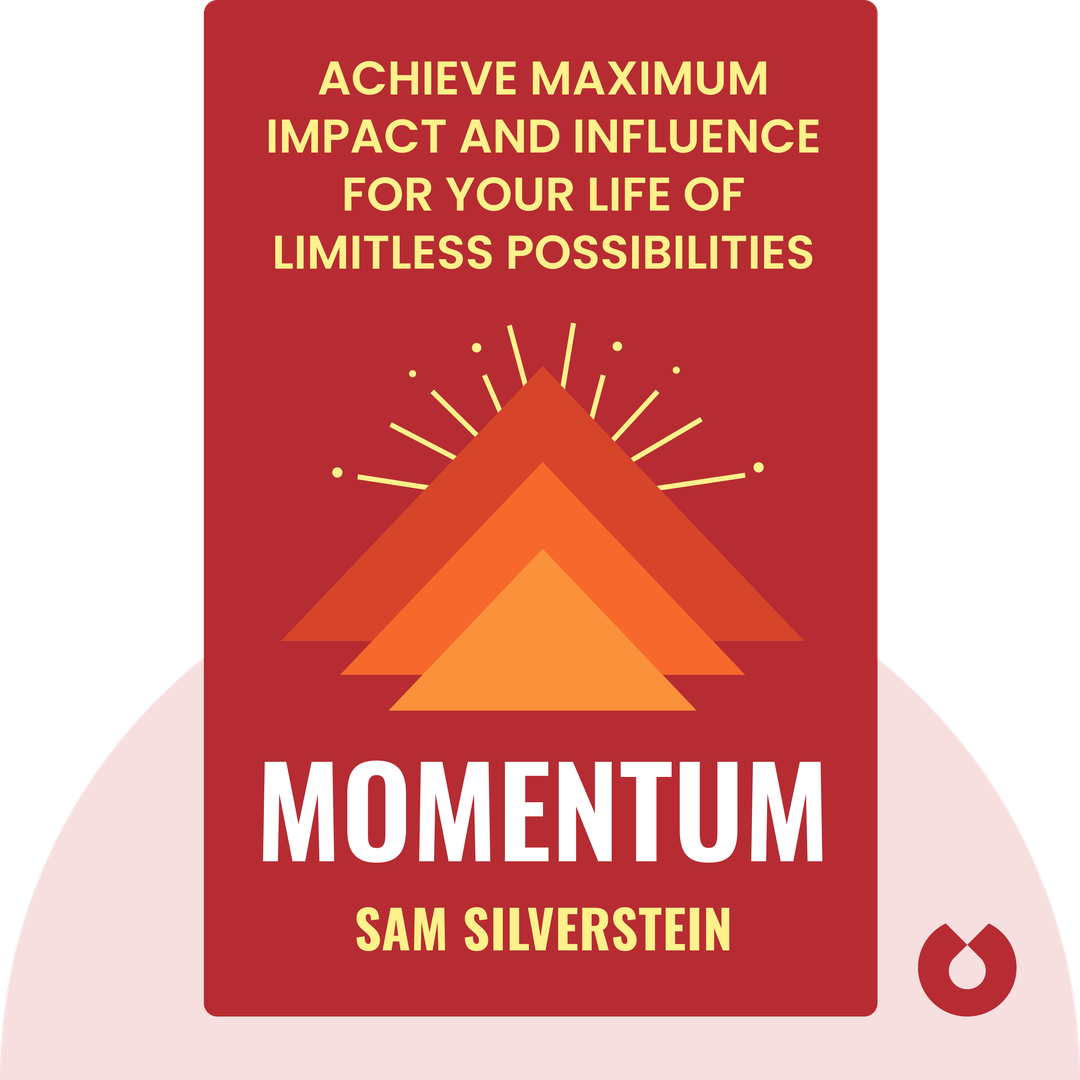
If You're Curious About These Questions...
You should listen to this audiobook
- What’s the secret to transforming a single, small action into an unstoppable force of progress in your career and personal life?
- Have you ever wondered why some people seem to glide effortlessly toward their goals while others feel constantly stuck in place?
- What if you could replace the weight of procrastination with a clear, purposeful drive that keeps you moving forward every single day?
Listen to Momentum — Free Audiobook
Loading player...
Key Takeaways from Momentum
- Discover why building true momentum requires shifting from a "me" to a "we" mindset, focusing on serving others rather than relying solely on willpower.
- Learn how to navigate your life's journey with clarity by mastering "the Big Three": your purpose (the why), your mission (the what), and your values (the how).
- Find out how to craft a powerful, one-sentence Declaration of Purpose by reflecting on whom you serve and what brings you joy in helping others.
- Understand how to turn your purpose into a tangible reality by creating a specific mission narrative built around three personal action verbs.
- Discover how analyzing the traits of your personal heroes can help you clearly define your core values, creating unbreakable "House Rules" that guide your actions and attract like-minded allies.
Learning Tools
Reinforce what you learned from Momentum
Mind Map
Momentum
Momentum Mindset+
The Big Three+
Taking Action+
Maintaining Consistency+
Quiz — Test Your Understanding
Question 1 of 8
How does the author define a 'momentum mindset'?
Question 2 of 8
According to Silverstein, what are 'the Big Three' elements required for clarity and direction?
Question 3 of 8
What is a key characteristic of an authentic 'Declaration of Purpose' according to the author?
Question 4 of 8
How does Silverstein recommend constructing a 'mission narrative'?
Question 5 of 8
Why does the author use the sock company Bombas as an example?
Question 6 of 8
What does the acronym SNAP stand for when evaluating a task you are procrastinating on?
Question 7 of 8
What unusual but practical technique does Silverstein use as a trigger to overcome the hardest part of a task (getting started)?
Question 8 of 8
How does the author suggest dealing with everyday distractions like a new TV show or messages from friends?
Momentum — Full Chapter Overview
- 1Recommendation
- 2Building a momentum mindset
- 3Discovering your purpose
- 4Creating your mission
- 5Clarifying your values
- 6Snap your fingers and get started
- 7Consistency matters most
- 8Final summary
Momentum Summary & Overview
Momentum (2024) aims to help people move forward with purpose. If you’re feeling stuck, you’ve come to the right place. Learn how to build momentum and make progress, in both your personal and professional life.
Who Should Listen to Momentum?
- Anyone who feels stuck or directionless
- Procrastinators
- People interested in self-development
Books Similar to Momentum
Readers who enjoyed this also liked these titles.