If You're Curious About These Questions...
You should listen to this audiobook
- What's the secret to making people change their minds without them even realizing it?
- Have you ever wondered why some people are more persuasive than others, even when they're not the most charismatic?
- What if you could unlock the hidden patterns of human decision-making to get the outcomes you want in your personal and professional life?
Listen to Mindstuck — Free Audiobook
Loading player...
Key Takeaways from Mindstuck
- Discover why bulletproof logic fails to change stubborn minds, and understand how our Instinctive Mind dictates 95 percent of decisions based on identity, ideology, and intuition.
- Learn how to use reframing techniques like priming and contrast to gently shift someone's perspective without triggering their defensive walls.
- Master the art of building affinity by treating disagreements as collaborative searches for truth rather than battles that must be won.
- Understand the persuasive power of vulnerability, and see how admitting the flaws in your own argument can actually release trust-building oxytocin in your listener.
- Find out how to bypass resistance by establishing common ground, tailoring your vocabulary, and preserving the other person's dignity when challenging their beliefs.
Learning Tools
Reinforce what you learned from Mindstuck
Mind Map
Mindstuck
The Psychology of Stubbornness+
Technique 1: Reframing+
Technique 2: Building Affinity+
Technique 3: Preserving Dignity+
Technique 4: Power of Conformity+
Technique 5: Employing Empathy+
Quiz — Test Your Understanding
Question 1 of 7
According to the book's psychological explanation of stubbornness, which part of the brain dictates our snap judgments and runs the show 95 percent of the time?
Question 2 of 7
What are the three main reasons people cling to their beliefs like a lifeline?
Question 3 of 7
How does the 'contrast' strategy help in reframing a stubborn mind?
Question 4 of 7
What is the surprising benefit of admitting the flaws in your own standpoint during a disagreement?
Question 5 of 7
When trying to preserve someone's dignity during persuasion, why is it highly effective to say, 'If you can't do it, I'll understand'?
Question 6 of 7
According to the text, what is an effective way to trigger the psychological principle of reciprocity?
Question 7 of 7
When employing empathy to change someone's mind, why is it recommended to focus on a single person's story rather than talking about a large crowd?
Mindstuck — Full Chapter Overview
- 1Recommendation
- 2The psychology of stubborn minds
- 3Technique one: Reframing
- 4Technique two: Building affinity
- 5Technique three: Preserving the other person’s dignity
- 6Technique four: Harnessing the power of conformity
- 7Technique five: Using empathy
- 8Final summary
Mindstuck Summary & Overview
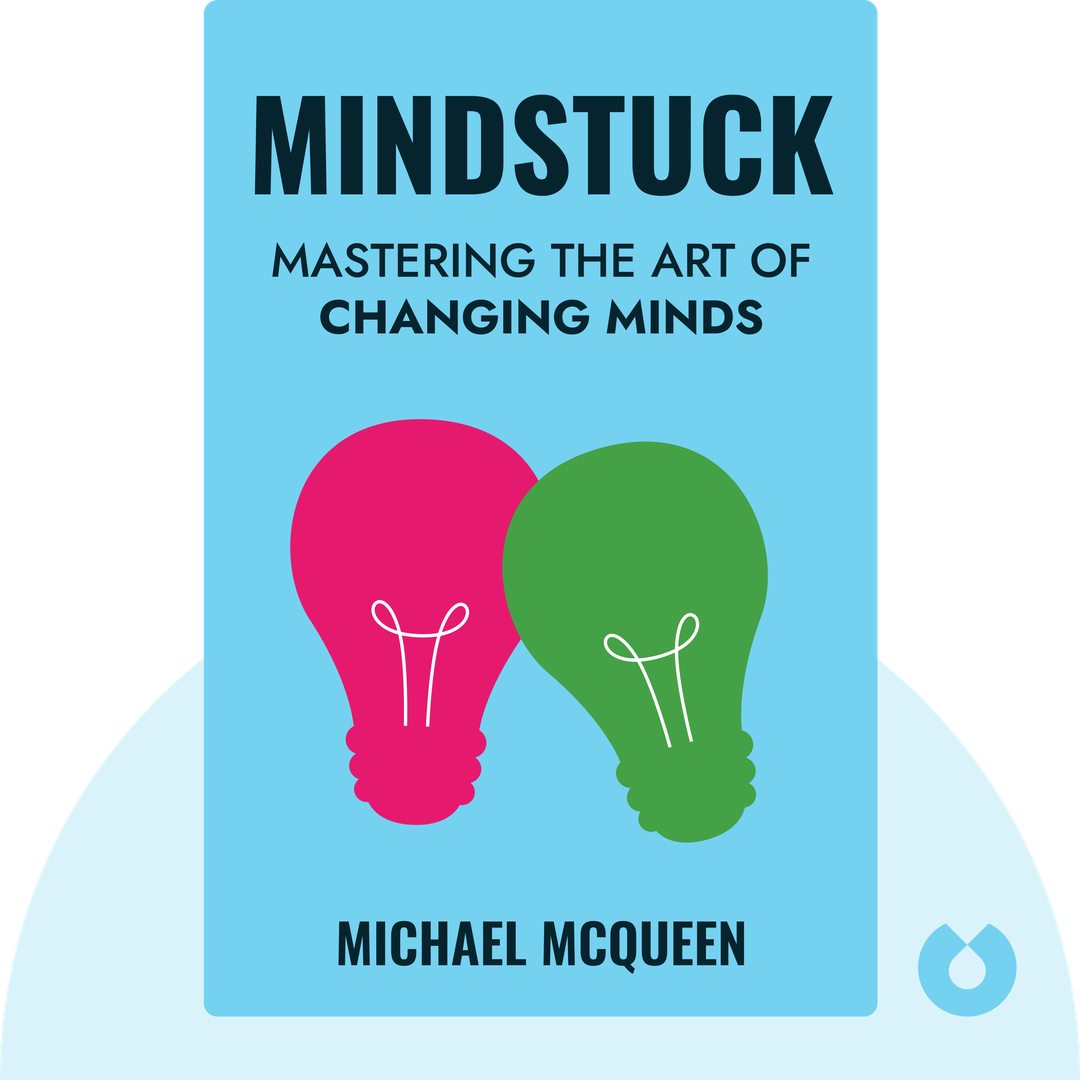
Mindstuck (2023) explores the intricacies of human decision-making and persuasion. It offers a deep dive into how and why people change their minds, providing you with actionable strategies to influence others effectively.
Who Should Listen to Mindstuck?
- Professionals seeking to enhance persuasion and communication skills.
- Leaders aiming to influence organizational culture and change.
- Innovators interested in understanding people’s decision-making processes.
Books Similar to Mindstuck
Readers who enjoyed this also liked these titles.