If You're Curious About These Questions...
You should listen to this audiobook
- Did you know that the origins of modern democracy and global finance can be traced back to the specific ways ancient city streets were built?
- Have you ever wondered why humans have been drawn to the chaos of the 'urban jungle' for over 200,000 years?
- What if the secret to our species' greatest achievements isn't our intelligence, but the unique way we crowd together in cities?
Listen to Metropolis — Free Audiobook
Loading player...
Key Takeaways from Metropolis
- Discover why the density and diversity of cities have historically made them humanity's greatest laboratories for innovation, from ancient mathematics to modern technologies.
- Learn how survival challenges in ancient Mesopotamian marshlands forced early humans into communal organization, birthing the world's first metropolis and groundbreaking inventions like writing.
- Understand the steep historical costs of concentrated urban living, where extraordinary cultural and technical progress has often been shadowed by inequality, warfare, and disease.
- Explore the terrifying paradox of 19th-century industrial 'shock cities' like Manchester and Chicago, which generated massive economic wealth while subjecting residents to horrific squalor.
- Find out how applying the lessons of historical urban successes and failures can empower us to reject inevitable sprawl and actively design cities that meet twenty-first-century needs.
Learning Tools
Reinforce what you learned from Metropolis
Mind Map
Metropolis
The Urban Experiment+
Uruk (Ancient Mesopotamia)+
Manchester & Chicago (19th Century)+
Lagos (21st Century)+
Quiz — Test Your Understanding
Question 1 of 6
According to the text, what fundamental characteristic makes cities 'engines of innovation'?
Question 2 of 6
In the context of the ancient city of Uruk, what realization does the legendary king Gilgamesh represent regarding city life?
Question 3 of 6
Who was Kushim, and what does his existence illustrate about the development of early cities?
Question 4 of 6
How did the working-class residents of nineteenth-century 'shock cities' like Manchester and Chicago eventually reshape their urban environments?
Question 5 of 6
What primary lesson does the modern megacity of Lagos offer for the future of urban development?
Question 6 of 6
Across the historical examples of Uruk, Manchester, and Lagos, what consistent dual nature of cities is highlighted?
Metropolis — Full Chapter Overview
- 1Recommendation
- 2Engines of creativity
- 3The city of Uruk
- 4Manchester and Chicago
- 5The city of Lagos
- 6Final summary
Metropolis Summary & Overview
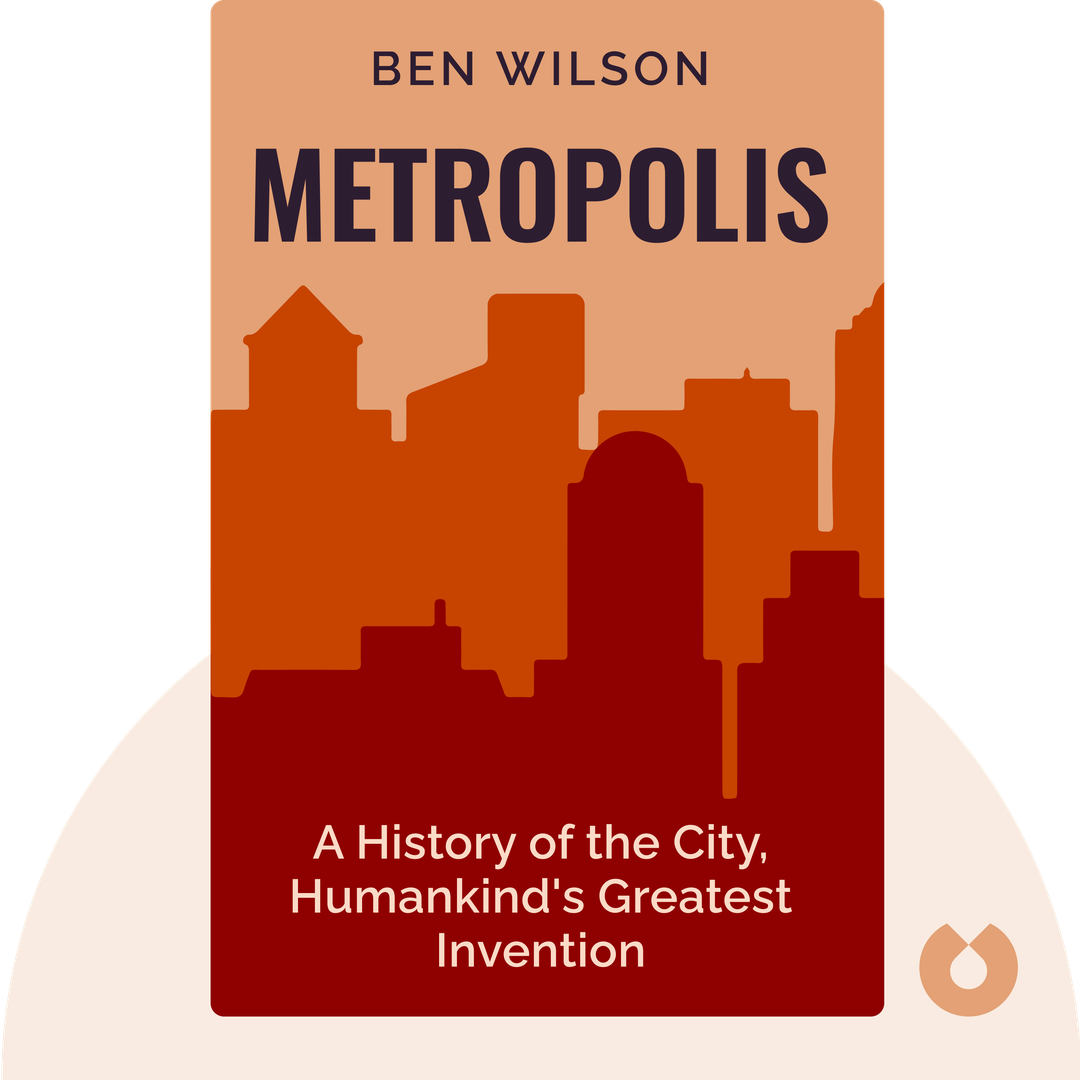
Metropolis (2020) charts how cities have profoundly shaped humanity. From Athenian democracy to Baghdad’s bazaars and London finance, it reveals cities as the driving force of civilization for over 200,000 years.
Who Should Listen to Metropolis?
- History buffs interested in the evolution of cities
- Readers curious about how people lived in past eras
- Anyone wanting to understand the origins of human civilization
Books Similar to Metropolis
Readers who enjoyed this also liked these titles.