If You're Curious About These Questions...
You should listen to this audiobook
- What if you could transform your career and community by mastering the five specific traits that define a true maverick leader?
- Are you curious about how the world’s most independent thinkers turn unconventional ideas into radical, real-world impact?
- What’s the secret to building the kind of resilience and resourcefulness that allows you to successfully shake up even the most rigid organizations?
Listen to Mavericks — Free Audiobook
Loading player...
Key Takeaways from Mavericks
- Discover why anyone can become a maverick by consciously choosing to cultivate the innate curiosity and original thinking they were born with.
- Understand the vital role mavericks play in today's divided world by acting as the creative dissenters needed to drive meaningful societal change.
- Learn how to embody the first core maverick trait by anchoring yourself in a deep belief to improve the world, prioritizing meaningful change over personal ego.
- Find out how to maximize your resourcefulness by identifying hidden potential and seizing unique opportunities in places others typically overlook.
- Master the art of exploiting social capital by leveraging 'weak ties' at the very edge of your network to turn ambitious ideas into reality.
Learning Tools
Reinforce what you learned from Mavericks
Mind Map
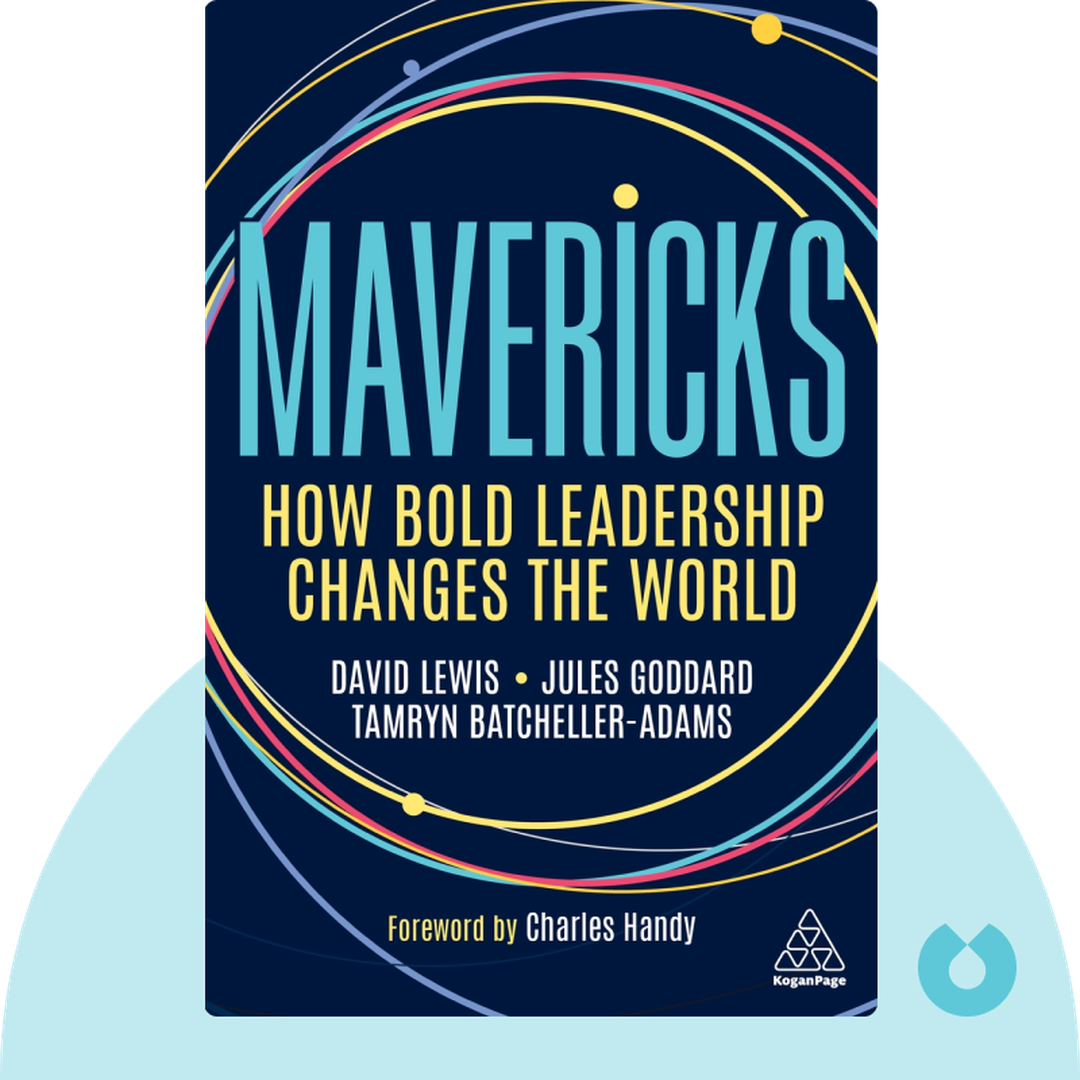
Mavericks
Core Philosophy+
The 5 Key Characteristics+
Practical Daily Actions+
Maverick Organizations+
Quiz — Test Your Understanding
Question 1 of 7
According to the authors of 'Mavericks', what is the primary factor that determines whether someone becomes a maverick?
Question 2 of 7
What valuable lesson about resourcefulness can be learned from Armene Modi's experience launching an NGO in India?
Question 3 of 7
Why is Katharine Birbalsingh’s approach at the Michaela Community School considered a 'maverick' form of nonconformity?
Question 4 of 7
Based on Oscar Corona Lopez’s recruitment experiment, what is the first step in the framework for successful maverick experimentation?
Question 5 of 7
According to the text, what enables mavericks like Khadim Hussain to remain resilient and persevere in the face of fierce opposition?
Question 6 of 7
What practical habit does the maverick Keith Coats recommend for developing a curious mindset?
Question 7 of 7
How did the Dutch bank ING transform into a 'maverick organization' in 2015?
Mavericks — Full Chapter Overview
- 1Recommendation
- 2Anyone can develop their inner maverick.
- 3Mavericks believe in improving things.
- 4Mavericks are resourceful thinkers.
- 5Mavericks don’t conform.
- 6Mavericks embrace experimentation.
- 7Mavericks never give up.
- 8Become a maverick leader and fulfill your higher purpose.
- 9Organizations can be mavericks too.
- 10Final summary
Mavericks Summary & Overview
Mavericks (2022) makes a case for maverick leadership. It shows that independent thinkers motivated by meaningful goals can transform their careers and communities – and that anyone can develop their inner maverick by focusing on five key characteristics.
Who Should Listen to Mavericks?
- Leaders interested in shaking things up
- Anyone who wants to become more resourceful or resilient
- People who want to change their organizations or communities for the better
Books Similar to Mavericks
Readers who enjoyed this also liked these titles.