If You're Curious About These Questions...
You should listen to this audiobook
- Did you know that Maoist ideology traveled from the remote caves of northwest China to inspire the military drills of the Black Panthers in California?
- Have you ever wondered why a Chinese political movement became the blueprint for revolutionary uprisings in the jungles of India and the high peaks of the Andes?
- Are you curious about how a 20th-century philosophy continues to influence global power dynamics and grassroots movements far beyond the borders of China?
Listen to Maoism — Free Audiobook
Loading player...
Key Takeaways from Maoism
- Understand how Maoism's unique flexibility allowed autocrats, insurgents, and workers worldwide to cherry-pick its principles, making it a potent global force for over 80 years.
- Discover the core tenets that separated Maoism from traditional Marxism, such as mobilizing the peasantry and championing global anti-imperialism.
- Learn how the brutal concepts of 'thought reform' and 'continuous revolution' drove devastating societal purges, ultimately causing millions of deaths during the Cultural Revolution.
- Uncover the surprising role an American journalist played in creating the Maoist cult of personality through the highly curated 1936 smash-hit book, 'Red Star Over China'.
- Find out how the ideological rift between China and the Soviet Union fueled the Sino-Soviet split, giving Mao the justification to launch radical domestic policies like the Great Leap Forward.
Learning Tools
Reinforce what you learned from Maoism
Mind Map
Maoism
Core Principles+
Global Propaganda+
Impact on Asia+
Impact on Africa+
Impact on the West+
Impact on Latin America+
Modern Resurgence+
Quiz — Test Your Understanding
Question 1 of 10
According to the text, what is the primary reason Maoism has remained a dynamic and influential force globally over the decades?
Question 2 of 10
How did Mao Zedong fundamentally alter the traditional Marxist-Leninist approach to revolution?
Question 3 of 10
What was the historical impact of Edgar Snow's book 'Red Star Over China'?
Question 4 of 10
What ideological shift in the Soviet Union deeply angered Mao Zedong and helped fuel the Sino-Soviet split?
Question 5 of 10
What fatal flaw in the Indonesian Communist Party's (PKI) strategy led to their destruction in 1965?
Question 6 of 10
Despite the economic failure of China's massive foreign aid projects in Africa, what major political victory did China achieve through these relationships?
Question 7 of 10
How did China contribute to the tragedy of the Khmer Rouge in Cambodia?
Question 8 of 10
What is a tragic irony of the Shining Path insurgency led by Abimael Guzmán in Peru?
Question 9 of 10
In the early 2000s, what catalyst caused the Indian government to escalate its crackdown on Naxalite (Maoist) insurgents in Chhattisgarh?
Question 10 of 10
How does the text characterize Xi Jinping's relationship with Mao's legacy in modern China?
Maoism — Full Chapter Overview
- 1Recommendation
- 2Maoism can be boiled down to a few core principles.
- 3Red Star Over China became an international bestseller and shaped how Mao – and Maoism – are seen.
- 4Rivalry between China and the USSR helped justify Mao’s growing radicalism at home and spending abroad.
- 5Indonesia’s Communists were inspired by Mao’s rhetoric to challenge the military, giving it a pretext to strike back.
- 6China’s efforts in Africa failed to spread Maoist politics – but did deliver one major win.
- 7China’s investment in Southeast Asia helped fuel horrific regional conflicts in the 1960s and ’70s.
- 8In the West, Maoism influenced a broad range of groups and individuals.
- 9Shining Path began as a peasant revolution, but peasants suffered most from its brutal violence.
- 10Maoism in India shows that rural communities almost always suffer most from Maoist insurgency.
- 11In Xi Jinping, China has its most Maoist leader since Chairman Mao.
- 12Final summary
Maoism Summary & Overview
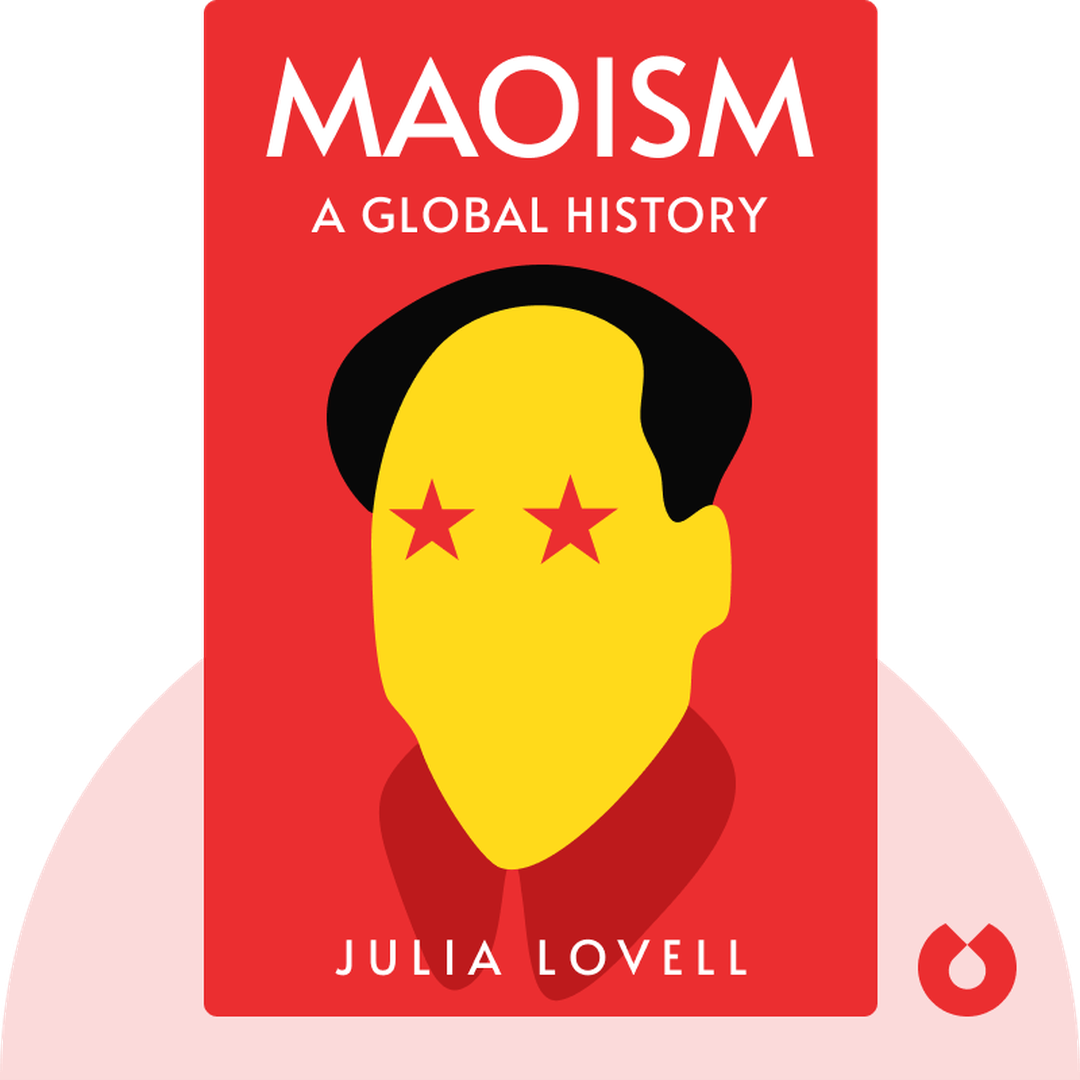
Maoism (2019) is a deep dive into Maoist ideology, tracing the origins of the movement in the caves of northwest China to the jungles of India, the high Andean sierra, and the California city parks where The Black Panthers did their military drills. Maoism is a movement that’s hardly limited to China or even Asia.
Who Should Listen to Maoism?
- Anyone looking to bone up on Chinese history
- Followers of leftist politics
- Those interested in transnational historical arcs
Books Similar to Maoism
Readers who enjoyed this also liked these titles.