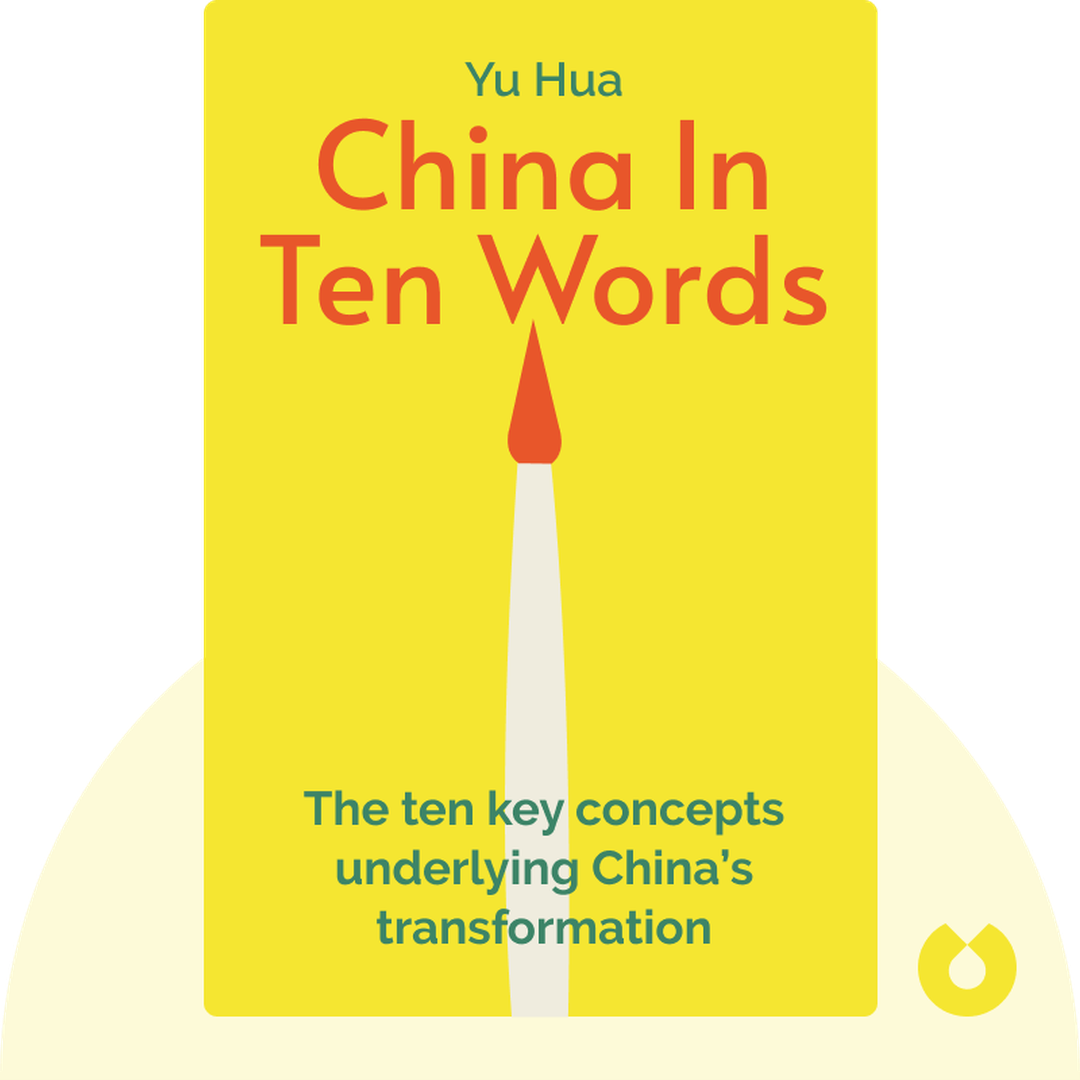
If You're Curious About These Questions...
You should listen to this audiobook
- Have you ever wondered how just ten everyday words can reveal the hidden soul and turbulent history of modern China?
- Did you know that beneath China’s sleek, modern exterior lies a society much closer to its revolutionary roots than the world realizes?
- Are you curious about the secret cultural contradictions that fueled the 'Chinese Miracle' and what they tell us about the nation's future?
Listen to China In Ten Words — Free Audiobook
Loading player...
Key Takeaways from China In Ten Words
- Understand how analyzing ten seemingly simple Chinese words provides a profound window into the country's rapid transformation from the Cultural Revolution to today's economic boom.
- Discover why the powerful, unifying concept of 'the people' vanished from Chinese society after the 1989 Tiananmen Square protests, leaving citizens to define themselves by fractured modern identities.
- Learn how the Chinese concept of a 'leader' shifted from Mao's intimate, populist rule to modern committee governance, fundamentally altering the nation's political dynamic.
- Find out why a staggering 85 percent of the Chinese public still feels a sense of nostalgia for Mao Zedong and believes his return would help combat modern corruption.
- Explore how severe censorship during the Cultural Revolution forced citizens to creatively satisfy their desire for reading by decoding political posters and frantically hand-copying banned books.
Learning Tools
Reinforce what you learned from China In Ten Words
Mind Map
China In Ten Words
Political Identity & Leadership+
Culture & Literature+
Socioeconomic Transformation+
Modern Behaviors & Values+
Quiz — Test Your Understanding
Question 1 of 10
What historical event caused the concept of 'the people' to lose its widespread use and unifying significance in China?
Question 2 of 10
How has the usage of the word for 'leader' (lingxiu) shifted in China since the era of Mao Zedong?
Question 3 of 10
During the Cultural Revolution, how did Yu Hua and his peers primarily gain access to banned literature like Alexandre Dumas's works?
Question 4 of 10
What was Yu Hua's initial, primary motivation for pursuing a career in writing?
Question 5 of 10
Why was Lu Xun one of the very few authors widely permitted and revered during the Cultural Revolution?
Question 6 of 10
According to the book, what is a modern-day parallel to the exaggerated agricultural claims made by officials during the 'Great Leap Forward'?
Question 7 of 10
How does Yu Hua contrast the behavior of those facing economic desperation during his youth with those in contemporary China?
Question 8 of 10
What commonality does the author see between the 'grassroots' millionaires of today and the political climbers of the Cultural Revolution?
Question 9 of 10
The modern acceptance of 'copycat' (shanzhai) products is rooted in which aspect of the Cultural Revolution?
Question 10 of 10
What is the primary concern critics have regarding the meteoric rise of the word 'bamboozle' (huyou) in modern China?
China In Ten Words — Full Chapter Overview
- 1Recommendation
- 2“The people” was central to modern China until the Tiananmen Square protests.
- 3Mao embodied the idea of a leader, but the word lost much of its power after his death.
- 4The meaning of “reading” reflects how books have changed since the Cultural Revolution.
- 5Writing was a central idea during the Cultural Revolution, and it became part of Yu’s identity.
- 6Lu Xun was one of the few writers Yu read as a child, though he appreciated him only much later.
- 7Revolution has shaped modern Chinese history from the mid-twentieth century to today.
- 8The gap between rich and poor is essential to understanding modern China.
- 9The rise of so-called “grassroots” people up the social ladder echoes Cultural Revolution ideology.
- 10“Copycat” is a buzzword in China today, but its roots run much deeper.
- 11“Bamboozle” is the hottest verb in contemporary China, and it is making deception respectable.
- 12Final summary
China In Ten Words Summary & Overview
China in Ten Words (2012) explores the way modern China talks about itself and probes what that tells us about its past, present and likely future. Honing in on ten common concepts, author Yu Huan tells the story of a nation that has seemingly changed beyond recognition, yet in many ways remains closer to its revolutionary origins than one might believe.
Who Should Listen to China In Ten Words?
- Students of the history of Communist China
- Linguists curious about how language shapes cultural concepts
- Those who are fascinated by the modern “Chinese Miracle”
Books Similar to China In Ten Words
Readers who enjoyed this also liked these titles.