If You're Curious About These Questions...
You should listen to this audiobook
- Have you ever wondered why a tiny punctuation mark can spark such passionate debates among writers and grammarians?
- Did you know that punctuation was originally designed for the ear rather than the eye, serving as a guide for public speaking?
- What if you could master the secret art of punctuation to express your unique voice instead of just following rigid rules?
Listen to Making a Point — Free Audiobook
Loading player...
Key Takeaways from Making a Point
- Discover why early languages didn't use spaces between words and how modern punctuation evolved to reduce confusing reading ambiguities.
- Understand the hierarchical nature of punctuation marks and learn why ending a modern text message with a period can subtly communicate anger or exasperation.
- Find out how the digital age is changing the way we emphasize text, causing a shift from italics to bold type to accommodate reading on computer screens.
- Realize the dangers of becoming an overly obsessive grammar enforcer through the cautionary tale of two friends who were heavily fined for 'correcting' a historic sign.
- Learn why adhering to strict, unbreakable rules of punctuation is a myth that can actually harm literacy, and discover how to balance proper usage with evolving trends.
Learning Tools
Reinforce what you learned from Making a Point
Mind Map
Making a Point
Evolution & Function+
The Punctuation Hierarchy+
The Danger of Strict Rules+
Creative Application+
Digital Age Transformations+
Quiz — Test Your Understanding
Question 1 of 7
Why were spaces between words largely unnecessary in the earliest written inscriptions?
Question 2 of 7
According to the text, why is bold type increasingly replacing italics as a way to add emphasis?
Question 3 of 7
How has the function of the period evolved in the context of modern instant messaging?
Question 4 of 7
What was the consequence for the two friends who traveled across the U.S. correcting punctuation on public signs?
Question 5 of 7
Why did Lloyds Banking Company eventually drop the apostrophe from its name?
Question 6 of 7
Why did James Joyce omit punctuation for the final 40 pages of his novel Ulysses?
Question 7 of 7
What does the text suggest about the impact of texting abbreviations and emoticons on young people's literacy?
Making a Point — Full Chapter Overview
- 1Recommendation
- 2Punctuation plays an important role, but it didn’t always exist.
- 3Punctuation marks have a hierarchy, and changing one affects the rest.
- 4Enforcing punctuation rules can sometimes go too far.
- 5Punctuation isn’t governed by fixed rules and includes many important exceptions.
- 6Punctuation, or its absence, holds great creative potential.
- 7The internet has created new uses for punctuation.
- 8Final summary
Making a Point Summary & Overview
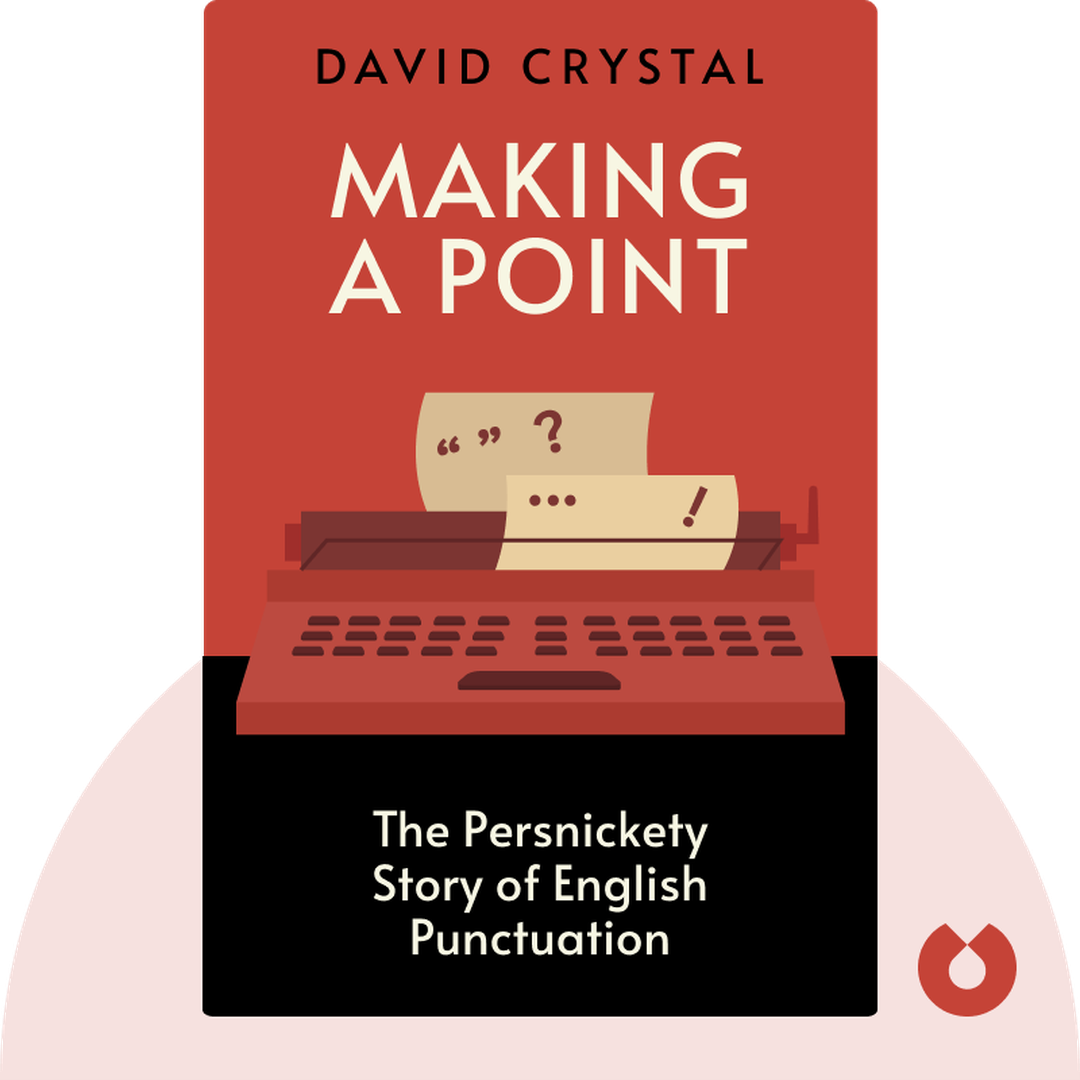
Making a Point (2015) is all about punctuation, the little marks that tie written language together. These blinks explain what function punctuation serves, why it can become a heated topic of discussion and how writers have used it creatively for years.
Who Should Listen to Making a Point?
- Anyone who writes
- Students of language or literature
- Grammar nerds
Books Similar to Making a Point
Readers who enjoyed this also liked these titles.