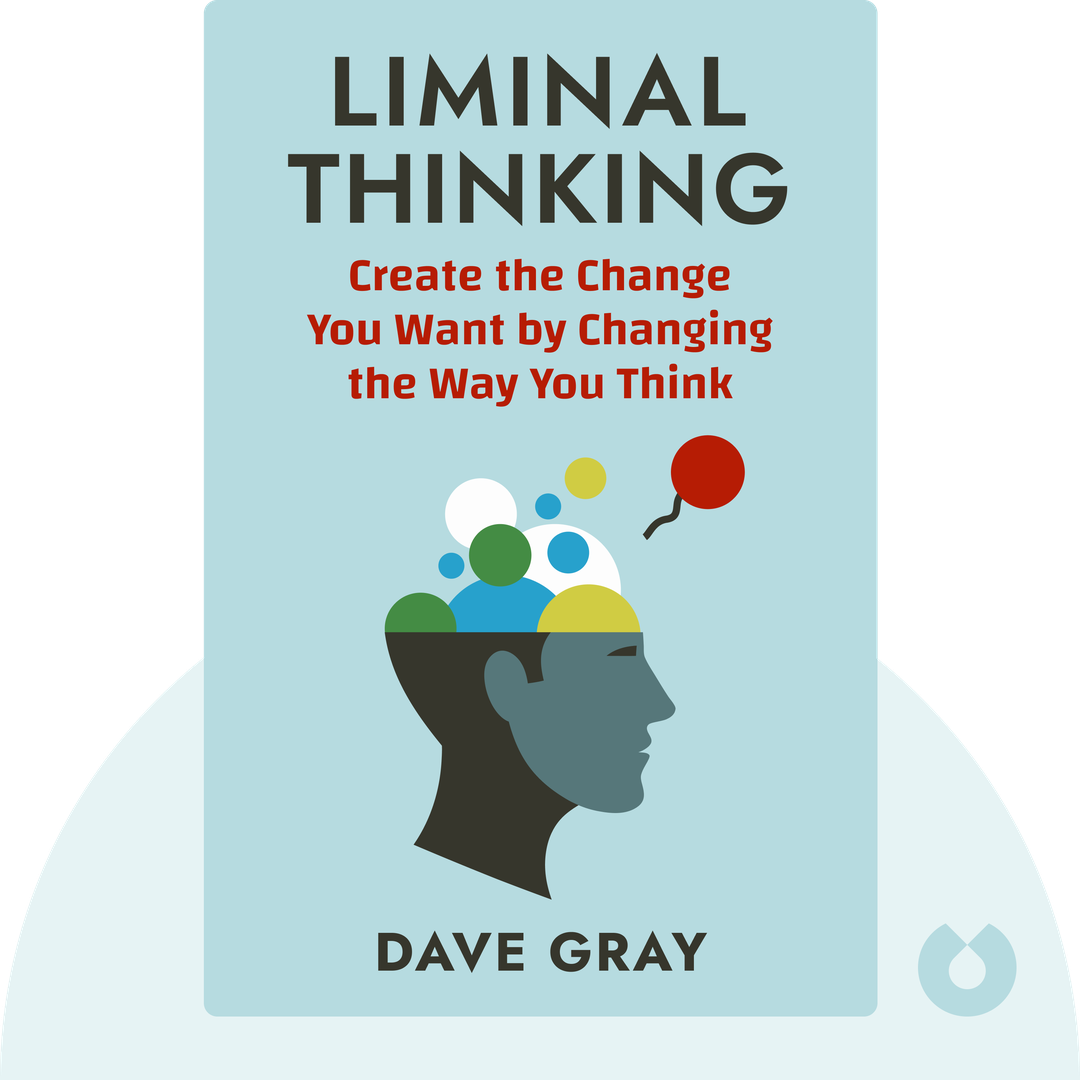
If You're Curious About These Questions...
You should listen to this audiobook
- Did you know that the beliefs you treat as absolute truths are actually just mental models that might be limiting your potential?
- What if you could solve 'impossible' problems by simply finding the hidden thresholds where your perspective shifts and new realities emerge?
- Have you ever wondered why we get trapped in the same cycles of behavior, and what's the secret to breaking out of your 'belief bubble' for good?
Listen to Liminal Thinking — Free Audiobook
Loading player...
Key Takeaways from Liminal Thinking
- Discover how 'liminal thinking' allows you to recognize and break free from the mental boundaries that limit your potential.
- Understand why your beliefs are not objective reality, but rather incomplete models built from your limited personal experiences.
- Learn why deeply held beliefs fiercely defend themselves and tie into your identity, and how questioning them can uncover unseen possibilities.
- Master the practice of 'emptying your cup' to let go of assumptions and truly listen without letting preconceptions cloud your judgment.
- Find out how to overcome your own lack of objectivity by recognizing your role in systemic problems and creating safe spaces for honest feedback.
Learning Tools
Reinforce what you learned from Liminal Thinking
Mind Map
Liminal Thinking
Core Concept+
The 6 Principles of Belief+
The 9 Practices for Change+
Quiz — Test Your Understanding
Question 1 of 8
According to the book, what is the fundamental nature of our beliefs?
Question 2 of 8
Why do people often reach completely different conclusions when presented with the exact same facts?
Question 3 of 8
What does the story of Dorothy Martin and her doomsday prophecy illustrate about beliefs?
Question 4 of 8
Why did UNICEF’s initial attempt to introduce laptops to rural communities in Uganda fail?
Question 5 of 8
In the context of creating a safe space for open communication, what does the 'A' in the SCARF model stand for?
Question 6 of 8
How did the parents of the rebellious son successfully change his behavior of staying out late?
Question 7 of 8
What is the main takeaway from Jason Roberts' initiative to transform an empty lot into a park in Dallas?
Question 8 of 8
According to the final practice, what was the result of Chris Ortiz taking a small risk by dressing differently than the unwritten dress code?
Liminal Thinking — Full Chapter Overview
- 1Recommendation
- 2How your beliefs shape your view of reality
- 3How beliefs form blind spots and limit your potential
- 4Questioning assumptions and making room for change
- 5Exploring new perspectives and breaking patterns to create change
- 6Taking small risks and using stories to spark change
- 7Final summary
Liminal Thinking Summary & Overview
Liminal Thinking (2016) shows how you can create lasting change by understanding and reframing your beliefs. Drawing from interviews with experts in various fields, it offers six principles and nine practices to help you shape your reality and take control of your life.
Who Should Listen to Liminal Thinking?
- People looking to grow by challenging their limiting beliefs
- Leaders wanting to create change through new perspectives
- Problem solvers seeking fresh approaches to difficult situations
Books Similar to Liminal Thinking
Readers who enjoyed this also liked these titles.