If You're Curious About These Questions...
You should listen to this audiobook
- Have you ever wondered why the pig is the only animal that has remained inextricably linked to human civilization since our very beginnings?
- Did you know that the pig’s reputation has undergone a dramatic transformation over the centuries, shifting from a vital companion to a symbol of disdain?
- Are you curious about how modern farming practices have fundamentally changed our relationship with this intelligent creature and what it reveals about our own history?
Listen to Lesser Beasts — Free Audiobook
Loading player...
Key Takeaways from Lesser Beasts
- Discover how the pig's role as an ambulant garbage disposal unit allowed early humans to manage waste and establish the world's first permanent settlements.
- Understand why the pig's scavenging diet caused it to be viewed as impure by ancient Middle Eastern elites, ultimately leading to strict religious bans.
- Learn how the ancient Greek and Roman empires utilized pork as a powerful political tool to culturally assimilate conquered subjects and pacify their citizens.
- Find out how the remarkable adaptability and rapid breeding of pigs provided a vital food supply that made European settlement of the New World possible.
- Explore the striking biological similarities between humans and pigs, including matching omnivorous digestive systems and nearly identical teeth.
Learning Tools
Reinforce what you learned from Lesser Beasts
Mind Map
Lesser Beasts
Biological & Historical Origins+
Religious & Social Taboos+
Classical Antiquity+
Exploration & Colonization+
Urbanization & Efficiency+
The Antibiotic Era+
Modern Factory Farming+
Quiz — Test Your Understanding
Question 1 of 7
Why did domesticated pigs play a crucial role in helping early humans settle into permanent villages?
Question 2 of 7
What primary factor led to the pig's decline in reputation among the elite in early Middle Eastern civilizations?
Question 3 of 7
How did the ancient Greeks, specifically Alexander the Great's successor Antiochus IV, utilize pork in conquered territories?
Question 4 of 7
Why were pigs considered so vital to Spanish explorers and English colonists settling the New World?
Question 5 of 7
What biological feature makes modern breeds of pigs highly efficient at converting corn into meat?
Question 6 of 7
In the mid-twentieth century, what unexpected benefit did farmers discover when they gave antibiotics to pigs?
Question 7 of 7
According to the text, what is a major environmental hazard associated with modern hog farming?
Lesser Beasts — Full Chapter Overview
- 1Recommendation
- 2Among domesticated animals, pigs are the most like us, and our history together is long.
- 3Many wealthy people began avoiding pork for reasons of status and religion.
- 4The ancient Greeks and Romans gave pigs another chance.
- 5The discovery and settlement of the New World may not have been possible without pigs.
- 6As cities developed, pigs became a profitable way to dispose of garbage.
- 7Giving pigs antibiotics had two benefits: faster weight gain and protection from disease.
- 8Modern hog farming harms both the environment and the pigs.
- 9Final summary
Lesser Beasts Summary & Overview
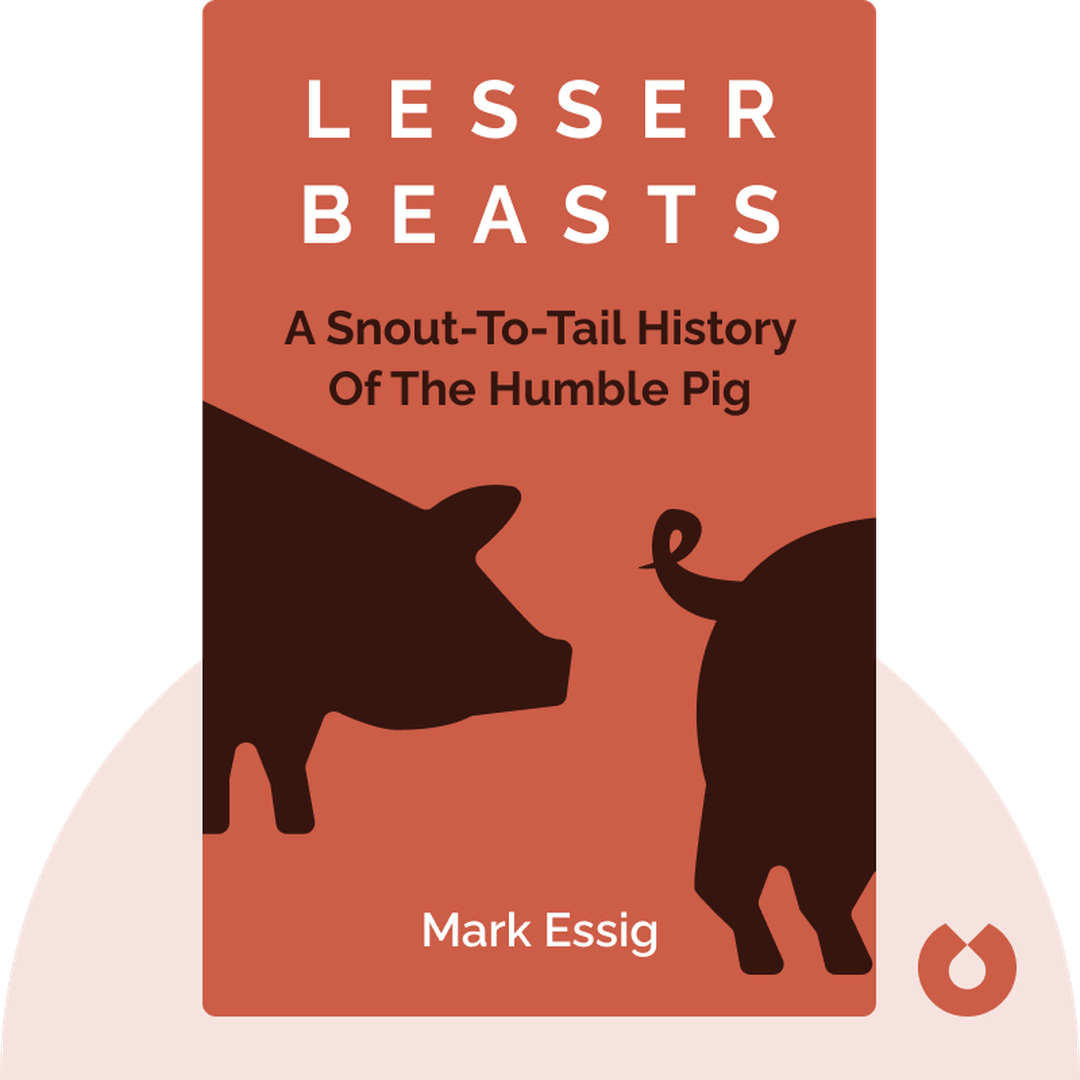
Lesser Beasts (2015) relates the long and fascinating history of the pig. Often considered an inferior creature, the pig is actually the sole animal that has stayed connected to us since the beginning of our existence. The pig’s reputation has taken plenty of blows over the years – and today, due to modern farming practices, its welfare may be suffering more than ever.
Who Should Listen to Lesser Beasts?
- Farmers who want to learn more about hog history
- Anthropologists interested in our relationship with food over the ages
- Foodies curious about the development of human dietary habits
Books Similar to Lesser Beasts
Readers who enjoyed this also liked these titles.