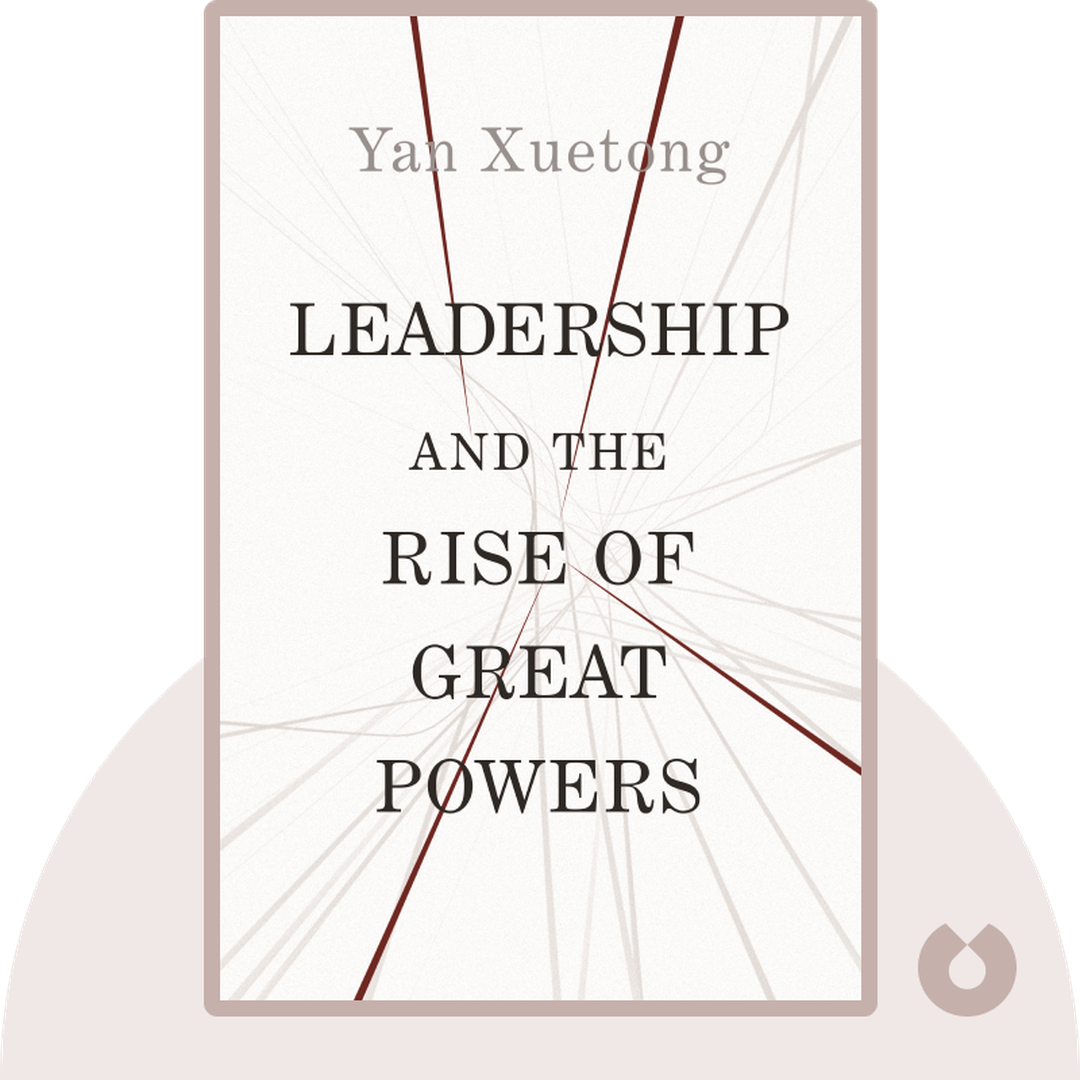
Leadership and the Rise of Great Powers
Start ListeningDownload Try free on iPhoneScan to start in 5 seconds
Categories:
If You're Curious About These Questions...
You should listen to this audiobook
- Have you ever wondered why some nations skyrocket to global dominance while others crumble, regardless of their economic or military might?
- Did you know that the secret to China’s rapid rise could lie in a specific leadership philosophy that is fundamentally reshaping international relations?
- Are you curious about what the world will actually look like when the era of a single superpower officially comes to an end?
Listen to Leadership and the Rise of Great Powers — Free Audiobook
Loading player...
Key Takeaways from Leadership and the Rise of Great Powers
- Discover why effective political leadership, rather than just military might or economic wealth, is the ultimate deciding factor in a nation's rise to global dominance.
- Learn how the capacity for progressive reform gives rising powers a crucial advantage over established nations that stubbornly resist change.
- Understand why international authority and global credibility are built on universal moral actions and leading by example, rather than through threats and deception.
- Find out how states with limited military or economic power can still muster significant global support by taking the moral high ground.
- Explore the four distinct types of international leadership—humane authority, hegemonic, anemocratic, and tyrannical—and see how historical figures embody these styles.
Learning Tools
Reinforce what you learned from Leadership and the Rise of Great Powers
Mind Map
Leadership and the Rise of Great Powers
Core Determinant of Power+
The Role of Morality+
Four Types of International Leadership+
Shifting World Order+
The Leaderless Era+
A New Ideological Synthesis+
Quiz — Test Your Understanding
Question 1 of 8
What does the author identify as the most significant factor in determining a state's rise and fall on the international stage?
Question 2 of 8
Why are established, dominant states typically less inclined to carry out progressive reforms compared to rising powers?
Question 3 of 8
According to the text, how was a small state like Palestine able to gain international credibility and support?
Question 4 of 8
Which type of international leadership is characterized by being trustworthy to allies but applying double standards and ruthlessness toward rivals?
Question 5 of 8
Why does the author believe the emerging bipolar world order between the US and China will NOT result in a new Cold War?
Question 6 of 8
How did the United States and the Soviet Union establish 'double-standards' as an international norm during the Cold War?
Question 7 of 8
Why is the world currently facing a 'leaderless global order' with declining international cooperation?
Question 8 of 8
How might Chinese traditional ethics improve the current state of Western liberalism, according to the author?
Leadership and the Rise of Great Powers — Full Chapter Overview
- 1Recommendation
- 2A state’s leadership is the key factor in its rise and decline.
- 3A state can gain international authority only through moral action.
- 4The four types of international leadership are humane authority, hegemonic, anemocratic, and tyrannical.
- 5We’re heading toward a bipolar world order, with China challenging US dominance.
- 6International norms can shift under different forms of world leadership.
- 7We face a leaderless global order as international cooperation rapidly declines.
- 8Traditional Chinese ethics could influence Western liberalism and help create a new international norm.
- 9Final summary
Leadership and the Rise of Great Powers Summary & Overview
Leadership and the Rise of Great Powers (2019) considers the way that leadership determines the fate of nations. Yan Xuetong reflects on the rise of China and the USA’s diminishing stature while speculating on how the international order might look like in a few decades.
Who Should Listen to Leadership and the Rise of Great Powers?
- Anyone interested in Sino-American relations
- Geopolitics buffs
- Those working in international relations
Books Similar to Leadership and the Rise of Great Powers
Readers who enjoyed this also liked these titles.