If You're Curious About These Questions...
You should listen to this audiobook
- Have you ever wondered how a small group of young girls managed to spark a wave of mass hysteria that brought an entire colony to its knees?
- Are you curious about the surprising ways the dark legacy of the Salem Witch Trials still influences American culture and the legal system today?
- Did you know that the terrifying events of 1692 weren't just about witchcraft, but a chilling demonstration of how quickly mob mentality can destroy a community?
Listen to Killing the Witches — Free Audiobook
Loading player...
Key Takeaways from Killing the Witches
- Discover how the draconian laws and extreme religious zealotry of early Puritan leaders laid the groundwork for mass paranoia and hysteria in Salem.
- Understand how the desperate confession of an enslaved woman named Tituba validated existing superstitions and sparked a deadly wave of accusations against vulnerable residents.
- Learn how prominent religious figures like Cotton Mather deliberately fueled the deadly witch hunts and silenced skeptics to consolidate their own fame and power.
- Find out how the admission of 'spectral evidence' and the unchecked testimonies of children allowed mass panic to supersede reason and justice in the courtroom.
- Explore the dark side of human nature and uncover how Salem's epic struggle between superstition and reason continues to influence American faith and pluralism today.
Learning Tools
Reinforce what you learned from Killing the Witches
Mind Map
Killing the Witches
Salem's Puritan Origins+
The Witch Hunt (1692)+
The Role of the Mathers+
The End of the Hysteria+
Influence on American Founding+
Modern Echoes of Superstition+
Quiz — Test Your Understanding
Question 1 of 7
What primary factor contributed to the resurgence of religious zealotry and superstition in Salem after a period of economic prosperity?
Question 2 of 7
How did Tituba’s confession influence the trajectory of the Salem Witch Trials?
Question 3 of 7
What was Cotton Mather's primary role during the Salem Witch Trials?
Question 4 of 7
How did Increase Mather's response to the witch trials differ from his son Cotton's?
Question 5 of 7
What was the decisive action taken by Massachusetts Governor Phips that effectively ended the deadly prosecutions in Salem?
Question 6 of 7
According to the text, how did the legacy of the Salem Witch Trials influence Benjamin Franklin’s political philosophy?
Question 7 of 7
How does the text contrast the 1949 exorcism of Ronald Hunkeler with the Salem witch persecutions?
Killing the Witches — Full Chapter Overview
- 1Recommendation
- 2Salem’s Origins
- 3The Witch Hunt Starts
- 4Cotton Mather Fans the Flames
- 5A Specter Haunts America
- 6The American Revolution
- 7The Exorcism of Ronald Hunkeler
- 8Final summary
Killing the Witches Summary & Overview
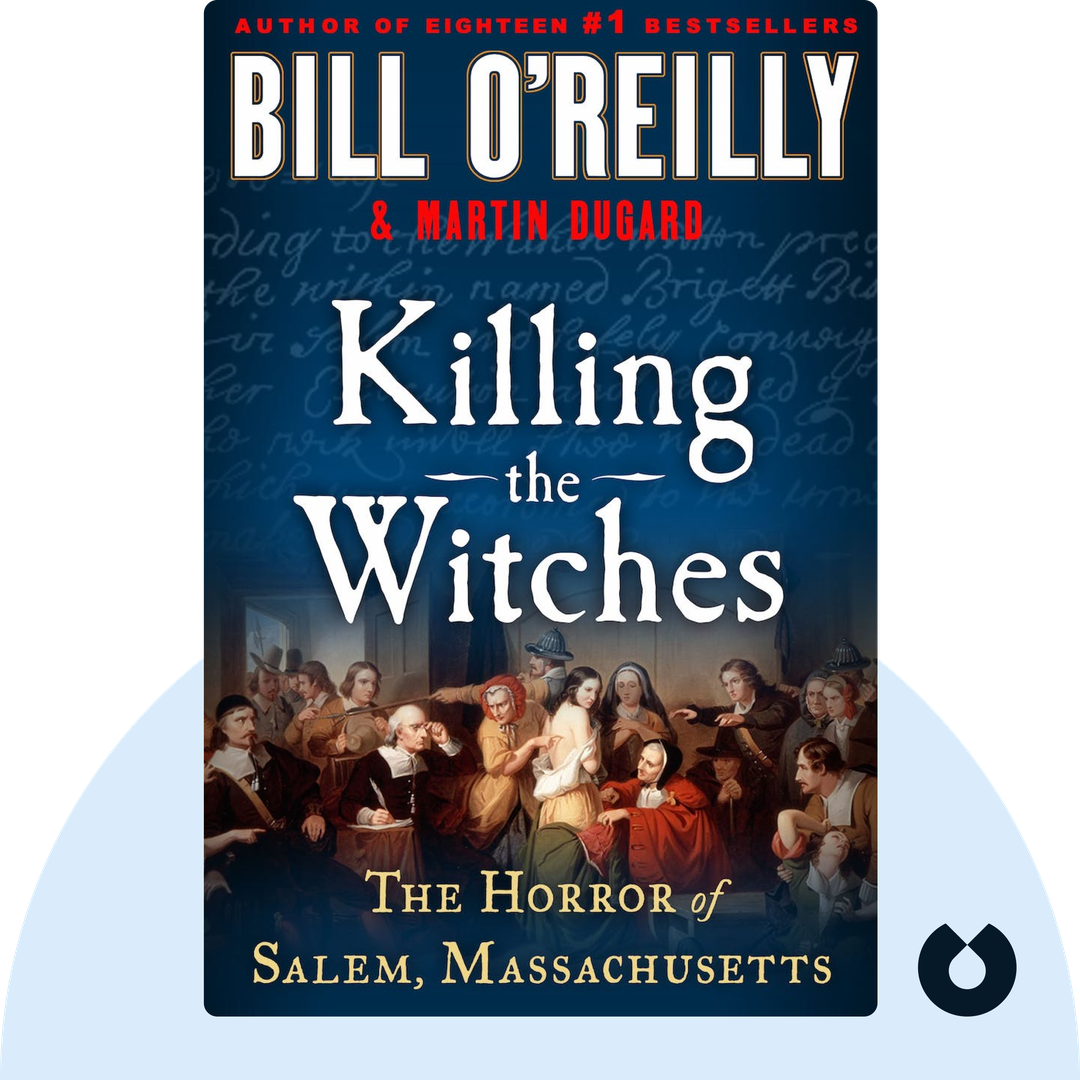
Killing the Witches (2023) revisits one of the most frightening episodes in American history: the Salem Witch Trials, which saw over 200 people accused of witchcraft and 20 killed. This dramatic history reveals how Puritan tradition shaped early America and examines its repercussions to this very day.
Who Should Listen to Killing the Witches?
- Fans of Bill O’Reilly
- Readers interested in Puritan history and early American culture
- Those interested in understanding mob mentality and mass hysteria
Books Similar to Killing the Witches
Readers who enjoyed this also liked these titles.