If You're Curious About These Questions...
You should listen to this audiobook
- Did you know that there are seven distinct types of office jerks, and using the same strategy for all of them might actually be making your work life harder?
- Have you ever wondered why certain colleagues excel at 'kissing up' to the boss while making your life miserable, and what the secret is to neutralizing their power?
- What if you could use simple social psychology tactics to stop a 'credit stealer' or 'gaslighter' in their tracks before they damage your reputation?
Listen to Jerks at Work — Free Audiobook
Loading player...
Key Takeaways from Jerks at Work
- Learn how to diplomatically expose a 'Kiss Up/Kick Downer' by gathering neutral testimonies from peers and acknowledging their strengths before presenting your case to management.
- Discover why 'Credit Stealers' might not be acting maliciously, and how revealing hidden behind-the-scenes work can help you reclaim ownership of your ideas.
- Master the art of preventing stolen credit by initiating non-accusatory, fact-based conversations and strictly defining team roles before projects begin.
- Find out how to stop a 'Bulldozer' from dominating meetings by voicing your positions early and forming peer alliances to effectively shut down interruptions.
- Understand how to reclaim your workplace power from a toxic colleague by learning the specialized skills and monopolized roles they use to make themselves indispensable.
Learning Tools
Reinforce what you learned from Jerks at Work
Mind Map
Jerks at Work
Core Premise+
Kiss Up/Kick Downer+
The Credit Stealer+
Bulldozers+
Free Riders+
Micromanagers+
Neglectful Bosses+
Gaslighters+
Final Strategy+
Quiz — Test Your Understanding
Question 1 of 10
When presenting your case against a 'Kiss Up/Kick Downer' to your manager, what strategy does the author recommend?
Question 2 of 10
According to the text, why might a 'Credit Stealer' take credit for your work unintentionally?
Question 3 of 10
Which tactic is recommended to counteract a 'Bulldozer' who dominates meetings and interrupts others?
Question 4 of 10
Why do strong, highly cohesive teams tend to attract 'Free Riders'?
Question 5 of 10
Which method is suggested to root out 'Free Riding' in a group project?
Question 6 of 10
What is the recommended approach for dealing with a Micromanager?
Question 7 of 10
When addressing specific behaviors you want a Micromanager to stop, how should you communicate?
Question 8 of 10
What is the common 'yo-yo dynamic' associated with Neglectful Bosses?
Question 9 of 10
How does a 'Gaslighter' fundamentally differ from the other types of toxic coworkers mentioned in the book?
Question 10 of 10
To protect yourself from a Gaslighter's psychological manipulation, what vital step should you take?
Jerks at Work — Full Chapter Overview
- 1Recommendation
- 2The Kiss-Up/Kick-Downer
- 3The Credit Thief
- 4Bulldozers
- 5Free Riders
- 6Micromanagers
- 7Neglectful Bosses
- 8Gaslighters
- 9Final summary
Jerks at Work Summary & Overview
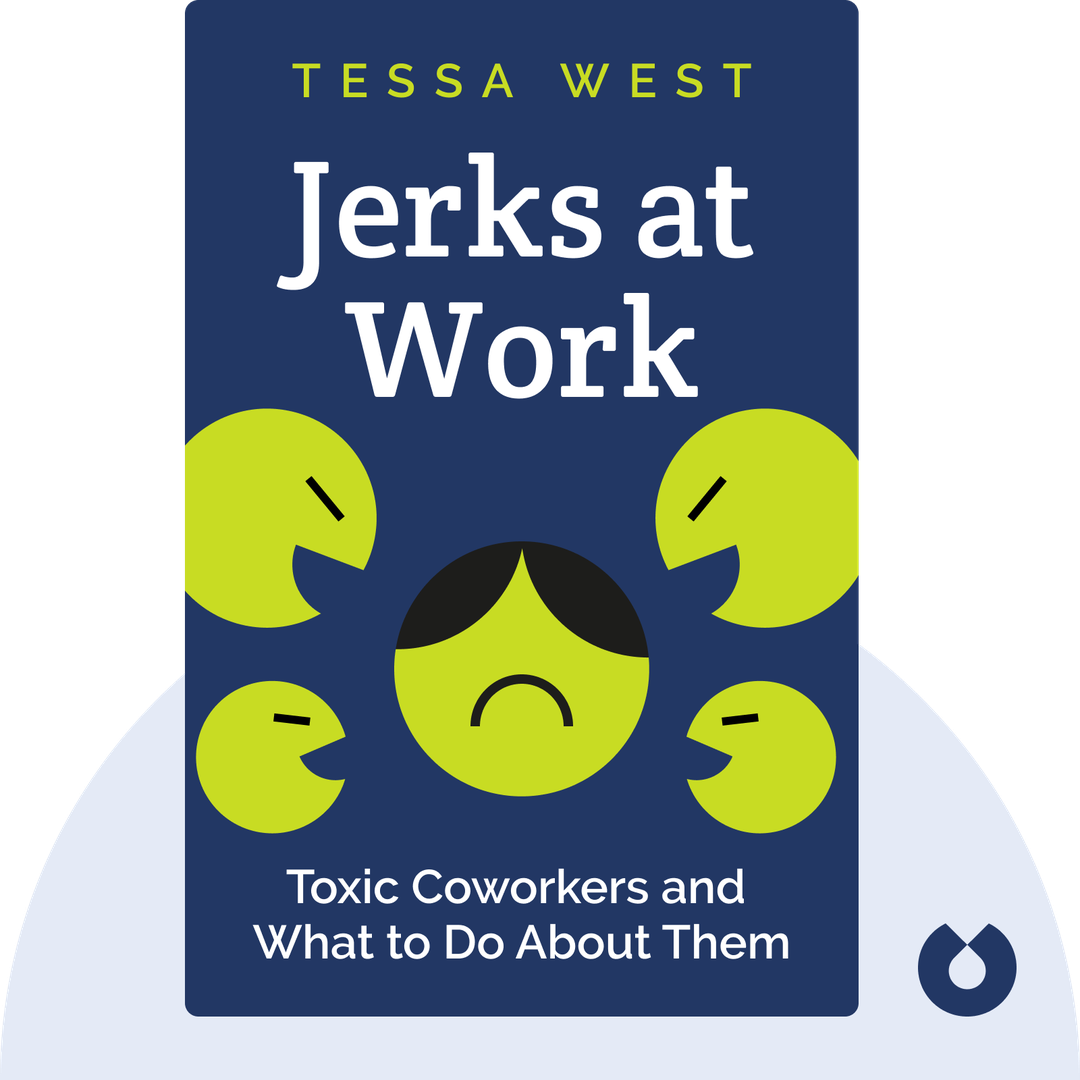
Jerks at Work (2022) provides a handbook for how to deal with difficult people at work. Identifying seven types of jerks, it informs you about what kind of behaviors to look out for and how to deal with them in a pragmatic, positive way.
Who Should Listen to Jerks at Work?
- Anyone who is struggling with a jerk at work
- Those who have a friend or loved one who won’t stop complaining about a jerk at work
- People who are interested in how social psychology applies to the workplace
Books Similar to Jerks at Work
Readers who enjoyed this also liked these titles.