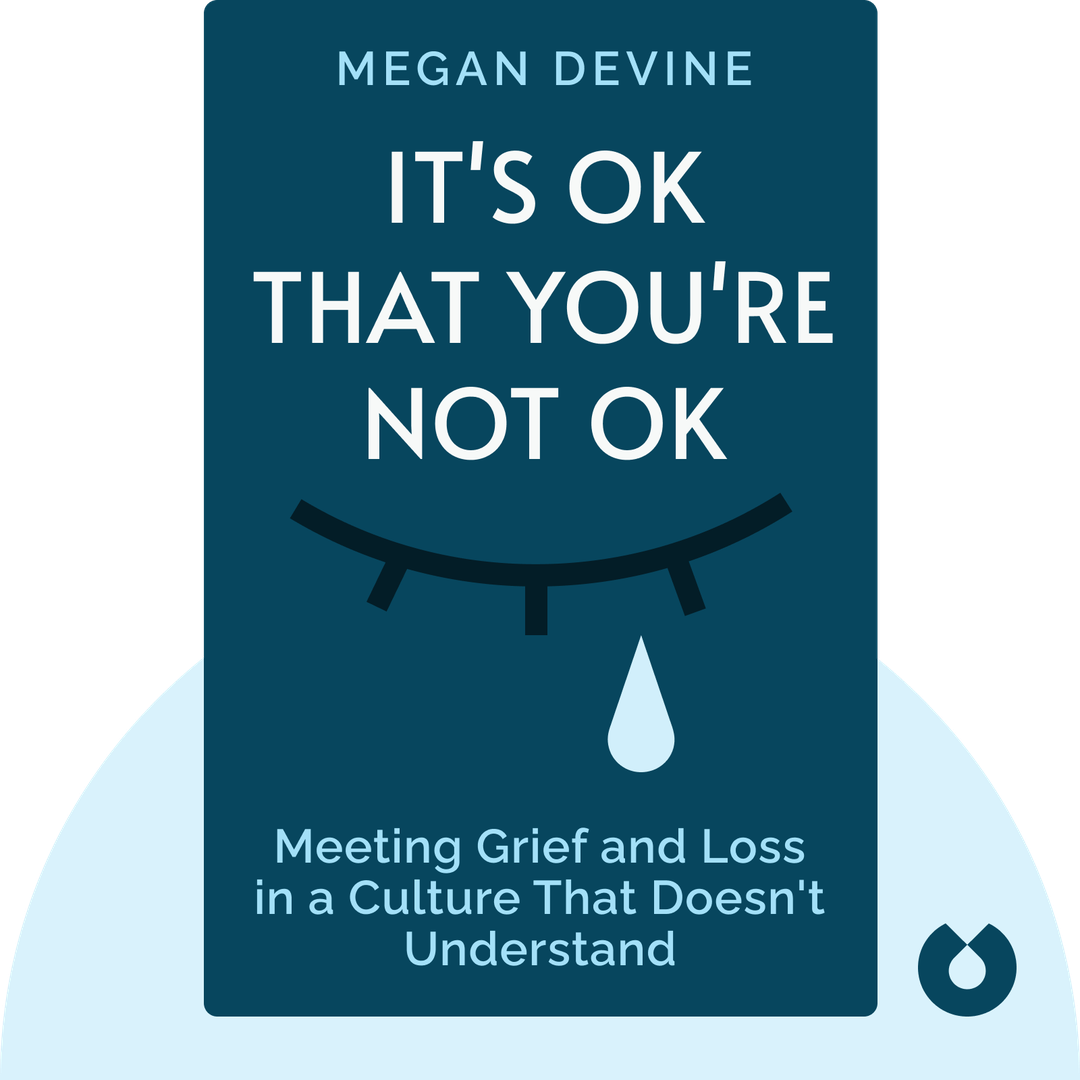
It's OK That You're Not OK
Start ListeningDownload Try free on iPhoneScan to start in 5 seconds
Categories:
If You're Curious About These Questions...
You should listen to this audiobook
- Why do well-intentioned phrases like 'everything happens for a reason' often cause more harm than good, and how does society's view of grief need to change?
- What is the crucial difference between the 'inevitable pain' of profound loss and 'unnecessary suffering,' and how can societal expectations accidentally increase that suffering?
- Why might the second year of grieving feel even harder than the first, and how can creating an 'image of recovery' help you carry your grief rather than trying to move on from it?
Listen to It's OK That You're Not OK — Free Audiobook
Loading player...
Key Takeaways from It's OK That You're Not OK
- Grief is not a problem to be solved or a medical diagnosis to overcome, but a natural, lifelong experience to be integrated and carried.
- Societal platitudes and linear models, like the five stages of grief, often invalidate the unique, unpredictable reality of profound loss.
- While the intense pain of losing a loved one is inevitable, the suffering caused by rushing the healing process or bowing to social pressure is optional.
- Grief is a full-body experience that can manifest as severe stress, brain fog, guilt, and even physical pain, requiring gentle, experimental self-care.
- You do not 'move on' from grief; instead, you move forward with it by creating an honest image of recovery and building a support system that allows you to carry the pain together.
Learning Tools
Reinforce what you learned from It's OK That You're Not OK
Mind Map
It's OK That You're Not OK
Society's Broken View of Grief+
Pain vs. Unnecessary Suffering+
Managing Grief-Induced Stress+
Creating New Meaning+
Quiz — Test Your Understanding
Question 1 of 6
How does the author suggest society fundamentally misunderstands grief?
Question 2 of 6
What is the author's perspective on the famous five-stage grief model (denial, anger, bargaining, depression, acceptance)?
Question 3 of 6
According to the book, what is the key difference between the 'pain' of grief and 'suffering'?
Question 4 of 6
Why do grievers often replay the event of a loved one's death in their heads, experiencing intense guilt?
Question 5 of 6
What does the author mean when discussing the concept of 'moving on' from grief?
Question 6 of 6
What is a likely consequence of having honest conversations about your grief with friends and family, according to the text?
It's OK That You're Not OK — Full Chapter Overview
- 1Recommendation
- 2Accept grief as a natural response to great loss.
- 3To grieve freely, manage pain your own way without unnecessary suffering.
- 4Ease grief-related stress symptoms in manageable steps.
- 5You can’t move on from grief, but you can create new meaning around it.
- 6Final Summary
It's OK That You're Not OK Summary & Overview
It’s OK That You’re Not OK (2017) is a radical take on grief. It deconstructs and recalibrates how we experience pain and support people who are grieving – and teaches us how to honor loss authentically.
Who Should Listen to It's OK That You're Not OK?
- First-time grievers
- Anyone who’s lost a loved one to death
- Those trying to support someone in pain
Books Similar to It's OK That You're Not OK
Readers who enjoyed this also liked these titles.