If You're Curious About These Questions...
You should listen to this audiobook
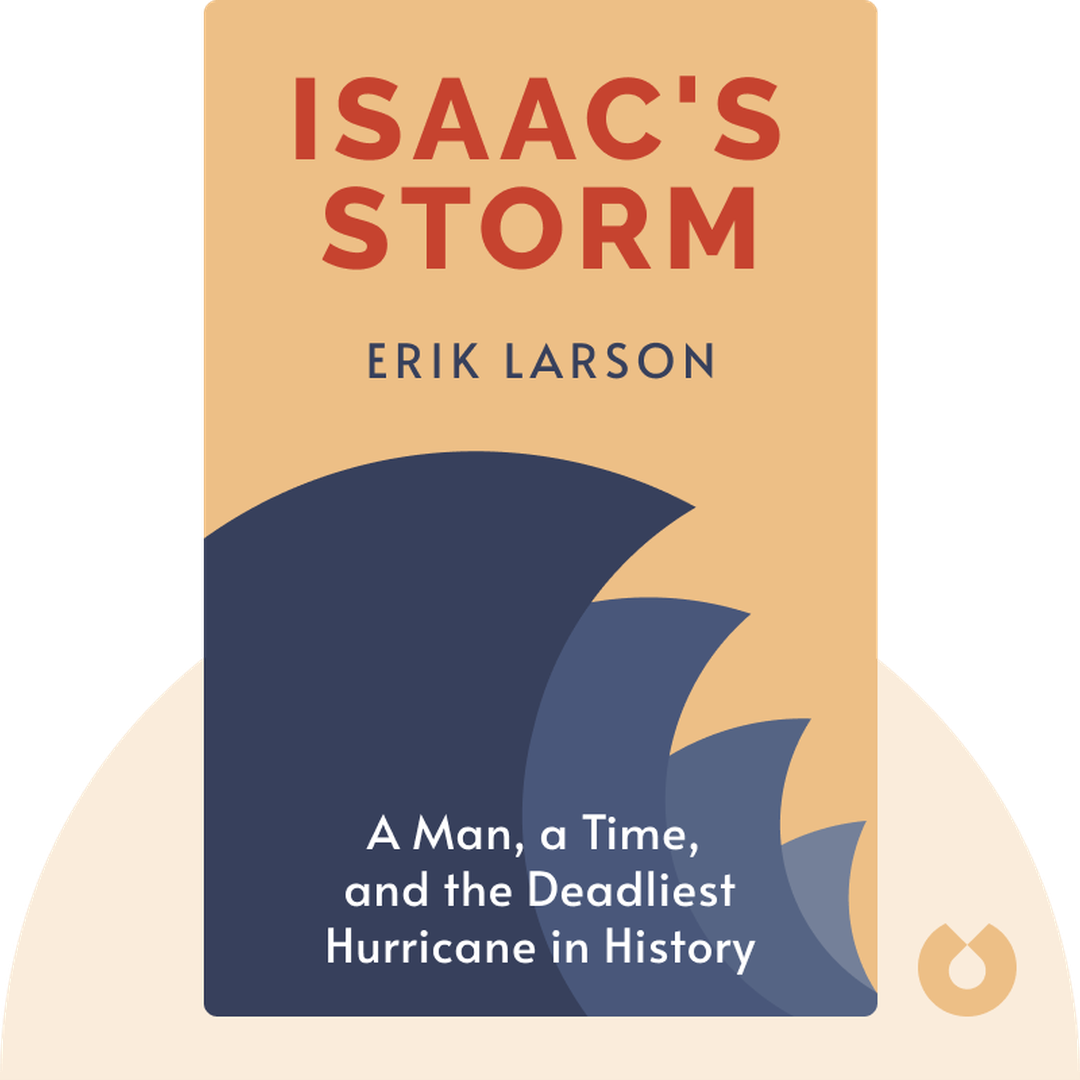
- Did you know that the deadliest natural disaster in U.S. history was worsened by the sheer arrogance of weather experts who believed such a catastrophe was impossible?
- Have you ever wondered what it would be like to stand at the center of a "perfect storm" that erased an entire city's golden future in a single night?
- Are you curious about how a single meteorologist’s fateful decision could mean the difference between life and death for thousands of unsuspecting people?
Listen to Isaac's Storm — Free Audiobook
Loading player...
Key Takeaways from Isaac's Storm
- Discover how scientific hubris and overconfidence left the prosperous city of Galveston completely unprepared for the deadliest natural disaster in United States history.
- Learn how Isaac Cline used his scientific rigor and discipline to rapidly rise through the ranks and legitimize a previously scandal-ridden Weather Bureau.
- Understand why leading meteorologists falsely concluded Galveston was safe from hurricanes by dangerously dismissing past storms in nearby towns as freak anomalies.
- Find out how the Weather Bureau's attempts to protect its damaged reputation led to the blocking of vital weather communications from Cuba.
- Explore the fascinating methods of early weather forecasting and how a complex sibling rivalry drove the success of the Galveston station prior to the storm.
Learning Tools
Reinforce what you learned from Isaac's Storm
Mind Map
Isaac's Storm
The Protagonist & The Bureau+
Scientific Hubris+
The Hurricane Strikes+
Destruction & Survival+
Aftermath & Legacy+
Quiz — Test Your Understanding
Question 1 of 8
Why was Isaac Cline initially sent to manage the Galveston Weather Bureau station in 1889?
Question 2 of 8
Why did Isaac Cline confidently claim in an 1891 article that Galveston was safe from hurricanes?
Question 3 of 8
What disastrous administrative decision did Weather Bureau chief Willis Moore make prior to the 1900 hurricane?
Question 4 of 8
How did the residents of Galveston generally react on the morning of September 8, 1900, before the worst of the storm hit?
Question 5 of 8
What geographical feature contributed to the sudden and dramatic rise in water levels in Galveston during the hurricane?
Question 6 of 8
Why did the clean-up crews in Galveston ultimately resort to burning the bodies of the deceased?
Question 7 of 8
What modern meteorological concept explains how the 1900 storm rapidly transformed from a heavy rainstorm into a devastating hurricane?
Question 8 of 8
What was the long-term economic consequence of the 1900 hurricane for Galveston?
Isaac's Storm — Full Chapter Overview
- 1Recommendation
- 2Isaac Cline rose quickly through the Weather Bureau to lead the Galveston, Texas office.
- 3Leading scientific opinion held that powerful hurricanes would never strike Galveston.
- 4As Isaac’s standing grew in Galveston, weather messages from Cuba were blocked to protect the Bureau’s damaged reputation.
- 5The hurricane arrived with little warning, and few grasped the true danger.
- 6People searched for safety as the storm began bearing down on Galveston.
- 7Families struggled to survive as water levels rose sharply.
- 8Reaching the next day came down to both survival and luck.
- 9The cleanup was difficult and filled with uncertainty.
- 10This was an unusually powerful hurricane that changed Galveston’s future forever.
- 11Final summary
Isaac's Storm Summary & Overview
Isaac’s Storm (1999) is a gripping account of the hurricane that devastated Galveston, Texas on September 8, 1900. Just as Galveston was becoming a world-class city, a storm arrived with little warning and crushed many of the community’s hopes and ambitions.
Who Should Listen to Isaac's Storm?
- Anyone moved by the indomitable power of nature
- Fans of historical nonfiction
- Storm chasers
Books Similar to Isaac's Storm
Readers who enjoyed this also liked these titles.