Theme Song
If You're Curious About These Questions...
You should listen to this audiobook
- Did you know that the sexual struggles in your long-term relationship are often a necessary catalyst for a much deeper level of intimacy?
- Have you ever wondered why one partner almost always ends up with more 'sexual power' than the other, and what that really says about your bond?
- What if the secret to reawakening passion isn't about learning new techniques, but about having the courage to truly confront yourself and your partner?
Listen to Intimacy & Desire — Free Audiobook
Loading player...
Key Takeaways from Intimacy & Desire
- Discover why waning sexual desire is not a sign of a failing relationship, but a normal, inevitable phase that all committed couples experience.
- Understand the relative dynamic between the High Desire Partner and Low Desire Partner to let go of the worry that there is something wrong with your individual sex drive.
- Recognize that the lower desire partner always dictates when sex happens, a natural power dynamic that usually feels like a heavy burden rather than intentional spite.
- Learn how identifying your current desire roles helps eliminate personal guilt and blame, allowing you to tackle intimacy problems together as a united team.
- Find out how evolutionary biology purposefully uses the natural decline in honeymoon-phase desire to force couples to tolerate interpersonal tension and develop their individual sense of self.
Learning Tools
Reinforce what you learned from Intimacy & Desire
Mind Map
Intimacy & Desire
The Desire Dynamic+
Evolutionary Purpose of Conflict+
The Validation Trap+
Developing a Solid Self+
Breaking Sexual Gridlock+
Collaborative Alliance+
Quiz — Test Your Understanding
Question 1 of 8
According to the text, what determines whether someone is the High Desire Partner (HDP) or the Low Desire Partner (LDP)?
Question 2 of 8
In a committed relationship, who ultimately wields the power over whether sex happens or not?
Question 3 of 8
From an evolutionary perspective, what is the radical theory proposed by the author regarding sexual desire problems?
Question 4 of 8
What is the danger of relying heavily on a 'reflected sense of self' in a romantic relationship?
Question 5 of 8
How does the author define a 'solid sense of self'?
Question 6 of 8
Why do most couples naturally resist altering their sexual routines as they settle into a relationship?
Question 7 of 8
What generally causes a relationship to reach a state of 'gridlock'?
Question 8 of 8
Which physical mindfulness exercise does the author recommend to embody partnership and cooperatively confront relationship issues?
Intimacy & Desire — Full Chapter Overview
- 1Recommendation
- 2In every relationship, one partner has lower desire and the other has higher desire.
- 3The lower-desire partner always controls sex, whether they want to or not.
- 4Sexual desire problems are nature’s way of pushing us to grow.
- 5Most people in relationships track their partner’s mind for self-validation.
- 6Relying on your partner for self-validation destroys sexual intimacy.
- 7Sexual experimentation slows as partners settle into a relationship.
- 8Sexual growth often happens when couples feel they’ve hit a wall.
- 9Building a stronger collaborative alliance with your partner leads to better sex.
- 10Final summary
Intimacy & Desire Summary & Overview
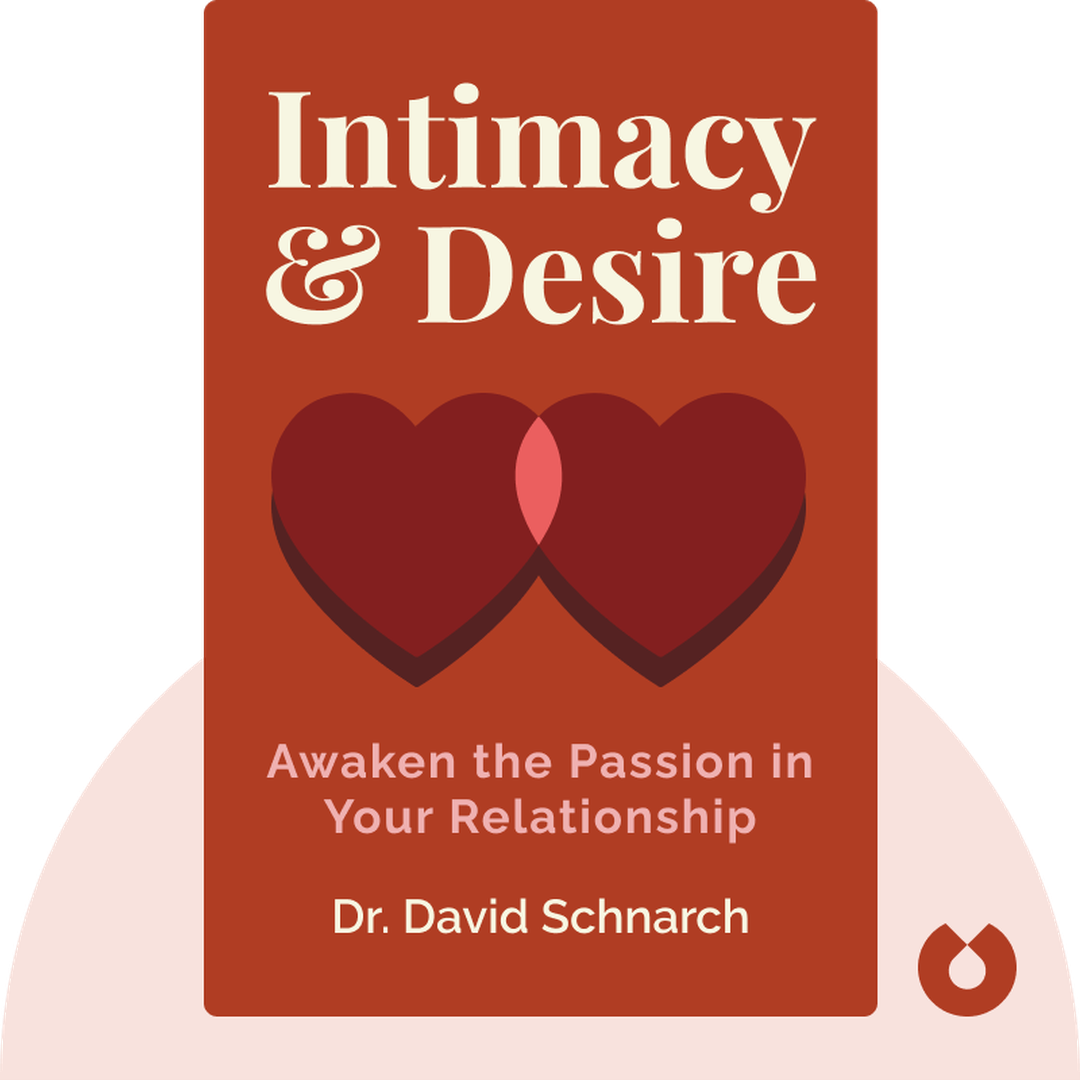
Intimacy & Desire: Awaken the Passion in Your Relationship (2009) explains why all people in committed, long-term relationships run into sexual problems. Driven by case studies of real couples in sex therapy, the book demonstrates how people in relationships can transform their perspective – and confront themselves and each other – to reawaken sexual passion.
Who Should Listen to Intimacy & Desire?
- Anyone interested in relationship advice
- Couples looking to overcome sexual problems
- Partners who want to deepen their connection
Books Similar to Intimacy & Desire
Readers who enjoyed this also liked these titles.