If You're Curious About These Questions...
You should listen to this audiobook
- What’s the secret behind why some tech companies consistently create products that feel effortless, while others waste resources on impressive features that nobody actually wants?
- Have you ever wondered why traditional 'lean' and 'agile' frameworks often turn into empty rituals that fail to produce real innovation?
- What if you could bridge the gap between business goals and engineering realities to discover high-value solutions before your team even starts building?
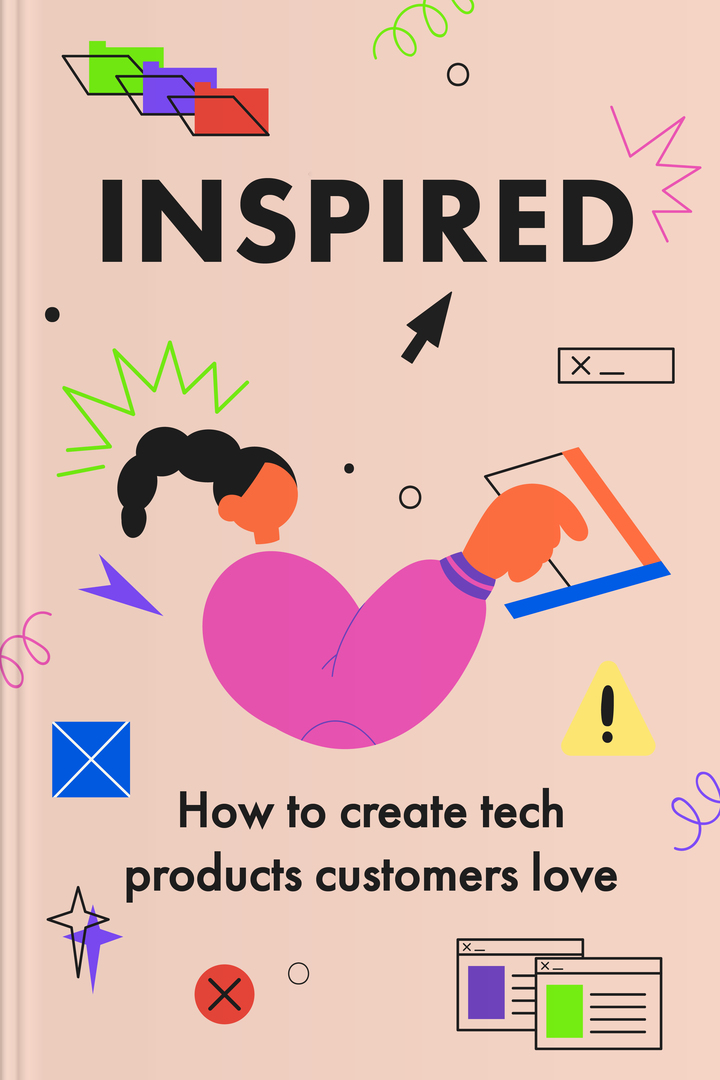
Listen to Inspired — Cinematic Audio Edition
Key Takeaways from Inspired
- Discover why technically brilliant products often fail, and learn to shift your team's focus from merely building features to discovering what customers actually value.
- Understand how product challenges evolve across company stages, from the survival pressure of startups to the legacy-versus-innovation tension in large enterprises.
- Learn the true role of a product manager as a communication tuner between designers, engineers, and users, rather than someone who simply manages project delivery.
- Recognize why Lean and Agile methodologies fail when turned into rigid rituals, and embrace the reality that product ideas must be tested as hypotheses.
- Master the practice of eliminating value, usability, feasibility, and business viability risks before you ever start creating the actual product.
Learning Tools
Reinforce what you learned from Inspired
Mind Map
Quiz — Test Your Understanding
Inspired — Full Chapter Overview
- 1Recommendation
- 2Product managers need clearly defined product teams around them.
- 3Prioritize user experience design: Build a complete UX team and help them contribute.
- 4Product managers must continually find and evaluate product opportunities.
- 5Product discovery: Confirm your product is valuable, usable, and feasible by defining and testing a minimal version.
- 6Use high-fidelity prototypes to communicate product specs clearly and test with real users.
- 7Use a charter user program to understand customers and build launch references.
- 8Product management is about making decisions: Use personas and product principles to guide you.
- 9When changing your product, think carefully about your goals and roll changes out gently.
- 10Final summary
Inspired Summary & Overview
This narration explores Marty Cagan’s product-thinking lens: why many technology companies build impressive things that nobody loves, and how strong product teams learn to discover value before they commit to building. Along the way, it clarifies what product management is really for—connecting customers, business goals, and engineering realities in a way that’s both disciplined and creative.
Moving chapter by chapter, the script walks through the stages companies grow through, the limits of “lean” and “agile” when they’re treated like rituals, and the everyday practices of teams that reliably innovate. It also offers a calm, supportive way to reflect on your own experiences as a customer—and how those experiences can reveal what great product organizations pay attention to.
Who Should Listen to Inspired?
- Product managers, designers, and engineers who want a shared language for discovery, collaboration, and building things people truly want.
- Leaders at startups, growth-stage companies, or enterprises who are trying to scale innovation without drowning in process.
- Anyone curious about why some products feel effortless and valuable—while others feel complicated, misaligned, or frustrating.
Books Similar to Inspired
Readers who enjoyed this also liked these titles.