If You're Curious About These Questions...
You should listen to this audiobook
- Did you know that the secret to building world-class tech isn’t about hiring 'superstars,' but about how you empower ordinary people to achieve extraordinary results?
- Have you ever wondered why some product teams consistently innovate while others are stuck acting like 'feature factories' that never move the needle?
- What if you could stop managing tasks and start leading with a purpose that inspires your team to solve the toughest customer problems?
Listen to Empowered — Cinematic Audio Edition
Loading player...
Key Takeaways from Empowered
- Discover why a robust coaching mindset is the foundation of great product leadership. Learn to use regular one-on-ones to focus on outcomes rather than delegating tasks, building a team of dedicated missionaries instead of mercenaries.
- Learn how to establish unshakeable trust within your product teams by completely avoiding micromanagement. Master the delicate balance of praising publicly, criticizing privately, and confidently correcting mistakes in real-time.
- Understand why world-class companies prioritize hiring for character before empowering for competence. Find out why you should personally screen candidates and use frequent check-ins to replace outdated annual performance reviews.
- Master the art of crafting a visionary product strategy that goes far beyond a dry, feature-heavy roadmap. Learn to communicate a compelling purpose that solves real-world problems and inspires your engineers to dream big.
- Find out how to build a foolproof team topology by uniting your members under a meaningful common goal. Ensure ultimate product success by generously empowering your teams with three vital ingredients: ownership, autonomy, and alignment.
Learning Tools
Reinforce what you learned from Empowered
Mind Map
Empowered
Strong Product Leadership+
Building Strong Product Teams+
Product Vision & Team Topology+
Product Strategy & Objectives+
Stakeholder Collaboration & Business Alignment+
Quiz — Test Your Understanding
Question 1 of 6
How should product leaders primarily utilize one-on-one meetings with their team members?
Question 2 of 6
According to the text, what is the most effective approach to handling performance feedback?
Question 3 of 6
What is a key difference between a product vision and a product strategy?
Question 4 of 6
Which of the following is a common reason the Objective and Key Results (OKR) technique fails in an organization?
Question 5 of 6
How does the author suggest handling a stakeholder who is hesitant about adopting the empowered product team model?
Question 6 of 6
Which phrase best describes the type of team members a strong product leader should aim to cultivate?
Empowered — Full Chapter Overview
- 1Recommendation
- 2Strong leaders are the starting point for great products.
- 3A product leader needs a strong product team.
- 4A visionary team structure is the foundation of great products.
- 5The right product strategy shapes the best team objectives.
- 6A broad collaboration mindset ultimately fuels business success.
- 7Final Summary
Empowered Summary & Overview
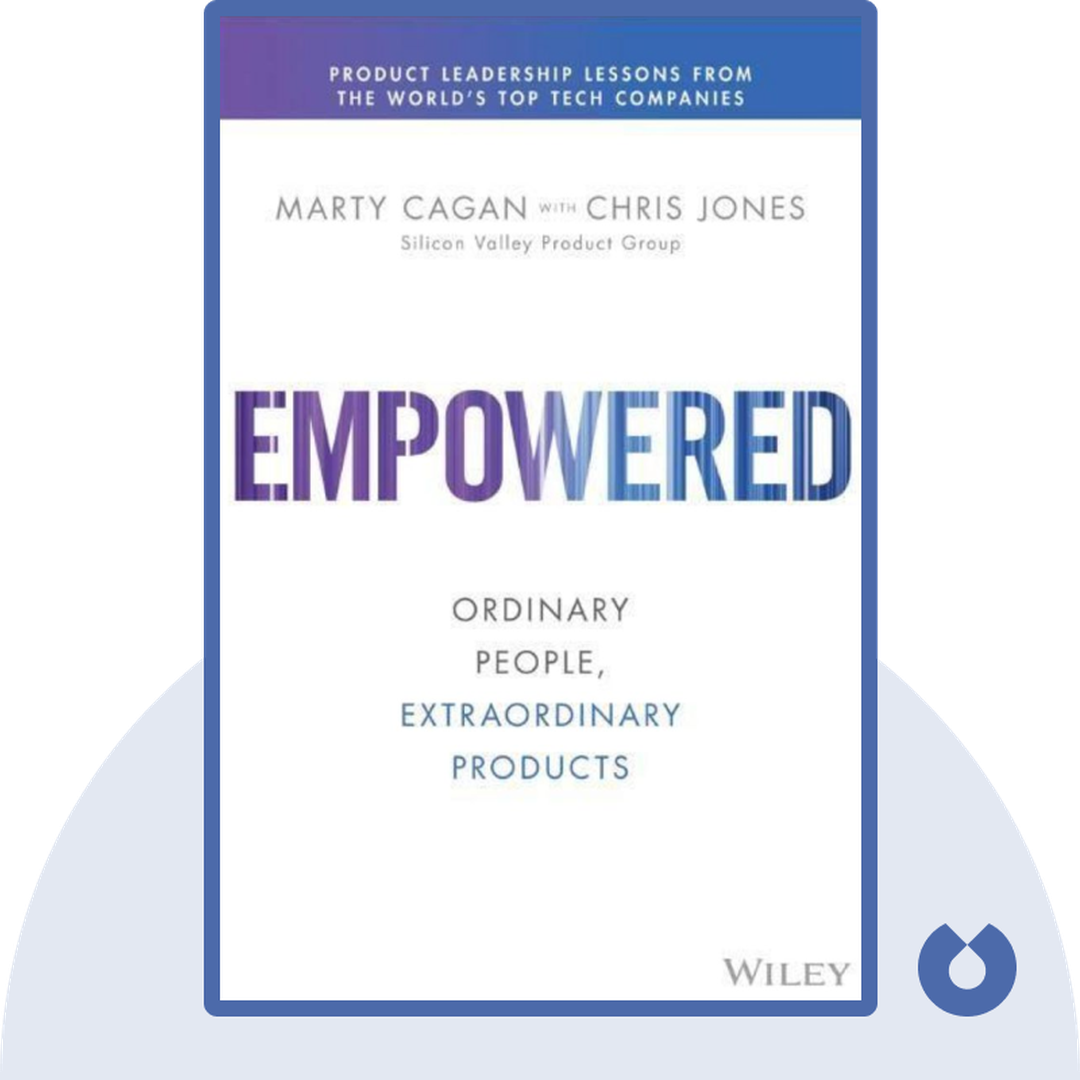
Empowered (2020) is a written master class that guides ordinary people to create extraordinary products. Discover how to create profitable products that consumers love!
Who Should Listen to Empowered?
- Tech product owners looking to lead with purpose
- Lovers of influential product designs
- Anyone curious about how great tech gets made
Books Similar to Empowered
Readers who enjoyed this also liked these titles.