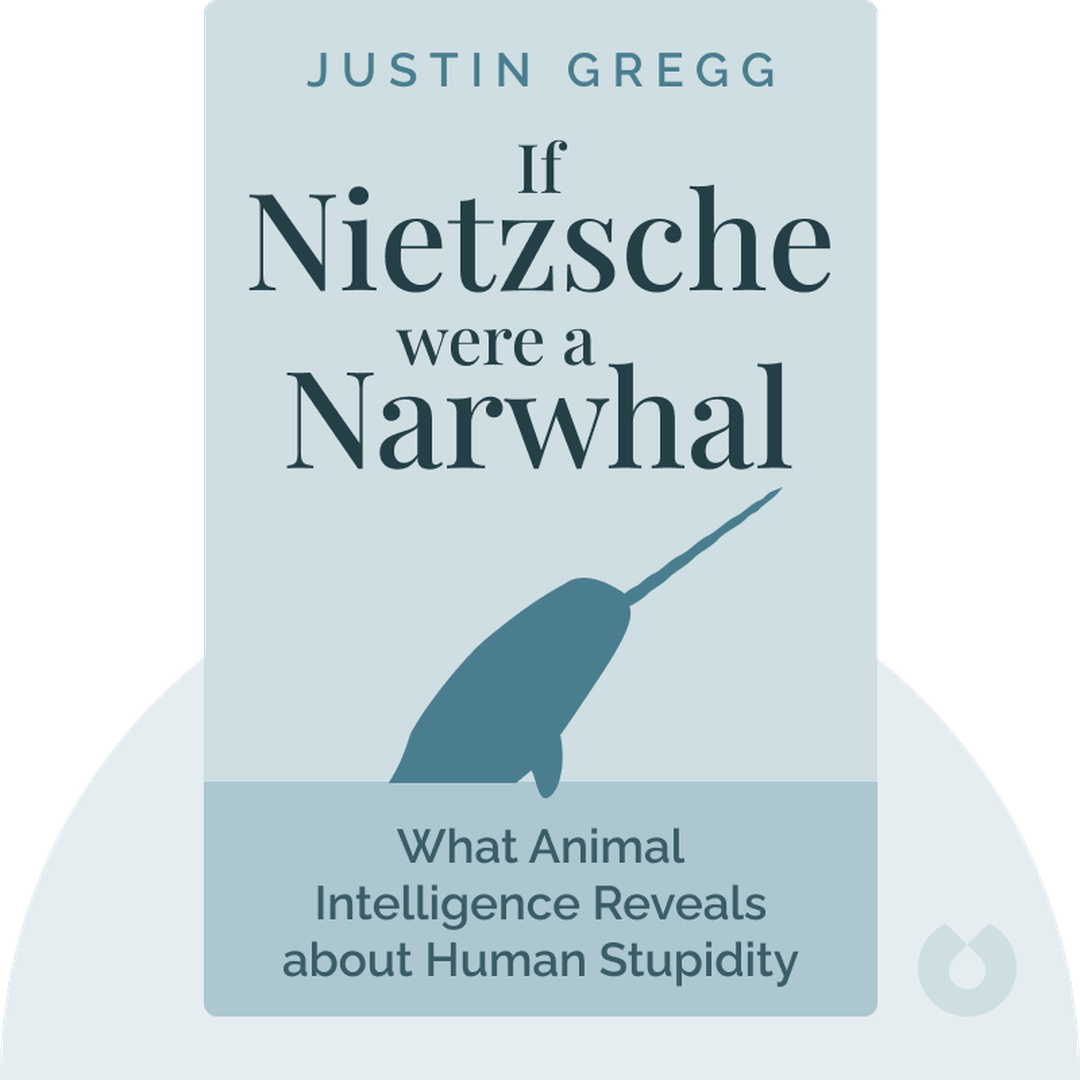
If Nietzsche Were a Narwhal
Start ListeningDownload Try free on iPhoneScan to start in 5 seconds
Categories:
If You're Curious About These Questions...
You should listen to this audiobook
- Did you know that the complex human intelligence we prize so much might actually be a catastrophic mistake from an evolutionary perspective?
- Have you ever wondered why animals without our advanced logic and language often lead more successful, stress-free lives than humans do?
- What if the very traits that make us 'special'—like our ability to reason and plan for the future—are actually the biggest threats to our species' survival?
Listen to If Nietzsche Were a Narwhal — Free Audiobook
Loading player...
Key Takeaways from If Nietzsche Were a Narwhal
- Discover why human intelligence doesn't necessarily make us the ultimate evolutionary winners, and how animals often demonstrate better strategies for survival and happiness.
- Understand how humanity's unique trait as a 'why specialist species' is a double-edged sword that fuels innovation but also triggers profound existential dread.
- Learn why the absence of complex cognitive abilities actually protects animals like narwhals from the self-destructive nihilism that frequently plagues human minds.
- Explore our evolutionary shift from practical 'learned associations' to a complex imagination filled with useless 'dead facts' that overcomplicate our existence.
- Recognize the devastating downside of human intellect by seeing how our grand philosophical and scientific ideas are frequently twisted to justify horrific atrocities and mistreatment.
Learning Tools
Reinforce what you learned from If Nietzsche Were a Narwhal
Mind Map
If Nietzsche Were a Narwhal
The Intelligence Illusion+
The Burden of Asking 'Why'+
Cognitive Evolution & Downsides+
Prognostic Myopia+
Animals vs. Humanity's Future+
Quiz — Test Your Understanding
Question 1 of 7
Based on the 2012 stock-picking contest featuring a cat named Orlando, what broader point does the author make about human intelligence?
Question 2 of 7
How does the author characterize the human tendency to be a 'why specialist' species?
Question 3 of 7
Before humans started asking existential 'why' questions, how did they primarily navigate the world for roughly 200,000 years?
Question 4 of 7
According to the book's discussion on human deception, why is 'bullshitting' often rewarded in the corporate workplace?
Question 5 of 7
What does the historical battle between humans and bedbugs using the chemical DDT illustrate about human cognition?
Question 6 of 7
According to the author, how do non-human animals currently compare to humans regarding the 'game of life'?
Question 7 of 7
How do thinkers Steven Pinker and John Gray differ in their views on humanity's future, as mentioned in the text?
If Nietzsche Were a Narwhal — Full Chapter Overview
- 1Recommendation
- 2Human cognition may be unique, but it isn’t always beneficial.
- 3Evolution created new ways of thinking, along with plenty of drawbacks.
- 4Our failure to think about long-term consequences is putting our survival at risk.
- 5Final summary
If Nietzsche Were a Narwhal Summary & Overview
If Nietzsche Were a Narwhal (2022) takes a playful yet profoundly meaningful look at what makes humans so different from the other animals on the planet. In doing so, it makes a strong case for why the human mind may be dangerously unsuccessful from an evolutionary standpoint.
Who Should Listen to If Nietzsche Were a Narwhal?
- Animal lovers and pet owners
- Science geeks
- People worried about the fate of humanity
Books Similar to If Nietzsche Were a Narwhal
Readers who enjoyed this also liked these titles.