If You're Curious About These Questions...
You should listen to this audiobook
- Did you know that it’s possible to launch a fully operational startup overnight with absolutely zero cash investment?
- What if you could build a high-performing business by using a specific suite of apps to automate almost every complex task?
- Have you ever wondered how to scale a company to success without ever hiring a single full-time employee?
Listen to Idea to Execution — Free Audiobook
Loading player...
Key Takeaways from Idea to Execution
- Discover how to launch a fully functional, scalable startup in just 24 hours by rapidly capitalizing on unexpected market opportunities.
- Learn how to build a robust business infrastructure entirely with free, easy-to-use online tools like Trello, eliminating the need for upfront capital.
- Understand how to identify critical flaws in competitors' business models to create innovative, highly specialized solutions that better serve your clients.
- Find out why paying your employees well above market rates attracts top talent, which justifies premium pricing and guarantees exceptional service.
- Master an efficient, automated hiring strategy that uses auto-responder emails and short video pitches to easily identify the most proactive job candidates.
Learning Tools
Reinforce what you learned from Idea to Execution
Mind Map
Idea to Execution
Rapid Launch & Opportunity+
Business Model Innovation+
Infrastructure & Quality+
Hiring & Team Management+
Growth & Customer Engagement+
Continuous Improvement+
Metrics, Scaling & Expansion+
Quiz — Test Your Understanding
Question 1 of 10
What specific event prompted the authors to launch their virtual assistant company within 24 hours?
Question 2 of 10
How did Less Doing Virtual Assistants solve the limitations of traditional 'dedicated' or 'on-demand' virtual assistant models?
Question 3 of 10
What pricing and compensation strategy did the authors use to guarantee top-tier service quality?
Question 4 of 10
What was the primary purpose of the company's two-step email and video pitch hiring process?
Question 5 of 10
When clients complained about a clunky onboarding process, which technique did the authors use to find the root cause of the issue?
Question 6 of 10
How did the company actively implement the Kaizen method to encourage continuous improvement?
Question 7 of 10
After consulting behavioral psychologist Nir Eyal, how did the company change its approach to improve client engagement?
Question 8 of 10
What specific metric did the authors focus on optimizing by reaching out to clients who had been inactive for two weeks?
Question 9 of 10
What important lesson did the authors learn after hosting their first live business boot camp?
Question 10 of 10
What strict policy did Ari and Nick implement to ensure virtual assistants provided the best possible client experience?
Idea to Execution — Full Chapter Overview
- 1Recommendation
- 2You can start a company in just 24 hours when you need to seize a hot opportunity.
- 3The authors’ business savvy helped them spot the flaws in other virtual assistant services.
- 4You can build infrastructure with free tools, but your service quality must stay top-notch.
- 5Hire smart: plan ahead and look for proactive employees.
- 6Networking can help your company grow fast, but growth can also bring structural challenges.
- 7Don’t let negative feedback linger; use creative problem-solving to keep ideas moving.
- 8Once you’ve mastered a successful strategy, you can teach it to others.
- 9There are many ways to optimize company processes, but getting clients hooked comes first.
- 10Once your structures are solid, focus on your company’s numbers and keep investing.
- 11Final summary
Idea to Execution Summary & Overview
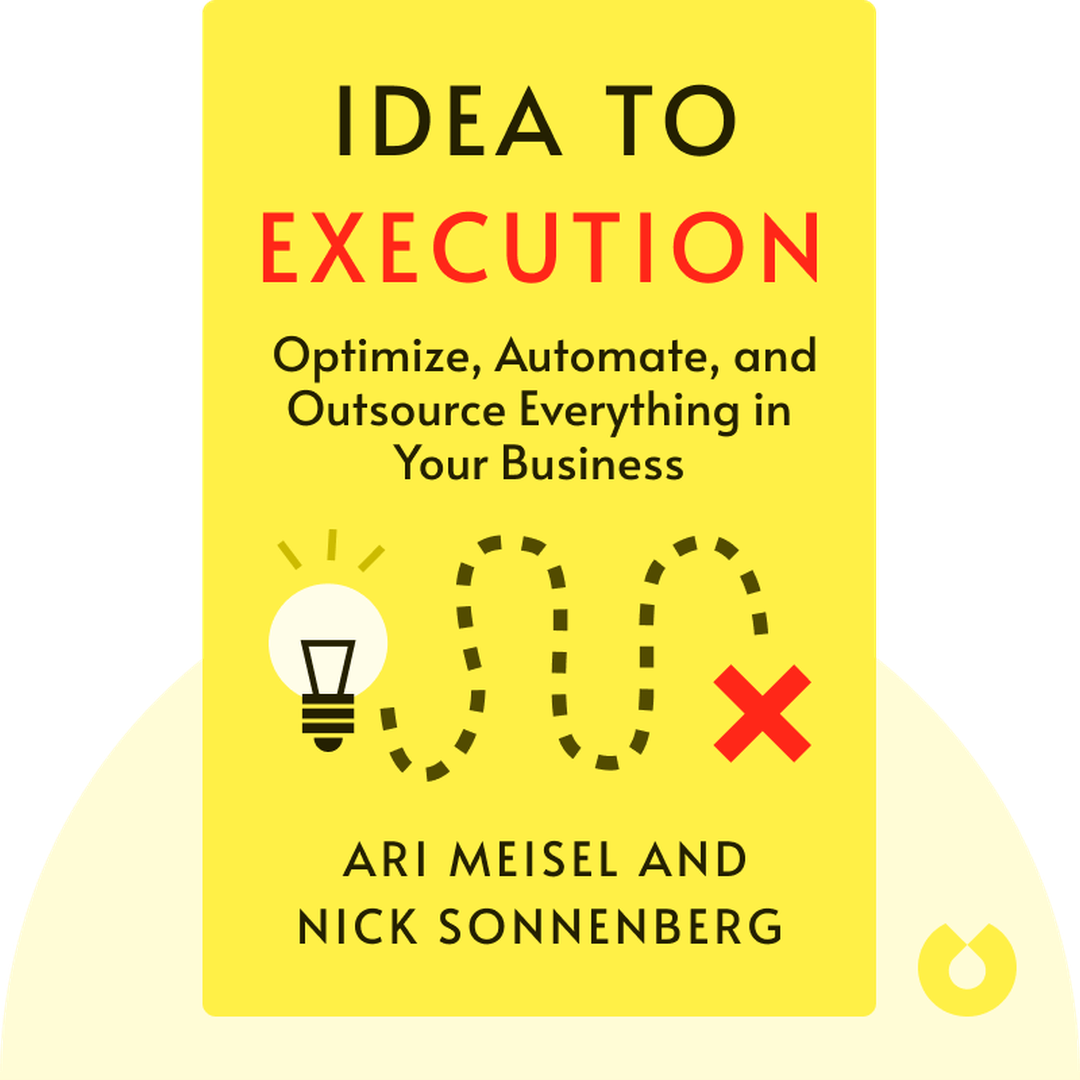
Based on the true story of two friends who founded a company overnight with zero cash investment and built it up over the following year, Idea to Execution (2016) is about the everyday challenges entrepreneurs face when launching a start-up. These blinks show you the steps to success, from sketching a business plan to putting tools in place that optimize your company’s performance numbers.
Who Should Listen to Idea to Execution?
- Aspiring entrepreneurs with limited capital
- Virtual assistants looking for ways to optimize performance
- Productivity enthusiasts who use apps to reach personal and professional goals
- Small business owners and employees of large corporations who want a different way of getting things done
Books Similar to Idea to Execution
Readers who enjoyed this also liked these titles.