If You're Curious About These Questions...
You should listen to this audiobook
- Did you know that the rise of advanced technology might actually make your uniquely human traits more valuable than ever before?
- Have you ever wondered which specific skills will distinguish the most successful leaders in an era where machines handle the technical heavy lifting?
- What’s the secret to not just surviving, but thriving, as the traditional workplace undergoes its most radical transformation in history?
Listen to Humanity Works — Cinematic Audio Edition
Loading player...
Key Takeaways from Humanity Works
- Explore the impending realities of the 2030 workplace, where careers will become less linear, transparency will be absolute, and bridging the gap between digital efficiency and human creativity will be key to success.
- Discover why shifting demographic trends, including an aging Boomer population and a millennial majority, require companies to adopt global, flexible hiring practices to overcome massive labor shortages.
- Understand the monumental shift of Industry 4.0, where interconnected devices and AI will automate manual labor and skyrocket the workplace demand for high-level analytical and strategic planning skills.
- Find out why artificial intelligence won't render humans obsolete, as organizations will increasingly rely on skilled workers to train, explain, and ethically manage complex new algorithms.
- Learn how to remain highly competitive in an increasingly automated world by cultivating uniquely human competencies, such as complex judgment and interpersonal skills, that machines cannot replicate.
Learning Tools
Reinforce what you learned from Humanity Works
Mind Map
Humanity Works
Demographic Shifts+
Industry 4.0+
Human-Machine Synergy+
Fluid Work Environments+
Career Customization+
Organizational Culture+
Modern Leadership+
Brand & Boundaries+
Quiz — Test Your Understanding
Question 1 of 9
According to the text, what is a primary reason that modern workplaces are struggling to cater to two very different generational cohorts?
Question 2 of 9
How does the 'Industry 4.0' revolution differ from the industrial revolutions of the past?
Question 3 of 9
What key lesson regarding automation does the text draw from the 2017 United Airlines overbooking incident?
Question 4 of 9
According to a study by Knoll, what is a major social advantage for workers utilizing coworking spaces?
Question 5 of 9
Beyond high-profile companies like Uber, which industries have seen the greatest shift toward the gig economy and alternative work arrangements?
Question 6 of 9
Why does the consultancy firm Deloitte recommend transitioning from a 'corporate ladder' to a 'corporate lattice' structure?
Question 7 of 9
How did companies like Toyota and Lexus successfully use 'design thinking' to improve their company culture?
Question 8 of 9
As Generation Z enters the workforce, what distinct values and traits are they noted for bringing with them?
Question 9 of 9
What is the main purpose of France's 'right to disconnect' legislation mentioned in the text?
Humanity Works — Full Chapter Overview
- 1Recommendation
- 2Workforces are evolving, and companies must adapt to attract new talent.
- 3New technologies will dramatically change the nature of work.
- 4Human skills are crucial for making the most of new technology.
- 5The standard time and place for work will become more flexible.
- 6As the gig economy grows, more industries will adopt flexible work arrangements.
- 7The typical career path will become far more personalized and unique.
- 8Building an accommodating and effective company culture will matter more than ever.
- 9Younger generations have new expectations and will reshape work around their needs.
- 10Social media and communication technology will keep blurring the line between work and daily life.
- 11Final summary
Humanity Works Summary & Overview
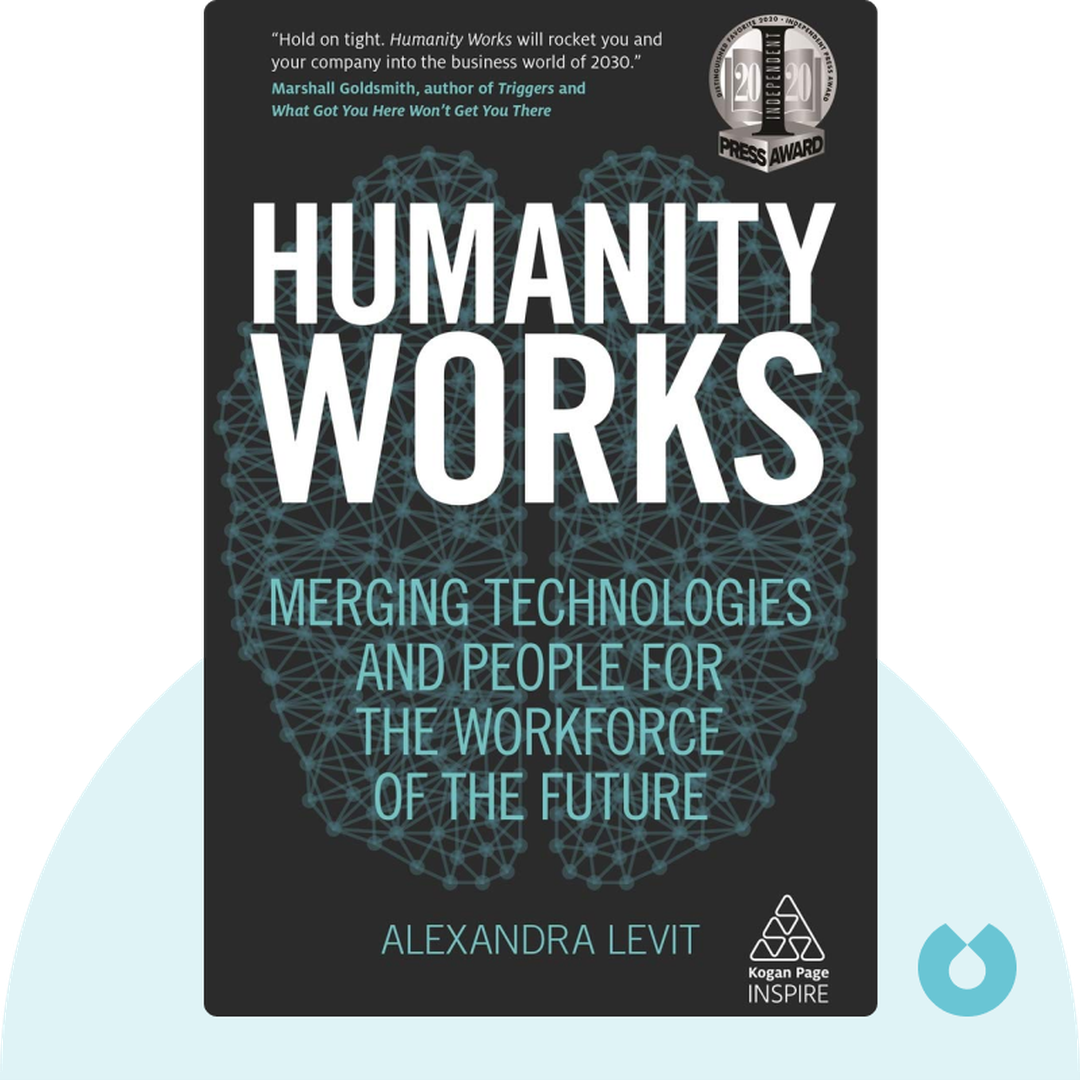
Humanity Works (2018) presents a critical examination of the future of work. Blending academic research with real-world examples, this forward-looking book explores how new technologies will augment human traits to transform even the most established industries.
Who Should Listen to Humanity Works?
- Anyone interested in the future of work
- Leaders of innovative and competitive organizations
- Ambitious workers navigating the changing professional landscape
Books Similar to Humanity Works
Readers who enjoyed this also liked these titles.