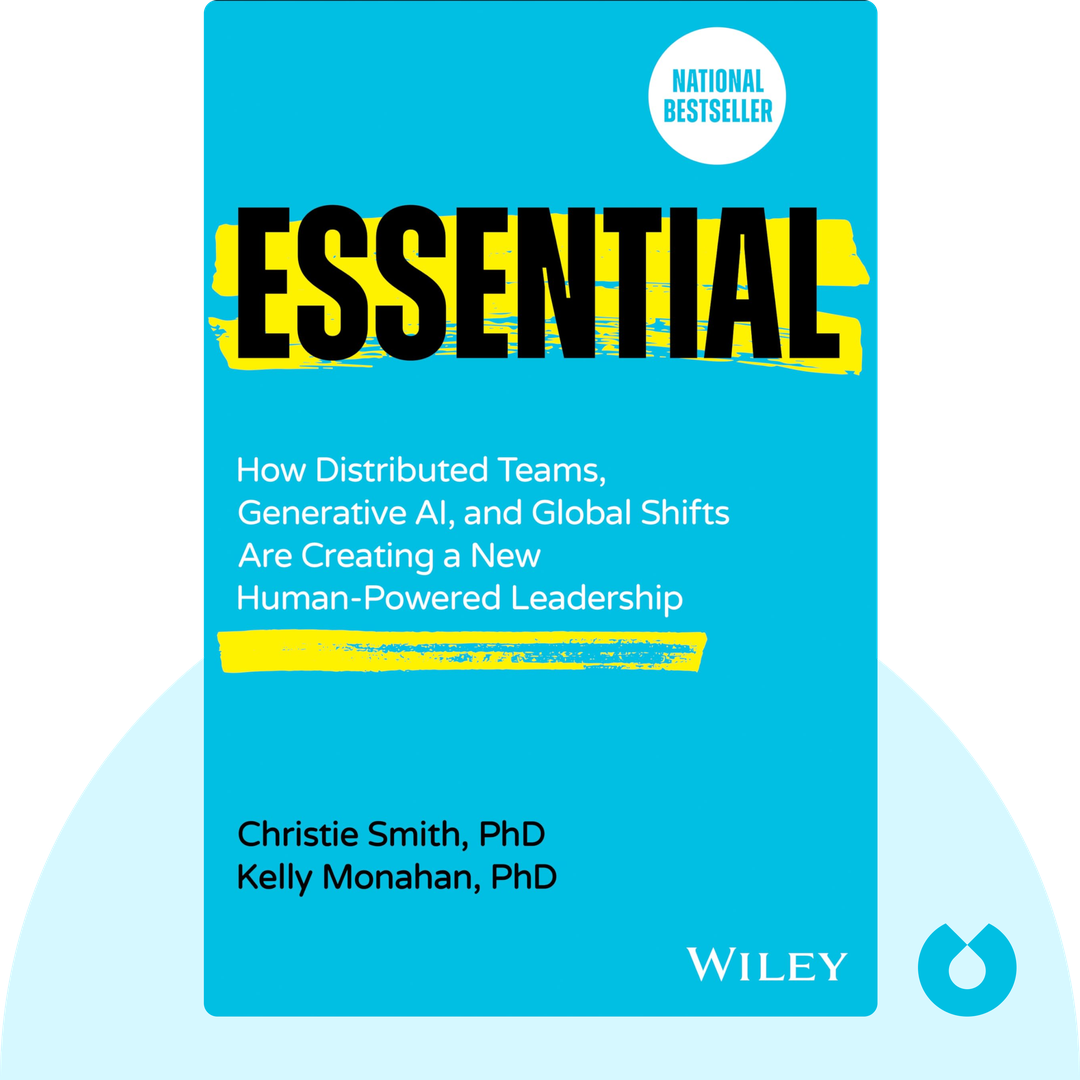
If You're Curious About These Questions...
You should listen to this audiobook
- Have you ever wondered why some leaders thrive during massive technological disruption while others struggle to keep their teams connected?
- What if you could harness the power of AI without losing the essential human element that drives your organization’s success?
- Are you curious about the secret to building a high-performance, purpose-driven culture in a distributed workforce where traditional management no longer works?
Listen to Essential — Free Audiobook
Loading player...
Key Takeaways from Essential
- Understand why a half-century of traditional management principles is now obsolete, and discover how to build flexible, human-driven enterprises where employee potential dictates business success.
- Master the essential skills required to lead distributed teams effectively by prioritizing employee well-being, autonomy, and work-life integration in a post-pandemic world.
- Learn how to successfully harmonize artificial intelligence with human capabilities by using AI for routine data processing while relying on humans for contextual understanding, ethical reasoning, and empathy.
- Discover why authentic corporate purpose is an economic imperative that boosts both retention and profitability, and understand how to avoid the credibility-destroying trap of 'purpose washing'.
- Find out how to turn corporate values into actionable practices, using examples like Patagonia to prove that aligning your company's public statements with real actions yields measurable business growth.
Learning Tools
Reinforce what you learned from Essential
Mind Map
Essential
The Leadership Reset+
Human & Machine Intelligence+
Purpose-Driven Culture+
Worker Agency+
Well-being as Strategy+
Humanized Leadership+
Quiz — Test Your Understanding
Question 1 of 7
What fundamental shift in the employer-employee relationship does the post-COVID era demand of leaders?
Question 2 of 7
According to the book, what is the ideal relationship between human workers and artificial intelligence?
Question 3 of 7
What does the text identify as the 'purpose gap' in modern corporate environments?
Question 4 of 7
What lesson should modern leaders take from the events at OpenAI and Dell regarding worker agency?
Question 5 of 7
Which of the following statistics highlights the 'perception gap' regarding employee well-being?
Question 6 of 7
What psychological phenomenon does the 'cookie monster experiment' illustrate about leadership?
Question 7 of 7
In the age of AI and remote work, what ultimately defines the most successful leaders?
Essential — Full Chapter Overview
- 1Recommendation
- 2Leadership Requires a Reset
- 3Bringing Together Human and Machine Intelligence
- 4Putting Purpose into Practice
- 5Empowering the People
- 6Caring Pays Dividends
- 7More Human Leadership
- 8Final summary
Essential Summary & Overview
Essential (2025) provides a blueprint for navigating the intersection of human-centered management and technological disruption in today’s business landscape. It presents strategies for transforming your leadership approach so you can effectively manage distributed teams and harness AI while maintaining the human element that drives organizational success.
Who Should Listen to Essential?
- Leaders managing distributed workforces
- HR professionals redesigning workplace programs for the remote-first era
- Startup founders building purpose-driven, flexible organizations
Books Similar to Essential
Readers who enjoyed this also liked these titles.