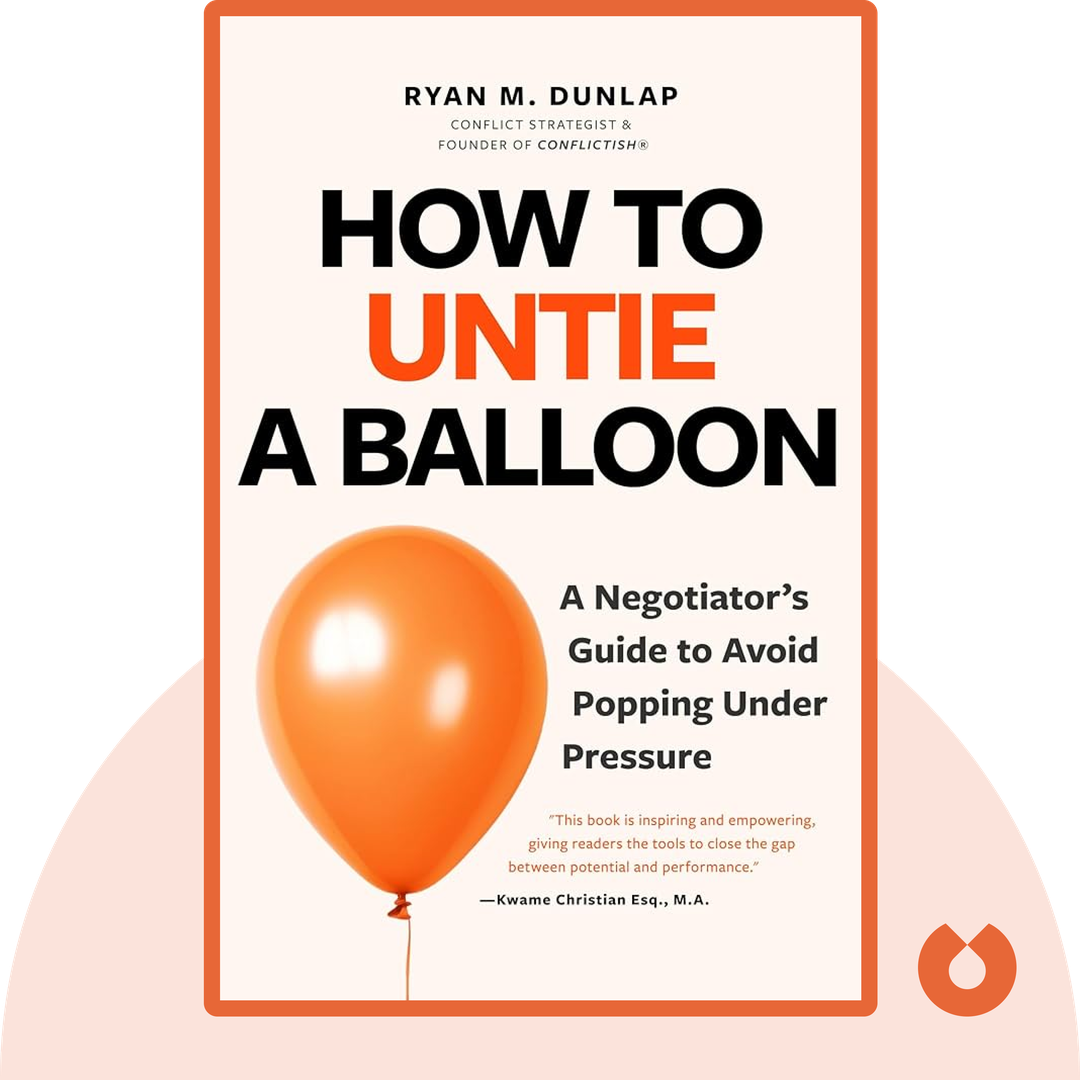
How to Untie a Balloon
Start ListeningDownload Try free on iPhoneScan to start in 5 seconds
Categories:
If You're Curious About These Questions...
You should listen to this audiobook
- Have you ever wondered why minor tensions can suddenly escalate into major crises, and how you can catch the warning signs before the "balloon" pops?
- Did you know that mounting pressure doesn't just make you feel stressed—it actually distorts your thinking and behavior in ways that could be sabotaging your success?
- What if you could master the art of "untying" high-pressure situations, allowing you to stay emotionally strong and in control when everyone else is hitting their breaking point?
Listen to How to Untie a Balloon — Free Audiobook
Loading player...
Key Takeaways from How to Untie a Balloon
- Discover how to transform overwhelming tension into actionable steps using crisis management strategies from a former SWAT hostage negotiator.
- Understand why pressure builds rapidly but releases slowly, and learn why you must wait 20 to 30 minutes for stress hormones to metabolize before attempting to resolve a conflict.
- Learn to recognize the critical warning signs of reaching your pressure threshold, such as your professional mask slipping, performance deteriorating, and logic giving way to emotion.
- Find out why abandoning communication during a breakdown is a critical mistake, and how deliberate preparation helps you avoid default fight-or-flight responses.
- Master the F.I.R.S.T. Steps Framework to systematically navigate complex crises by evaluating Feelings, Interests, Relationships, Situation, and Tolls.
Learning Tools
Reinforce what you learned from How to Untie a Balloon
Mind Map
How to Untie a Balloon
The Balloon Analogy (Core Concept)+
Warning Signs of Rupture+
F.I.R.S.T. Framework (Analyzing Crises)+
3R Framework (Urgent Action)+
S.T.O.P. Protocol (Controlled Decompression)+
Quiz — Test Your Understanding
Question 1 of 6
According to the balloon analogy exercise, why do many interpersonal conflicts escalate even after a brief pause?
Question 2 of 6
Which of the following is identified as a primary warning sign that a person is reaching their pressure threshold?
Question 3 of 6
What comparison does the author make between police firearms training and communication under pressure?
Question 4 of 6
In Ryan Dunlap's F.I.R.S.T. framework, what does the 'S' stand for, and what is its purpose?
Question 5 of 6
When an emergency demands urgent action, the 3R Iterative Progression Framework suggests cycling through which three steps?
Question 6 of 6
When employing the 'Time' component of the S.T.O.P. protocol, what specific trap does the author warn against?
How to Untie a Balloon — Full Chapter Overview
- 1Recommendation
- 2Dangerous overinflation
- 3Pushed to your limit
- 4F.I.R.S.T. steps for managing crises
- 5Using the 3R framework for urgent action
- 6Controlled decompression
- 7Final summary
How to Untie a Balloon Summary & Overview
How to Untie a Balloon (2025) offers concrete strategies for managing stress and conflict, and developing emotional strength. It explores how mounting pressure can distort our thinking and behavior, using a balloon metaphor to show how unresolved tension can quietly escalate into harm. It will help you release pressure and defuse conflict before you become destructive.
Who Should Listen to How to Untie a Balloon?
- Business leaders facing high-pressure, conflictual decisions
- Professionals managing stress while balancing competing demands
- Anyone who struggles to perform under pressure and wants to regain control
Books Similar to How to Untie a Balloon
Readers who enjoyed this also liked these titles.