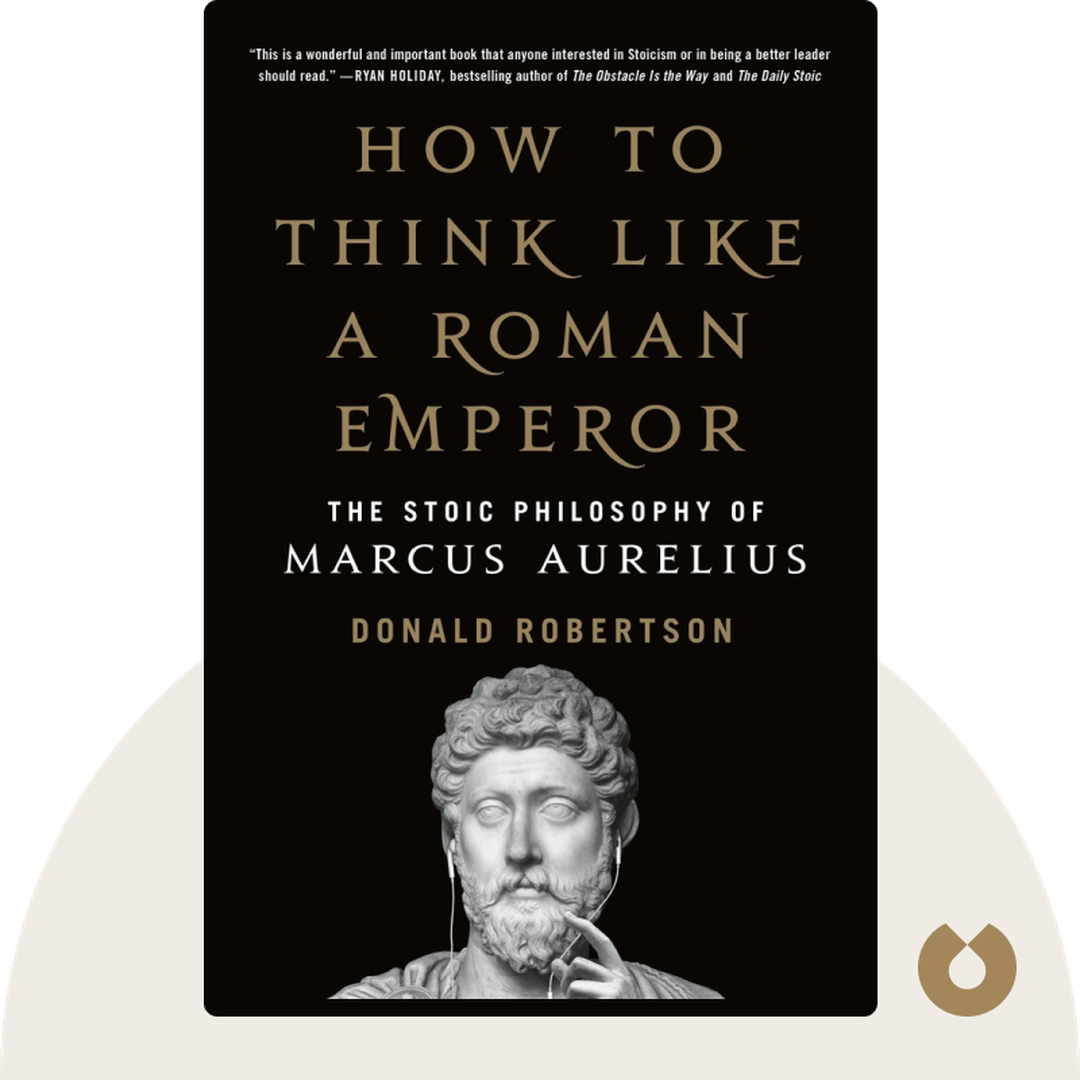
How to Think Like a Roman Emperor
Start ListeningDownload Try free on iPhoneScan to start in 5 seconds
Categories:
If You're Curious About These Questions...
You should listen to this audiobook
- Did you know that the ancient mental exercises used by Marcus Aurelius to rule the Roman Empire are actually the secret precursors to modern cognitive behavioral therapy?
- What if you could adopt the same 'unshakable' mindset that allowed a Roman Emperor to remain calm in the face of plagues, wars, and betrayal?
- Have you ever wondered how one of history's most powerful men used simple daily habits to prevent absolute power from corrupting his character?
Listen to How to Think Like a Roman Emperor — Cinematic Audio Edition
Loading player...
Key Takeaways from How to Think Like a Roman Emperor
- Understand how to live a satisfying life by aligning your actions with the natural order of things and accepting your fate exactly as it is.
- Discover the four cardinal virtues of Stoicism—wisdom, morality, courage, and moderation—and how to deliberately cultivate them to navigate life's challenges.
- Learn how to master your passions using 'cognitive distance' to step back from intense emotions and make rational decisions instead of impulsive reactions.
- Find out why authentic happiness is derived purely from the satisfaction of virtuous living rather than the endless pursuit of fleeting pleasures.
- Realize why it makes no logical sense to wish for immortality, and how accepting that everything will eventually be forgotten can shift your perspective on life.
Learning Tools
Reinforce what you learned from How to Think Like a Roman Emperor
Mind Map
How to Think Like a Roman Emperor
Core Philosophy+
Emotional Mastery+
Handling Hardship & Pain+
Ego & Mortality+
Accountability & Mentorship+
Communication & Leadership+
Quiz — Test Your Understanding
Question 1 of 9
What is the fundamental idea of living a satisfying life according to the core tenets of Stoicism?
Question 2 of 9
Which of the following make up the four cardinal virtues outlined in early Stoic writings?
Question 3 of 9
How do Stoics like Marcus Aurelius achieve what is referred to as 'authentic happiness'?
Question 4 of 9
What is the Stoic technique of 'cognitive distance'?
Question 5 of 9
What was Marcus Aurelius's perspective on leaving a permanent legacy and achieving historical immortality?
Question 6 of 9
How did Marcus Aurelius handle his chronic physical pain using Stoic philosophy?
Question 7 of 9
Why do modern Stoics practice 'voluntary hardship', such as taking cold showers?
Question 8 of 9
What technique did Marcus Aurelius rely on for accountability when he no longer had trusted sounding boards later in life?
Question 9 of 9
Instead of using emotional and flowery rhetoric, what communication style did Marcus Aurelius adopt?
How to Think Like a Roman Emperor — Full Chapter Overview
- 1Recommendation
- 2Stoics hold that a wise, virtuous life means living in harmony with nature.
- 3Building a relationship with virtue gives you a steady behavioral compass to rely on, whatever life brings.
- 4Master your passions, and genuine happiness will naturally follow.
- 5Wishing for immortality makes no sense because it’s logically impossible.
- 6Stoicism isn’t about suppression or passivity; it’s about choosing your reactions wisely and accepting reality joyfully.
- 7You can make peace with physical pain through disciplined practice.
- 8Recognizing the value of voluntary hardship helps you enjoy life’s good things more.
- 9Marcus Aurelius believed mentorship and constructive criticism fostered greater personal accountability.
- 10You can use counter-rhetoric to balance discussions when people rely on emotion to prove a point.
- 11Final summary
How to Think Like a Roman Emperor Summary & Overview
How to Think Like a Roman Emperor (2019) describes the guiding principles of Stoicism through the life and writings of Marcus Aurelius. As one of the most esteemed Roman emperors, his most admired characteristics as a leader were informed by the philosophy of the Stoics. We also find out how these practices can be followed by anyone today.
Who Should Listen to How to Think Like a Roman Emperor?
- Amateur and advanced Stoics looking for a fresh perspective
- People curious about the life of Marcus Aurelius
- Anyone interested in how ancient philosophy mixes with modern psychology
Books Similar to How to Think Like a Roman Emperor
Readers who enjoyed this also liked these titles.