If You're Curious About These Questions...
You should listen to this audiobook
- Did you know that the most successful fraudsters often share specific, predictable traits that can help you spot them before they take a dime of your money?
- Have you ever wondered why some of the most 'exclusive' and 'consistent' investment returns are actually the biggest warning signs of a scam?
- What if you could learn the exact questions to ask a financial advisor to expose a 'rat' and protect your life savings from the next big Ponzi scheme?
Listen to How to Smell a Rat — Free Audiobook
Loading player...
Key Takeaways from How to Smell a Rat
- Learn how to protect your investments by always employing a third-party custodian. Separating your advisor from your funds prevents fraudsters from easily stealing your money and covering their tracks.
- Discover why unusually consistent or sky-high investment returns are a massive red flag. Since real markets are highly volatile, promises of steady gains are often the hallmark of a scam.
- Understand the importance of never investing in a strategy you do not fully comprehend. A trustworthy financial advisor must be able to explain their methods to you in plain English, without relying on confusing jargon.
- Master the ability to distinguish between flashy financial tactics and true investment strategies. Scammers often use complex-sounding tools to distract investors from the fact that they lack a legitimate blueprint for generating returns.
- Find out why you should be highly suspicious of advisors who use the illusion of exclusivity as a selling point. Fraudsters use elite, invite-only tactics to make clients eager to invest and less likely to question shady practices.
Learning Tools
Reinforce what you learned from How to Smell a Rat
Mind Map
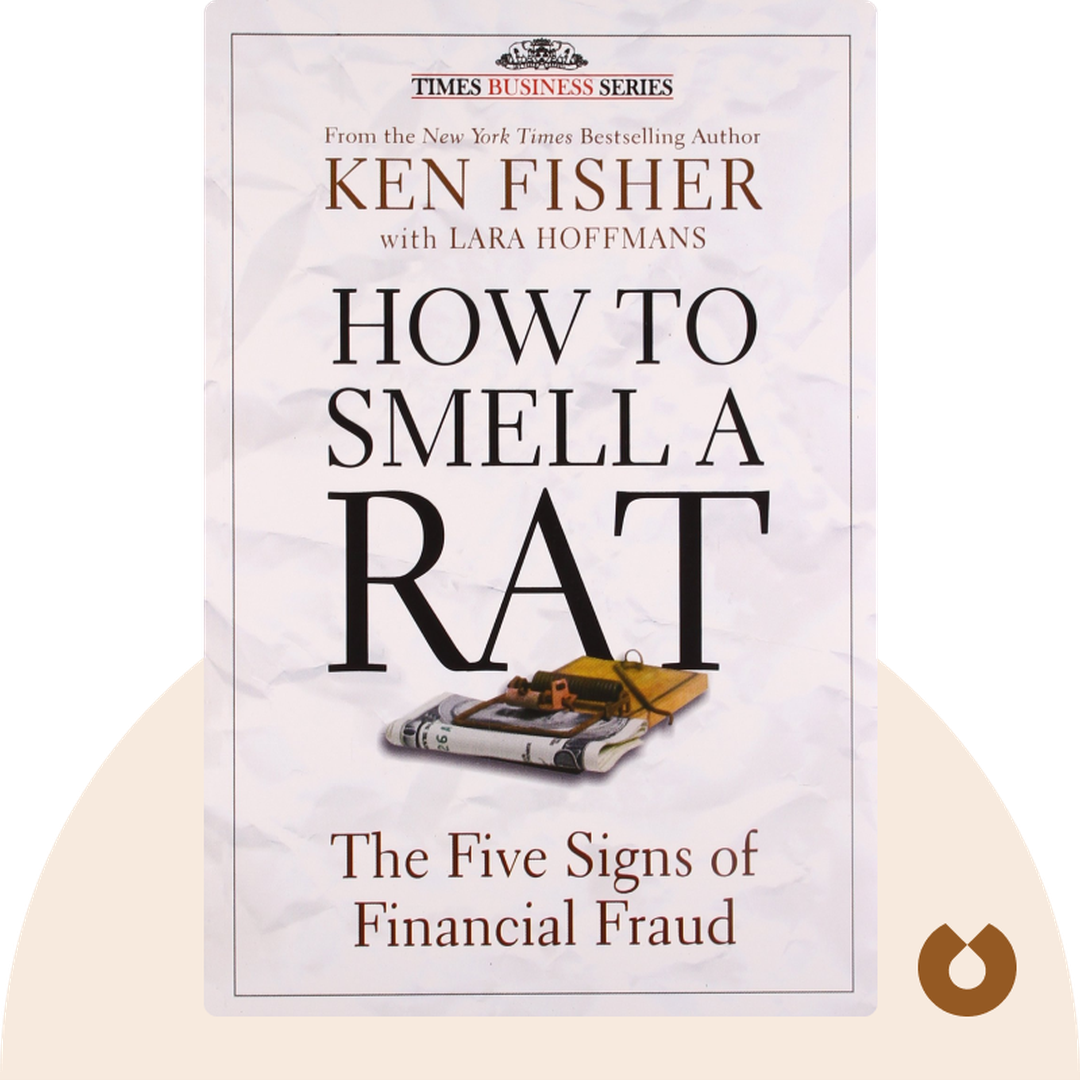
How to Smell a Rat
Asset Custody+
Investment Returns+
Strategy & Jargon+
Superficial Trappings+
False Trust Signals+
Social Proof Pitfalls+
Regulatory Limitations+
Quiz — Test Your Understanding
Question 1 of 7
What is the primary reason the authors recommend employing a third-party custodian for your investments?
Question 2 of 7
How should an investor view an adviser who promises consistent, above-average market returns year after year?
Question 3 of 7
According to the book, what is the crucial difference between an investment strategy and an investment tactic?
Question 4 of 7
Why might a fraudulent financial adviser heavily promote their services as 'exclusive'?
Question 5 of 7
What hidden danger exists when a financial adviser offers to manage your money for 'free'?
Question 6 of 7
Why is it dangerous to choose a financial adviser solely based on a friend's recommendation or a shared social group?
Question 7 of 7
What is a major limitation of the Securities and Exchange Commission (SEC) when it comes to protecting investors?
How to Smell a Rat — Full Chapter Overview
- 1Recommendation
- 2Make sure your investment adviser doesn’t also hold your assets.
- 3Be cautious if an investment adviser’s returns are consistently excellent.
- 4Your adviser should explain investment strategies in plain language.
- 5Be wary of flashy displays or claims of exclusivity.
- 6Charitable giving or a strong reputation doesn’t prove an adviser is trustworthy.
- 7A friend’s recommendation or shared social circles aren’t enough to vet an adviser.
- 8The SEC can help, but it’s ultimately up to you to keep your money safe.
- 9Final summary
How to Smell a Rat Summary & Overview
How to Smell a Rat gives you the tools you need to avoid becoming the victim of financial fraud. It catalogs legendary fraudsters’ favorite tricks.
Who Should Listen to How to Smell a Rat?
- Investment novices
- Anyone who is excited to jump on the bandwagon for the next great investment scheme
- Anyone who is searching for a reliable financial adviser
Books Similar to How to Smell a Rat
Readers who enjoyed this also liked these titles.