Theme Song
How to Make Money in Stocks
Start ListeningDownload Try free on iPhoneScan to start in 5 seconds
Categories:
If You're Curious About These Questions...
You should listen to this audiobook
- What’s the secret seven-letter formula that has helped investors identify the market’s biggest winners long before they become household names?
- Did you know that almost every legendary stock market winner since 1880 followed the exact same chart pattern before its price exploded?
- Have you ever wondered why some investors consistently profit in any market while others get left behind, and how you can spot the warning signs of a failing stock before it’s too late?
Listen to How to Make Money in Stocks — Cinematic Audio Edition
Loading player...
Key Takeaways from How to Make Money in Stocks
- Master the use of historical stock chart patterns, specifically the 'Cup with Handle,' to pinpoint the exact moment to buy a stock before it shoots upward.
- Discover why a consistent, substantial percentage increase in a company's Earnings Per Share (EPS) is the single most important indicator of a winning stock.
- Protect your portfolio from disastrous market crashes by learning to invest only in companies with concrete, proven profitability rather than speculative hype.
- Identify disruptive, innovative companies that have historically driven exponential market growth so you can capitalize on the next wave of revolutionary technology.
- Rethink the traditional 'buy low, sell high' logic and learn why purchasing an innovative stock just as it hits a new high can actually lead to massive, continuous returns.
Learning Tools
Reinforce what you learned from How to Make Money in Stocks
Mind Map
How to Make Money in Stocks
Chart Patterns & Timing+
Earnings & Profitability+
Innovation & Leadership+
Supply, Demand & Ownership+
Institutional Sponsorship+
General Market Direction+
Risk Management+
Quiz — Test Your Understanding
Question 1 of 8
According to the 'Cup with Handle' stock chart pattern, at what precise point should an investor buy the stock?
Question 2 of 8
What does the author consider to be the most important factor to look at when deciding to buy a stock?
Question 3 of 8
How does the author suggest investors approach highly innovative companies whose stock prices are already at all-time highs?
Question 4 of 8
Which of the following is considered a positive indicator regarding the supply and demand of a company's stock?
Question 5 of 8
When selecting stocks within a specific industry, what strategy does the text recommend?
Question 6 of 8
Why is it important for individual investors to look for stocks with 'institutional sponsorship'?
Question 7 of 8
What is the likely outcome for individual stocks if the general market begins heading downward?
Question 8 of 8
What actionable rule does the author provide for cutting losses in the stock market?
How to Make Money in Stocks — Full Chapter Overview
- 1Recommendation
- 2Learn stock chart patterns—especially one key pattern.
- 3Rising earnings are the most important sign of a strong stock.
- 4Innovative companies can deliver strong returns, but timing matters.
- 5Supply and demand play a key role in choosing stocks.
- 6Buy the leaders in their industries.
- 7Look for stocks backed by institutional sponsorship.
- 8Keep a close watch on the overall market direction.
- 9Final summary
How to Make Money in Stocks Summary & Overview
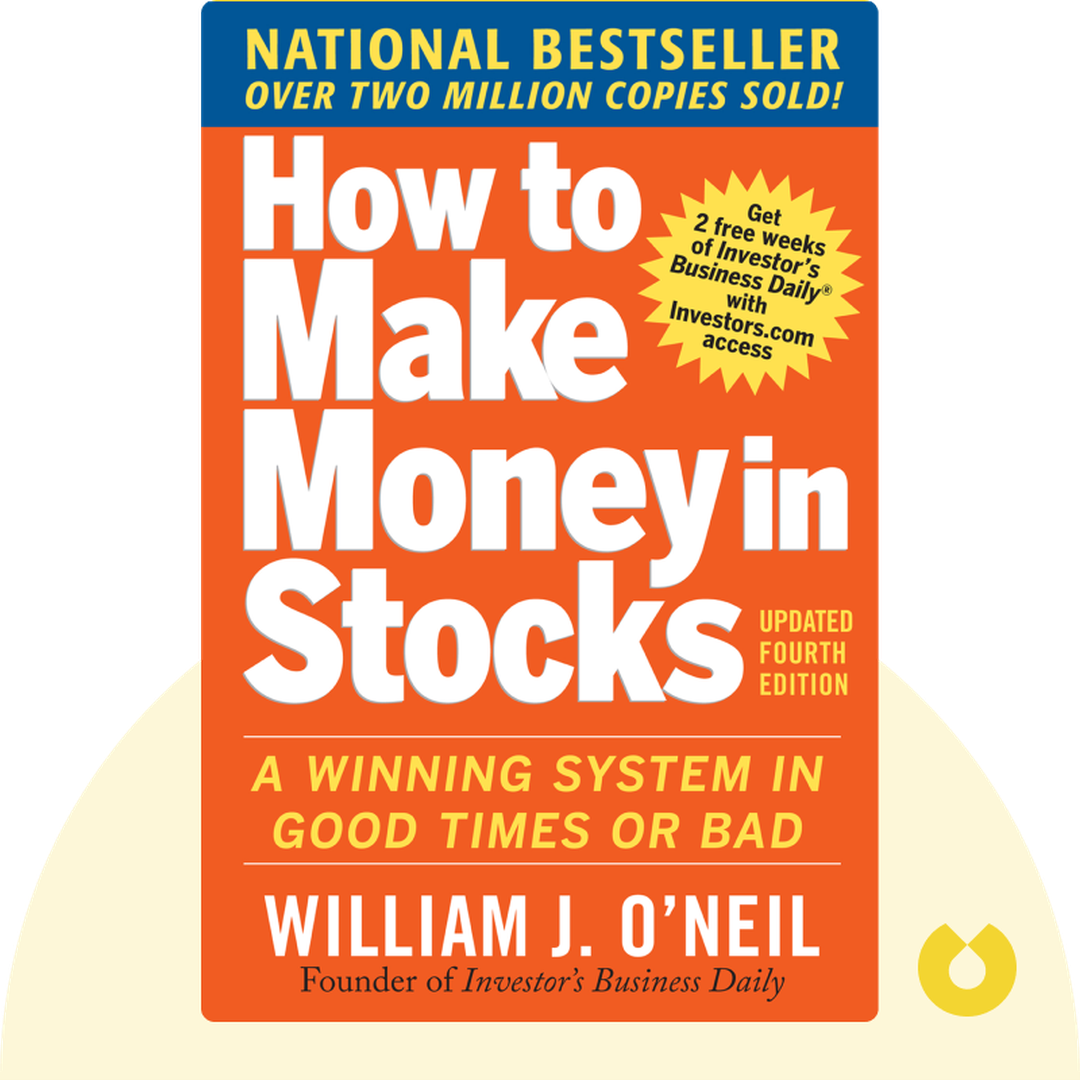
How to Make Money in Stocks (1988, new edition 2008) is a guide to building wealth in the stock market, with proven tips for finding winning stocks and avoiding losers. By learning from the past, How to Make Money in Stocks shows us how to spot telltale patterns in unpredictable markets and profit from them.
Who Should Listen to How to Make Money in Stocks?
- Rookies looking to invest for the first time
- Experienced traders in search of new tips
- Anyone interested in the mysterious workings of the market
Books Similar to How to Make Money in Stocks
Readers who enjoyed this also liked these titles.