If You're Curious About These Questions...
You should listen to this audiobook
- What's the secret to finding calm in a chaotic world, and how can ancient monastic wisdom help you achieve it?
- Are you curious about how the principles of sixth-century monastic living can help you become a more effective leader in your daily life?
- What if you could cultivate a sense of inner peace and purpose by embracing the simple yet profound teachings of St. Benedict?
Listen to How to Live — Free Audiobook
Loading player...
Key Takeaways from How to Live
- Learn how to 'listen with the ear of the heart' to truly understand others, a sixth-century monastic secret that builds harmonious communities.
- Discover why acknowledging the inevitability of death is a powerful motivator to stop living on autopilot and start fully embracing your daily life.
- Master the practice of true silence by stepping away from modern distractions like social media to quiet your mind and nurture a rich inner life.
- Understand how reframing humility as patience and love can help you avoid gossip, resolve conflicts, and foster peaceful relationships.
- Find out how to abandon the impossible pursuit of perfection and instead use tools like prayer and poetry to achieve true work-life balance.
Learning Tools
Reinforce what you learned from How to Live
Mind Map
How to Live
Listening & Communication+
Awakening & Mortality+
Silence & Humility+
Balance & Contemplation+
Forgiveness & Hospitality+
Leadership & Community+
Simplicity & Awe+
Meaningful Work+
Quiz — Test Your Understanding
Question 1 of 9
According to St. Benedict, what is the most important rule for building a harmonious community?
Question 2 of 9
How does The Rule of St. Benedict suggest we should view the inevitability of death?
Question 3 of 9
In the context of St. Benedict's teachings, what is the true purpose of silence?
Question 4 of 9
Why does the author compare writing a haiku to the monastic practice of prayer?
Question 5 of 9
How does The Rule of St. Benedict suggest we should practice hospitality?
Question 6 of 9
According to St. Benedict, what is the defining characteristic of a good leader?
Question 7 of 9
What does St. Benedict mean when he advises to 'regard all utensils and goods of the monastery as sacred vessels of the altar'?
Question 8 of 9
What is the meaning behind the Benedictine motto 'ora et labora'?
Question 9 of 9
How is the Benedictine concept of 'conversatio' best understood in the context of the book?
How to Live — Full Chapter Overview
- 1Recommendation
- 2St. Benedict urged his community to listen deeply so they could better understand one another.
- 3To live fully, you must wake up to your surroundings and the reality of death.
- 4Silence and humility are essential tools for living peacefully.
- 5Practices like prayer and poetry can help you live a more balanced life.
- 6Forgiveness and hospitality are central to peaceful living.
- 7The Rule offers guidance on facing our faults and becoming better leaders.
- 8We must overlook nothing and remember to live with a sense of awe.
- 9Meaningful work comes from loving the world and blending action with contemplation.
- 10Final summary
How to Live Summary & Overview
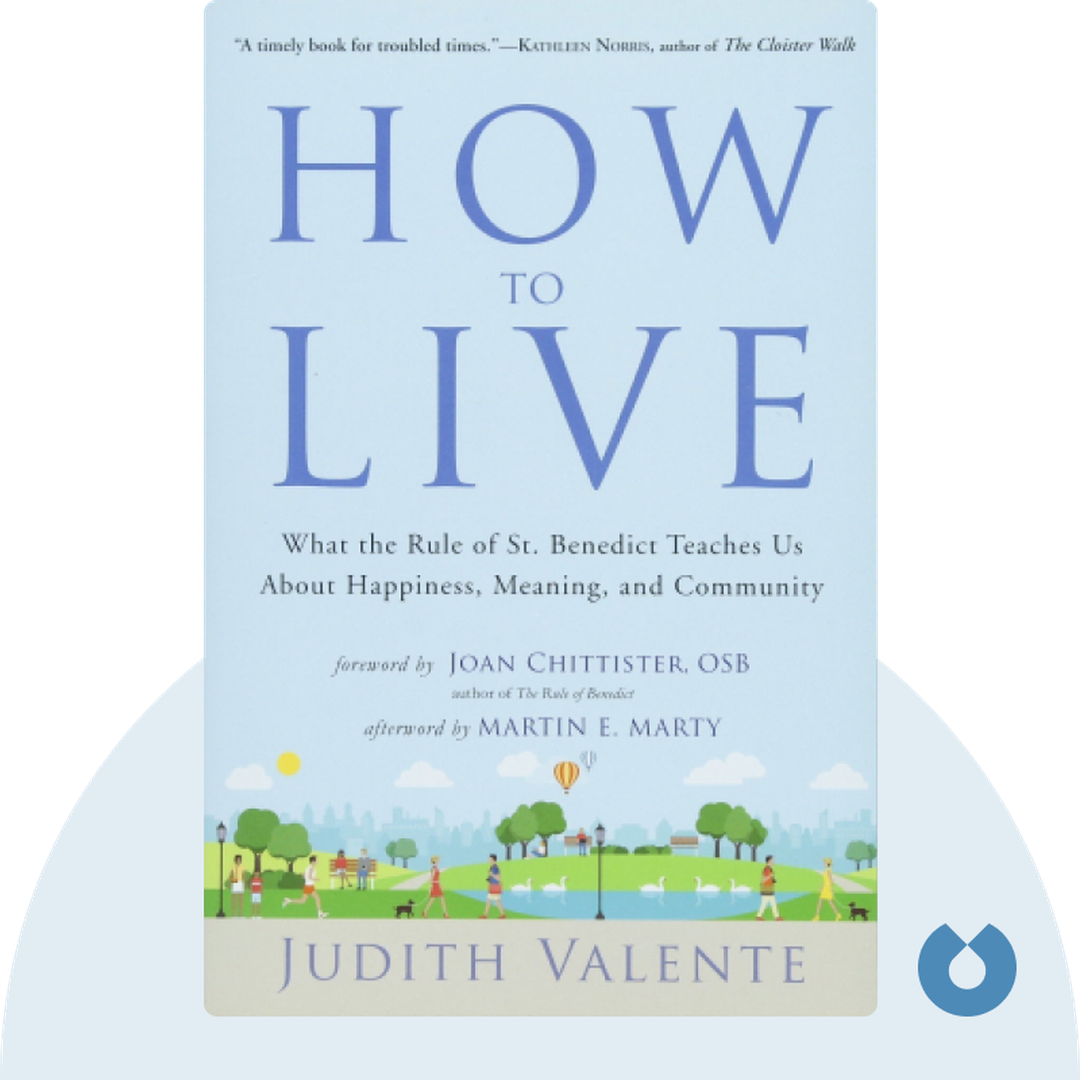
How to Live (2018) takes a thoughtful look at the teachings of St. Benedict and how the rules he applied to sixth-century monastic living can help us lead better lives today. From the benefits of cultivating silence to insights into how to be a better leader, find out how The Rule of St. Benedict can help you better navigate the pitfalls of modern life.
Who Should Listen to How to Live?
- Anyone eager to live more meaningfully
- People interested in monastic life
- Burned-out workers looking for balance
Books Similar to How to Live
Readers who enjoyed this also liked these titles.