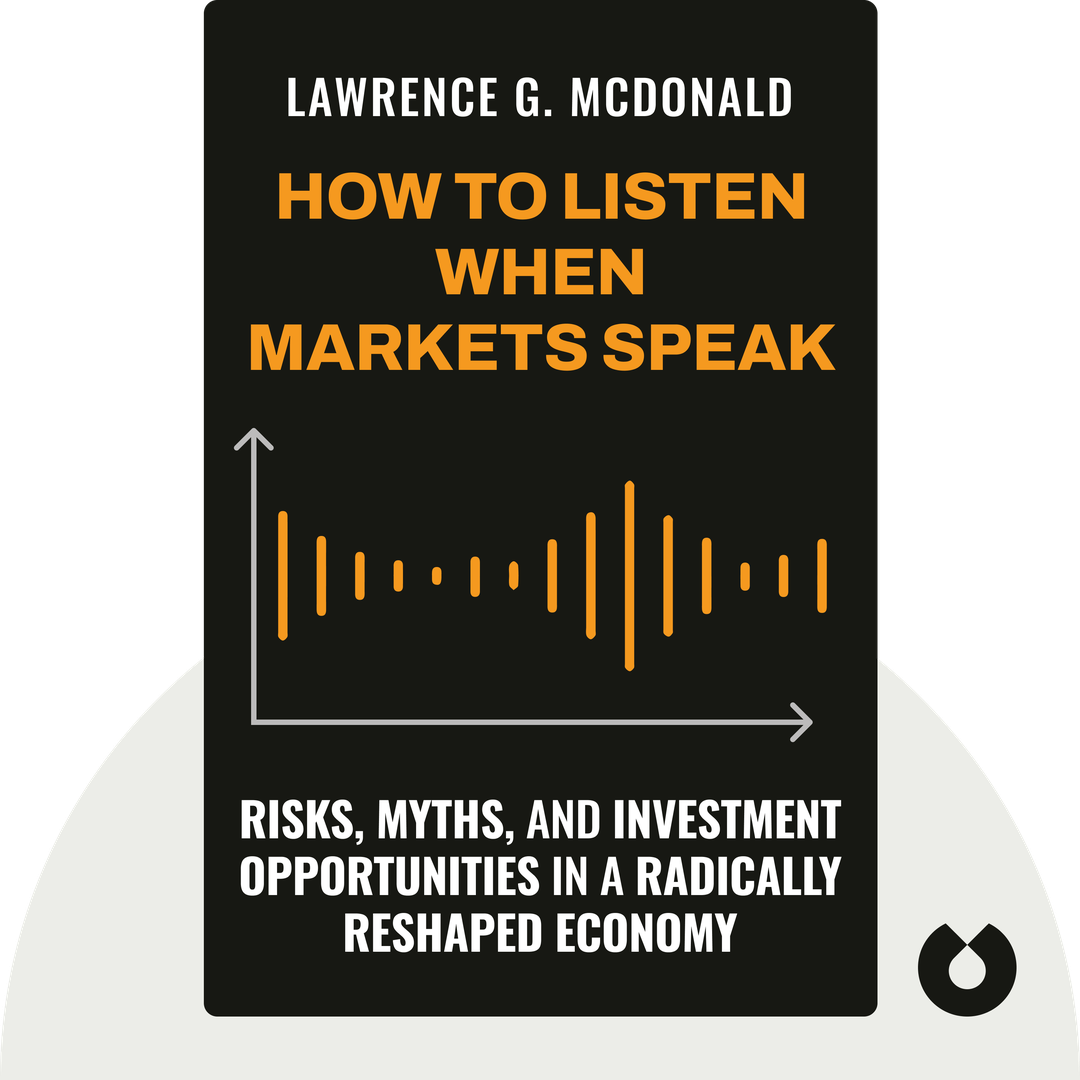
How to Listen When Markets Speak
Start ListeningDownload Try free on iPhoneScan to start in 5 seconds
Categories:
If You're Curious About These Questions...
You should listen to this audiobook
- Did you know that the most critical market signals are often hidden in plain sight, waiting for those who know how to truly 'listen' to the noise?
- Have you ever wondered why historical financial patterns repeat themselves, and how you can use these echoes to predict the next big market move?
- What if you could master the 'silent' indicators that professional traders use to stay ahead of economic shifts before they hit the headlines?
Listen to How to Listen When Markets Speak — Free Audiobook
Loading player...
Key Takeaways from How to Listen When Markets Speak
- Understand how the transition from a unipolar to a multipolar geopolitical landscape threatens decades of economic stability and requires a reevaluation of traditional investment strategies.
- Discover why continuous central bank interventions and bailouts create a dangerous cycle of moral hazard, inflating asset prices while setting the stage for long-term economic instability.
- Find out why discerning investors are increasingly shifting their focus away from speculative ventures and toward reliable, tangible hard assets to build economic resilience.
- Explore how historical cycles of boom, bust, and bailout—from the 1997 Asian financial crisis to the 2008 crash—demonstrate the severe risks of overvaluation and high leverage.
- Learn how artificially low interest rates and quantitative easing fundamentally alter market behaviors, using the dramatic rise and fall of the fracking industry as a vital cautionary tale.
Learning Tools
Reinforce what you learned from How to Listen When Markets Speak
Mind Map
How to Listen When Markets Speak
Geopolitics & Macroeconomics+
Central Bank Interventions+
Energy Market Dynamics+
Bubbles & Speculation+
Shift to Hard Assets+
Quiz — Test Your Understanding
Question 1 of 6
According to the text, what major economic trend followed the collapse of the Soviet Union and the transition to a unipolar world order?
Question 2 of 6
What is identified as a major long-term consequence of continuous central bank interventions and bailouts, such as those during the 1998 LTCM crisis and the 2008 financial crisis?
Question 3 of 6
How does the author suggest investors and policymakers approach the transition from fossil fuels to green energy?
Question 4 of 6
What historical and psychological comparison does the text make regarding the cryptocurrency boom?
Question 5 of 6
Why does the text suggest that traditional 60/40 stock and bond portfolio allocations are becoming less effective?
Question 6 of 6
According to the investment philosophy of Charlie Munger highlighted in the text, how should investors respond to market downturns?
How to Listen When Markets Speak — Full Chapter Overview
- 1Recommendation
- 2The End of the Cold War and Its Impact on Global Economics
- 3How Central Bank Interventions Shape Stability and Risk
- 4Energy Market Dynamics and the Shift from Fossil Fuels to Green Energy
- 5Financial Bubbles and Cryptocurrency Mania
- 6The Global Investment Shift Toward Hard Assets
- 7Final summary
How to Listen When Markets Speak Summary & Overview
How to Listen When Markets Speak (2024) explores strategies for interpreting the complex signals of financial markets to make informed investment decisions. It offers insights into the correlation between historical market events and current market behaviors, providing readers with the tools to predict and respond to market trends effectively. The guidance within emphasizes the importance of listening to and understanding the nuances of market data and economic indicators.
Who Should Listen to How to Listen When Markets Speak?
- Financial analysts seeking market behavior insights
- Investors interested in risk management strategies
- Business students studying financial markets
Books Similar to How to Listen When Markets Speak
Readers who enjoyed this also liked these titles.