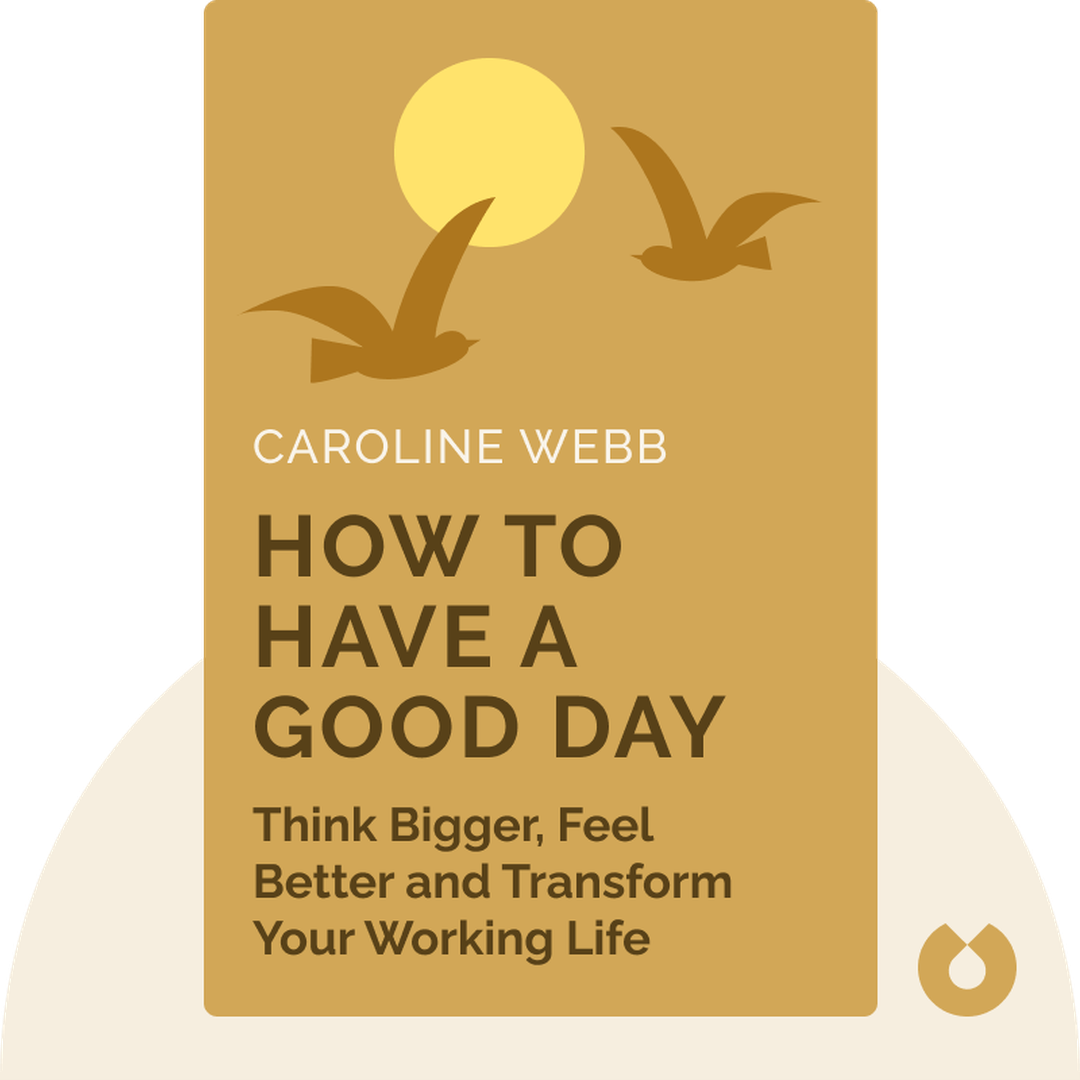
How To Have A Good Day
Start ListeningDownload Try free on iPhoneScan to start in 5 seconds
Categories:
If You're Curious About These Questions...
You should listen to this audiobook
- Did you know that you can 'prime' your brain to automatically filter out distractions and focus only on the tasks that actually move the needle?
- What if you could use simple insights from behavioral science to stay in 'discovery mode' even when faced with difficult colleagues or high-stress deadlines?
- What’s the secret to hacking your brain’s energy levels so you can finish your workday feeling as energized as when you started?
Listen to How To Have A Good Day — Free Audiobook
Loading player...
Key Takeaways from How To Have A Good Day
- Understand the difference between defensive and discovery modes, and learn how a few minutes of mental groundwork can train your brain to proactively seek opportunities.
- Master an effective daily system by setting clear aims, adjusting your attitude, and using a 'When-Then Plan' to anticipate and conquer unexpected obstacles.
- Discover why multitasking reduces your efficiency, and learn how to optimize your workflow by batching similar tasks and taking strategic mental breaks every 90 minutes.
- Learn how to transform challenging workplace interactions into cooperative collaborations by identifying common ground, practicing active listening, and shifting from instructing to coaching.
- Unlock your own creativity and overcome mental roadblocks by utilizing strategic questioning and introspection to consistently discover new perspectives.
Learning Tools
Reinforce what you learned from How To Have A Good Day
Mind Map
How To Have A Good Day
Intentions & Goals+
Overload & Focus+
Workplace Relationships+
Decisions & Problem-Solving+
Effective Presentations+
Confidence & Energy+
Quiz — Test Your Understanding
Question 1 of 7
How does the book suggest framing your daily goals to improve performance?
Question 2 of 7
According to research by psychologist K. Anders Ericsson, what scheduling habit do top performers like world-class violinists and athletes share?
Question 3 of 7
What is the recommended approach for handling tension with a coworker or client?
Question 4 of 7
When breaking down a complex problem using an 'issue tree', what does the 'trunk' of the tree represent?
Question 5 of 7
Based on an experiment at Stanford University, how can you increase audience recall during a presentation?
Question 6 of 7
How does the book suggest you handle the anxiety of a stressful upcoming event, like a meeting with a dissatisfied customer?
Question 7 of 7
What actionable advice is given regarding email to maintain high productivity throughout the day?
How To Have A Good Day — Full Chapter Overview
- 1Recommendation
- 2For a more productive day, begin by clearly setting your intentions and goals.
- 3Handle overload, overcome procrastination, and stay focused by planning ahead and scheduling enough breaks.
- 4Create better working relationships by building rapport with people you meet and addressing tensions directly.
- 5Make decisions systematically with thinking routines and by breaking complex problems into an issue tree.
- 6Get your message across by engaging your audience and making your presentation memorable.
- 7Boost your confidence by recalling past problems you have overcome, and raise your energy with positive thoughts.
- 8Final summary
How To Have A Good Day Summary & Overview
How to Have a Good Day (2016) explains how you can make the most of your working day, with advice based on recent findings in the fields of psychology, economics and neuroscience. These blinks will teach you how to navigate the challenges of the modern workplace like a pro and boost your energy level during nerve-racking or tiring days.
Who Should Listen to How To Have A Good Day?
- Professionals who want to be more productive and efficient
- Procrastinators
- Anyone who wants to have a greater impact at his or her workplace
Books Similar to How To Have A Good Day
Readers who enjoyed this also liked these titles.