If You're Curious About These Questions...
You should listen to this audiobook
- Have you ever wondered why the very drive that makes you successful often leaves you feeling like you’re never quite good enough?
- What if you could silence your inner critic and finally accept your successes without the constant fear of being exposed as an imposter?
- Are you curious about the seven specific mindset changes that allow you to maintain high standards of excellence without falling into the trap of perfectionism?
Listen to How to Be Enough — Cinematic Audio Edition
Loading player...
Key Takeaways from How to Be Enough
- Understand why perfectionism is rarely about a healthy drive for excellence, but rather a protective coping mechanism rooted in never feeling good enough.
- Discover how your harsh inner critic uses impossible standards to shield you from outside judgment, and learn to transform that voice into a kinder, more supportive guide.
- Learn why practicing self-compassion actually leads to better results, higher-quality work, and reduced stress compared to the draining cycle of relentless self-criticism.
- Realize how projecting your perfectionism onto loved ones and colleagues pushes them away, and discover how pausing to choose kindness fosters genuine connection.
- Master the shift from living by a rigid rulebook of 'shoulds' and 'musts' to making choices guided by freely chosen personal values that bring true meaning to your life.
Learning Tools
Reinforce what you learned from How to Be Enough
Mind Map
How to Be Enough
The Perfectionist Paradox+
Calming the Critic+
From Rules to Values+
From Paralysis to Progress+
Stop Comparing & Be You+
Quiz — Test Your Understanding
Question 1 of 6
According to the text, what is the true underlying driver of perfectionism?
Question 2 of 6
Why do perfectionists often maintain a harsh inner critic and impossibly high expectations?
Question 3 of 6
How does the book distinguish between living by 'rules' versus living by 'values'?
Question 4 of 6
According to the author, what is the root cause of procrastination for a perfectionist?
Question 5 of 6
What is one practical strategy mentioned in the text for breaking the cycle of perfectionist paralysis and procrastination?
Question 6 of 6
What does the author suggest as a strategy to break free from the habit of constantly comparing yourself to others?
How to Be Enough — Full Chapter Overview
- 1Recommendation
- 2The paradox of perfectionism
- 3Quieting the inner and outer critic
- 4Moving from rules to values
- 5Shifting from paralysis to progress
- 6Stop comparing and be yourself
- 7Final summary
How to Be Enough Summary & Overview
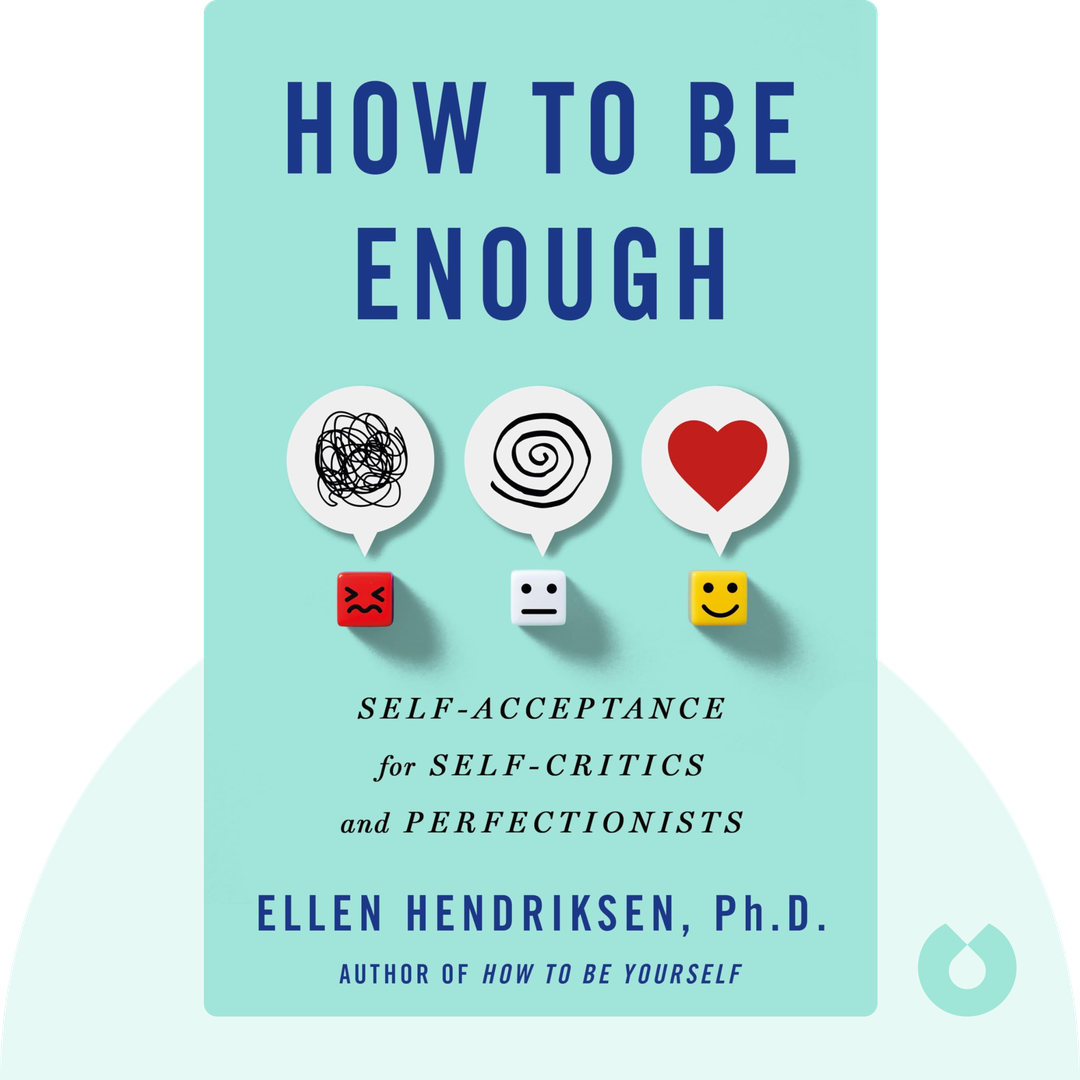
How to Be Enough (2024) offers a transformative approach to overcoming perfectionism by shifting from harsh self-judgment to genuine self-acceptance. Through seven key mindset changes, from embracing self-compassion to practicing emotional authenticity, the book provides practical strategies for breaking free from the cycle of never feeling good enough while maintaining healthy standards of excellence.
Who Should Listen to How to Be Enough?
- Those who have difficulty accepting compliments or celebrating their successes
- High-achieving professionals who struggle with imposter syndrome
- People-pleasers who have difficulty setting boundaries or saying no
Books Similar to How to Be Enough
Readers who enjoyed this also liked these titles.