If You're Curious About These Questions...
You should listen to this audiobook
- Have you ever wondered why society has a 'checklist' for what it means to be Black, and what happens when you decide to ignore it?
- What if you could transform the anxiety of navigating racial differences into a hilarious and eye-opening journey of self-discovery?
- Are you curious about the secret to staying true to yourself while moving through elite spaces that were never designed for you?
Listen to How To Be Black — Free Audiobook
Loading player...
Key Takeaways from How To Be Black
- Understand how growing up as a token black child in a predominantly white environment means navigating complex prejudices from both white and black communities.
- Discover the unique challenges of carrying an African name in America, from enduring mispronunciations by teachers to facing cultural gatekeeping from African immigrants.
- Learn how the author's mother shattered racial stereotypes by embracing an outdoorsy, health-food lifestyle while enforcing a rigorous approach to his cultural education.
- Realize the awkward pressure of being the only black student in an affluent private school, where you are often unfairly expected to act as the spokesperson for black history.
- Explore how grassroots community groups help African-American youth balance their dual heritage by instilling discipline, practical skills, and cultural pride.
Learning Tools
Reinforce what you learned from How To Be Black
Mind Map
How To Be Black
Identity & Stereotypes+
Navigating White Spaces+
Preserving Cultural Heritage+
Interpersonal Rules+
College & Workplace+
Quiz — Test Your Understanding
Question 1 of 9
Why did some Nigerian immigrants react negatively to Baratunde's name?
Question 2 of 9
How did Baratunde's mother, Arnita, defy common stereotypes of a black mother in the 1970s?
Question 3 of 9
What uncomfortable expectation did Baratunde face from his classmates at his private school, Sidwell Friends?
Question 4 of 9
What was the primary purpose of the weekend group 'Ankobia' that Baratunde attended?
Question 5 of 9
How did Baratunde explain the necessity of black students sitting together at lunch to his white classmates?
Question 6 of 9
Why does Baratunde advise against white people touching a black person's hair without permission?
Question 7 of 9
How did Baratunde view his experience working on the 'Dorm Crew' at Harvard?
Question 8 of 9
According to the text, why might a black coworker unexpectedly act as a 'nemesis' to a newly hired black employee like Baratunde?
Question 9 of 9
What is Baratunde's suggested approach when white coworkers ask him to provide the 'black perspective' on political figures like Barack Obama?
How To Be Black — Full Chapter Overview
- 1Recommendation
- 2Growing up as a black child in 1970s America was even harder with an African name.
- 3Baratunde’s mother challenged many common stereotypes about black women.
- 4Baratunde’s first experiences at private school were filled with awkward moments.
- 5Black people can take equal pride in being American and in their African heritage.
- 6When black people gather together, white people shouldn’t see it as a threat.
- 7Black-white friendships can be wonderful, but don’t ask to touch a black person’s hair.
- 8Boston could be hostile to black people, but Harvard University provided a more accepting environment.
- 9The workplace brings its own challenges when navigating black and white coworkers.
- 10Final summary
How To Be Black Summary & Overview
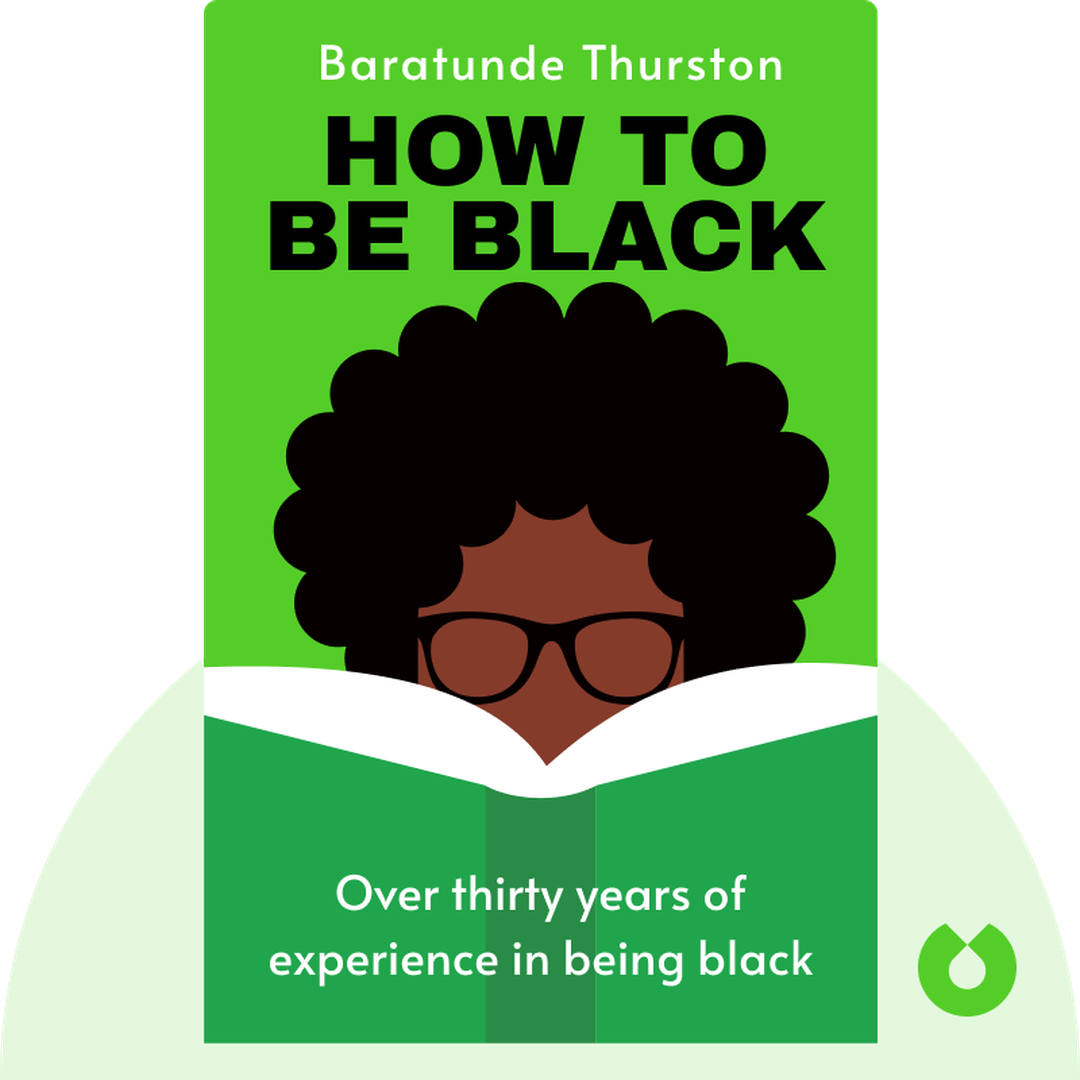
How To Be Black (2012) is the funny, revealing and insightful autobiography of Baratunde Thurston. Thurston attended private schools and Harvard University, and the experience of being black in a predominantly white milieu taught him a great deal about what white and black people have come to expect from one another. These blinks tackle a difficult subject with humor and empathy.
Who Should Listen to How To Be Black?
- Black people who get nervous around white people
- White people who get nervous around black people
- Curious readers interested in a fresh perspective
Books Similar to How To Be Black
Readers who enjoyed this also liked these titles.