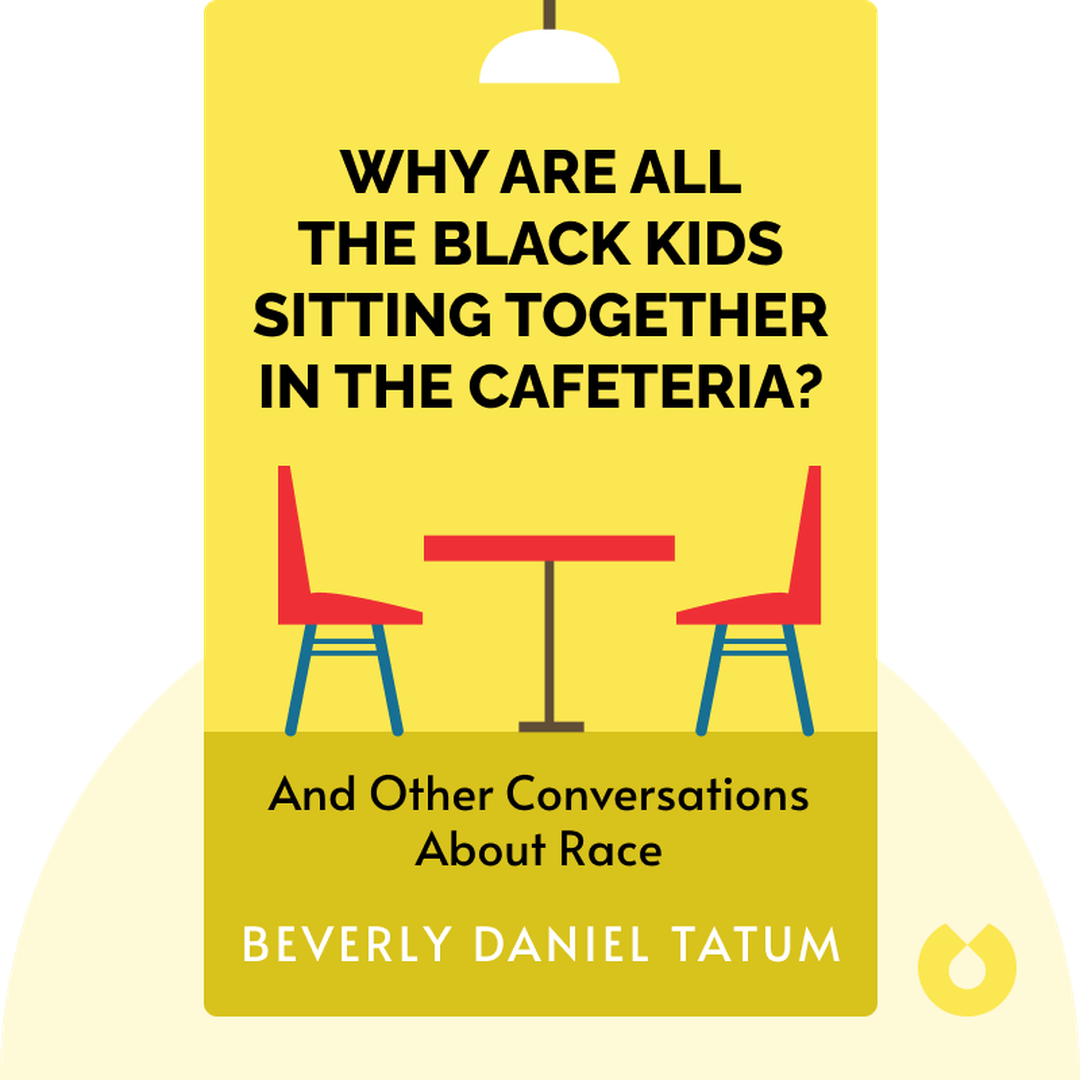
Why Are All the Black Kids Sitting Together in the Cafeteria?
Start ListeningDownload Try free on iPhoneScan to start in 5 seconds
Categories:
If You're Curious About These Questions...
You should listen to this audiobook
- Have you ever wondered why students of color often cluster together in schools, and what this 'self-segregation' actually reveals about their psychological development?
- Did you know that your own racial identity—regardless of your background—follows a specific developmental process that shapes how you perceive and navigate the world?
- What if you could master the art of talking openly about race to bridge social divides and foster a more equitable environment for the next generation?
Listen to Why Are All the Black Kids Sitting Together in the Cafeteria? — Free Audiobook
Loading player...
Key Takeaways from Why Are All the Black Kids Sitting Together in the Cafeteria?
- Understand why racial inequality continues to afflict nearly every aspect of American society, from vast income divides to disproportionate occupational representation.
- Discover the hidden societal privileges that white Americans experience daily, and learn why many remain oblivious to the ongoing reality of systemic racism.
- Learn how 'de facto' segregation actively persists in modern US schools and neighborhoods, limiting cross-racial interactions despite legal advancements.
- Realize how living in racially segregated communities creates an empathy gap that prevents Americans from understanding each other's unique societal struggles.
- Recognize how entertainment media and cultural stereotypes warp our assumptions about other racial groups, filling the void left by a lack of real-world relationships.
Learning Tools
Reinforce what you learned from Why Are All the Black Kids Sitting Together in the Cafeteria?
Mind Map
Why Are All the Black Kids Sitting Together in the Cafeteria?
Persistence of Racism+
Ongoing Segregation+
Power of Cultural Stereotypes+
Black Racial Identity+
White Identity & Allyship+
Quiz — Test Your Understanding
Question 1 of 8
According to the text, why are many white Americans often oblivious to the persistence of racial inequality?
Question 2 of 8
What does the term 'de facto segregation' refer to in the context of US schools and neighborhoods?
Question 3 of 8
In the study involving preschoolers drawing pictures of Native Americans, what was the primary source of the children's stereotypical imagery?
Question 4 of 8
Why do Black youths typically begin to think about themselves in terms of race during adolescence?
Question 5 of 8
According to the text, what is a primary reason Black students congregate together in the school cafeteria?
Question 6 of 8
What characterizes the 'immersion experience' described by psychologist William Cross?
Question 7 of 8
When asked about their ethnic background, why do many white people in the author's workshops hesitate or describe themselves as 'just normal'?
Question 8 of 8
According to the actionable advice in the text, what is the proper role of a white ally in the fight against racism?
Why Are All the Black Kids Sitting Together in the Cafeteria? — Full Chapter Overview
- 1Recommendation
- 2Racism and racial inequity persist throughout the United States.
- 3Racial segregation continues to pose problems in US schools and across American society at large today.
- 4Our perceptions of race are molded by cultural stereotypes.
- 5Black children grasp the importance of their racial identity during adolescence.
- 6Black students gather together to share their experiences and hardships with one another.
- 7Parents and educators can help young Black people build their sense of Black identity.
- 8White people must develop a racial identity that helps them better recognize and become fully aware of their racial privileges.
- 9Many white people are afraid to discuss racism, yet open dialogue remains an essential part of overcoming this pervasive problem.
Why Are All the Black Kids Sitting Together in the Cafeteria? Summary & Overview
Why Are All the Black Kids Sitting Together in the Cafeteria? (1997) explores the reality of race in the American public education system and sheds light on racial-identity development in both Black and white people. Updated with a new prologue in 2017, it also explains how talking openly about racism is essential for cutting across racial and ethnic divides.
Who Should Listen to Why Are All the Black Kids Sitting Together in the Cafeteria??
- People seeking to understand the dynamics of race in America
- Parents and educators who want to teach children about race
- Those interested in social justice, equal opportunity, and democracy
Books Similar to Why Are All the Black Kids Sitting Together in the Cafeteria?
Readers who enjoyed this also liked these titles.