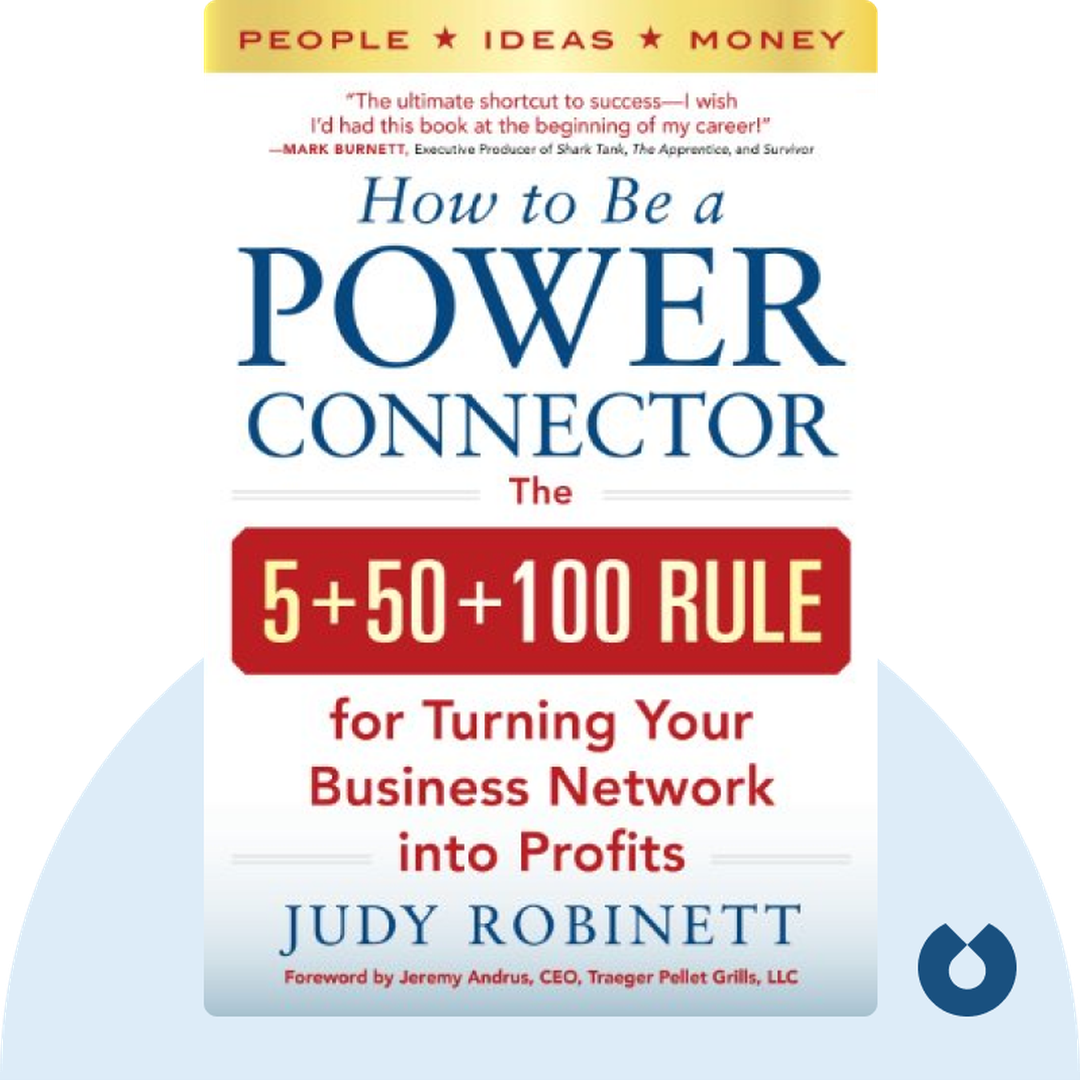
How to Be a Power Connector
Start ListeningDownload Try free on iPhoneScan to start in 5 seconds
Categories:
If You're Curious About These Questions...
You should listen to this audiobook
- What if you could manage your most important professional relationships using a simple 5+50+100 rule to ensure you never miss a life-changing opportunity?
- Have you ever wondered why some people seem to effortlessly connect with high-level influencers while others struggle to get a foot in the door?
- What’s the secret to building a 'power grid' of contacts that provides consistent value, even if you’re not a natural-born extrovert?
Listen to How to Be a Power Connector — Free Audiobook
Loading player...
Key Takeaways from How to Be a Power Connector
- Discover how to transition from a standard networker to a true power connector who maximizes opportunities for everyone involved.
- Learn how to organize and prioritize your strategic relationships using the 5+50+100 Rule to effectively manage your inner circle, key associates, and vital acquaintances.
- Understand why you should actively connect with people who disagree with you to build a wide, deep, and robust network that drives innovation.
- Find out why your professional network functions like a street gang, shaping your social status, identity, and access to crucial private information.
- Master the art of identifying and entering the right power ecosystems to connect with the exact resources and influencers needed to achieve your specific professional goals.
Learning Tools
Reinforce what you learned from How to Be a Power Connector
Mind Map
How to Be a Power Connector
Core Philosophy+
Network Organization+
Network Attributes+
Ecosystems+
The 4 Phases System+
Digital Networking+
Strategies for Women+
Actionable Advice+
Quiz — Test Your Understanding
Question 1 of 9
What distinguishes a 'power connector' from a traditional networker?
Question 2 of 9
According to the 5+50+100 Rule, who makes up your 'Key 50'?
Question 3 of 9
Why does the author suggest that a conservative Catholic should network with a Buddhist?
Question 4 of 9
In the context of building a network, what does having a 'deep' network mean?
Question 5 of 9
What is the Marriott 15/5 rule used for during the targeting phase of networking?
Question 6 of 9
After meeting a valuable new contact, what is the author's recommended timeframe for reconnecting?
Question 7 of 9
What is a 'power triangle' in the context of power connecting?
Question 8 of 9
How does the author recommend using Twitter for networking?
Question 9 of 9
What does Mary Sue Coleman's term 'relentlessly pleasant' mean for female power connectors?
How to Be a Power Connector — Full Chapter Overview
- 1Recommendation
- 2Strategic relationships are essential to your personal success.
- 3Be smart about identifying who matters most in your network.
- 4Build your network with both diversity and depth.
- 5Find the right environment where your network can thrive.
- 6Preparation and targeting are the first two steps in power connecting.
- 7Following up and connecting your contacts are the final steps to becoming a power connector.
- 8Power connectors use LinkedIn and other social media to their advantage.
- 9Strategic connecting, speaking up, and supporting other women benefit female power connectors.
- 10Final summary
How to Be a Power Connector Summary & Overview
How to Be a Power Connector (2014) offers a hands-on introduction to networking in the modern business world. By laying out the theory behind strong networking and providing practical tips for turning theory into practice, this book sets you on your way to achieving your career goals.
Who Should Listen to How to Be a Power Connector?
- Anyone who wants to build a better network
- People who want to climb the career ladder
- Those wanting to improve their business relationships
Books Similar to How to Be a Power Connector
Readers who enjoyed this also liked these titles.