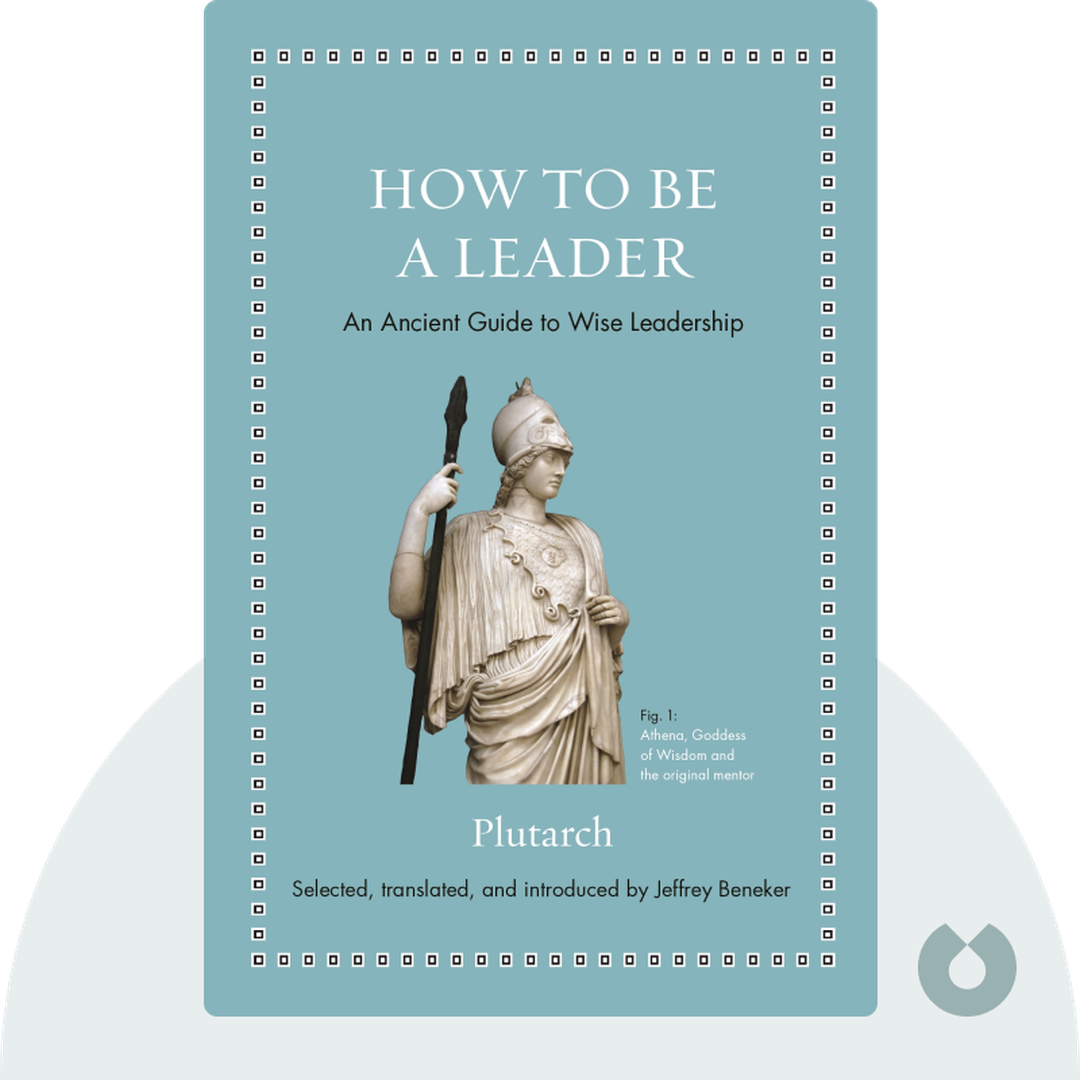
If You're Curious About These Questions...
You should listen to this audiobook
- What if the most effective strategies for modern leadership weren't found in a contemporary boardroom, but in the political arenas of ancient Greece and Rome?
- Have you ever wondered whether a seasoned leader should retire gracefully or if their most influential years are actually yet to come?
- What’s the secret to balancing personal ambition with the public good, according to the philosopher who chronicled the lives of history's greatest icons?
Listen to How to Be a Leader — Free Audiobook
Loading player...
Key Takeaways from How to Be a Leader
- Understand why true leadership must be driven by a sense of duty and honor rather than a reckless desire for fame and public acclaim.
- Discover how to navigate intense public scrutiny by maintaining an impeccable character and prioritizing dignified behavior over extravagance.
- Learn why you must govern yourself with wisdom and reason before attempting to lead others, ensuring your decisions promote the general good.
- Find out why sharing power and ruling benevolently creates a much stronger, more stable foundation for leadership than hoarding authority out of self-interest.
- Master the art of eloquent communication to persuade and win people over, recognizing that effective leadership relies on inspiration rather than blind obedience.
Learning Tools
Reinforce what you learned from How to Be a Leader
Mind Map
How to Be a Leader
Motivations for Leading+
Public Character+
Guiding Principles+
Communication Skills+
Age and Leadership+
Lifelong Engagement+
Professional Conduct+
Quiz — Test Your Understanding
Question 1 of 7
Why does Plutarch argue that leaders should not be motivated by a desire for glory and public acclaim?
Question 2 of 7
According to the text, what is the only sure-fire way for a leader to avoid public criticism?
Question 3 of 7
What leadership lesson is illustrated by the contrast between Aristodemus and Theopompus?
Question 4 of 7
Why was the Athenian politician Nicias forced to lead a disastrous military campaign in Sicily despite opposing it?
Question 5 of 7
How does Plutarch apply Aesop’s fable of the fox and the ticks to political leadership?
Question 6 of 7
How did Plutarch view the concept of retirement for older leaders?
Question 7 of 7
What mistake did the Roman politician Scipio Aemilianus make that damaged his reputation for courtesy and fairness?
How to Be a Leader — Full Chapter Overview
- 1Recommendation
- 2You should seek leadership for the right reasons.
- 3A leader should have impeccable character.
- 4Leaders should be guided by reason and wisdom.
- 5Leaders should speak eloquently and persuasively.
- 6Older leaders have some unique strengths.
- 7The rewards of work should keep older leaders engaged.
- 8Final summary
How to Be a Leader Summary & Overview
How to Be a Leader is an ancient guide to effective leadership. Blending pragmatic advice with historical anecdotes and political history, it lays out a timeless vision of the qualities all great leaders have in common.
Who Should Listen to How to Be a Leader?
- Aspiring politicians and the civil leaders of tomorrow
- History nerds interested in the ancient world
- Aging leaders wondering whether to throw in the towel
Books Similar to How to Be a Leader
Readers who enjoyed this also liked these titles.