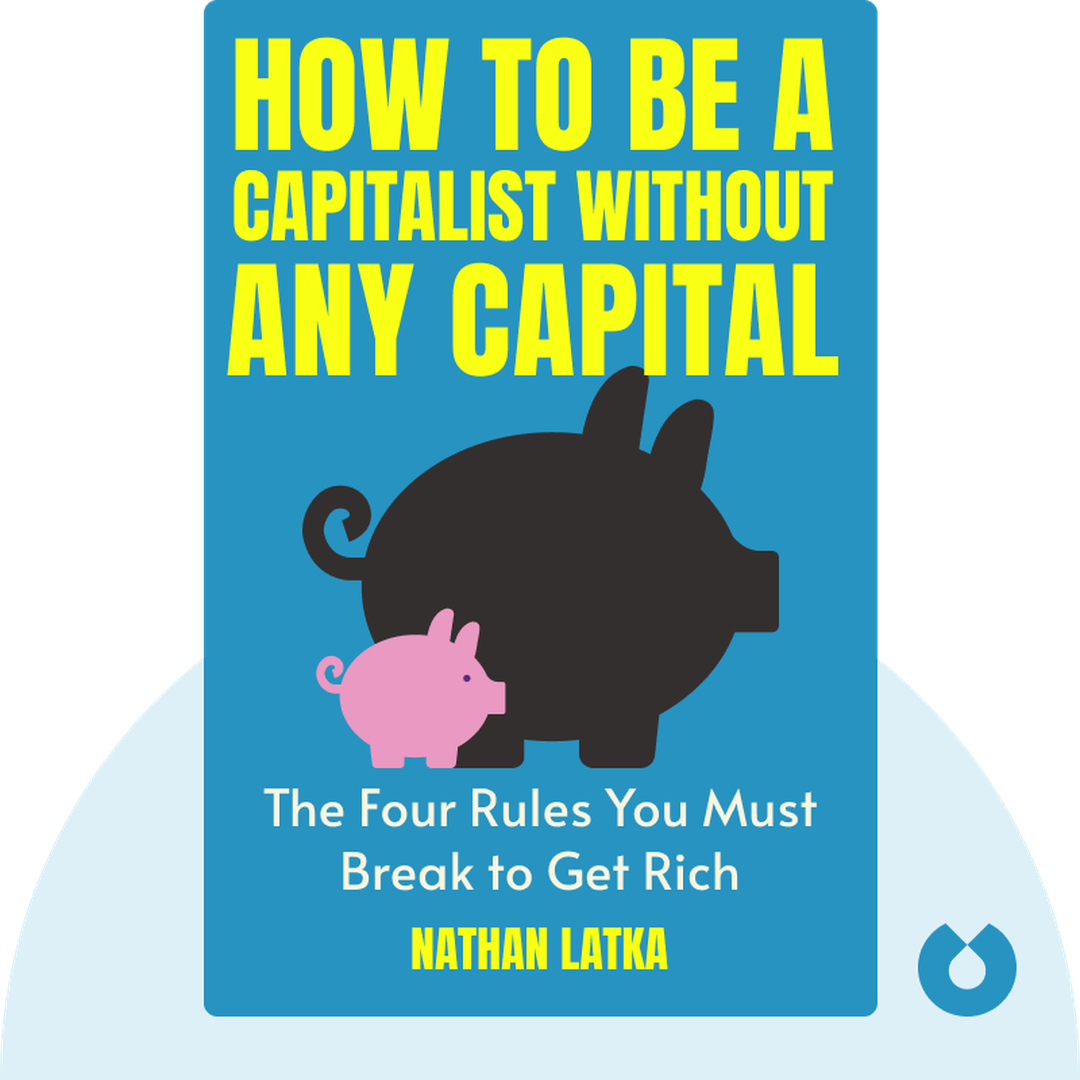
How to Be a Capitalist Without Any Capital
Start ListeningDownload Try free on iPhoneScan to start in 5 seconds
Categories:
If You're Curious About These Questions...
You should listen to this audiobook
- Did you know that you can build a multi-million dollar empire without an original idea or a single cent of your own money to start?
- Have you ever wondered why some entrepreneurs make more money while working fewer hours simply by deliberately breaking 'established' business rules?
- What if you could bypass the traditional path to wealth and use creative 'hacks' to acquire assets that pay you every single month?
Listen to How to Be a Capitalist Without Any Capital — Cinematic Audio Edition
Loading player...
Key Takeaways from How to Be a Capitalist Without Any Capital
- Discover why sticking to a single career path leaves you vulnerable, and learn how to cultivate multiple revenue streams to multiply your income and reduce financial risk.
- Learn why waiting for a brilliantly original idea is a trap, and find out how to successfully copy and tweak competitors' concepts to dominate adjacent markets.
- Understand why building scalable systems is far more important than setting individual goals, and how automating your work output can massively boost your bottom line.
- Master the art of outsourcing routine work by documenting step-by-step procedures, allowing you to easily test and delegate tasks so you can focus on growth.
- Find out how to cross-pollinate your business ventures to maximize profits, just like using a software tool's audience to command $160,000 advertising slots on a podcast.
Learning Tools
Reinforce what you learned from How to Be a Capitalist Without Any Capital
Mind Map
How to Be a Capitalist Without Any Capital
Defy Conventional Wisdom+
Multiply Income Streams+
Copy and Tweak Competitors+
Build Systems & Outsource+
Sell Pickaxes to Goldminers+
Monetize Existing Assets+
Hack Luxury Travel+
Acquire Digital Companies+
Scale and Price Strategically+
Street-Smart Investing+
Quiz — Test Your Understanding
Question 1 of 8
According to the author, why is it beneficial to avoid specializing in one narrow career field?
Question 2 of 8
What is the author's perspective on copying competitors?
Question 3 of 8
Why does the author argue that systems are more important than individual goals?
Question 4 of 8
What does the strategy of 'selling pickaxes to goldminers' mean in a modern business context?
Question 5 of 8
When you are low on cash, what alternative to scrimping and saving does the author recommend?
Question 6 of 8
How does the author suggest affording a luxurious travel lifestyle without spending a fortune?
Question 7 of 8
When acquiring a company, why does the author recommend buying a digital firm that acts as a distribution channel?
Question 8 of 8
What is the primary benefit of intentionally limiting your number of customers, according to the book?
How to Be a Capitalist Without Any Capital — Full Chapter Overview
- 1Recommendation
- 2Increasing your income streams improves your chances of success.
- 3Successful companies copy their competitors, and you should do the same.
- 4Systems matter more than individual goals, so outsource routine tasks.
- 5Backing a growing industry is a smart way to get rich.
- 6Getting the most from your assets beats scrimping and saving.
- 7Specialized services can help you cut travel costs.
- 8When buying a company, choose digital and seek a firm that works as a distribution channel.
- 9Grow your income by limiting your customers and asking one simple question.
- 10Final summary
How to Be a Capitalist Without Any Capital Summary & Overview
How to Be a Capitalist Without Any Capital (2019) unlocks the secrets of the capitalist system to show budding entrepreneurs how to make big bucks without burning the candle at both ends. Packed with creative hacks and actionable advice, self-made multimillionaire Nathan Latka demolishes the myth that you need a ton of money or a dazzlingly original idea to get rich. So what do you do need? Simple: a willingness to break established rules and chart your own course.
Who Should Listen to How to Be a Capitalist Without Any Capital?
- Entrepreneurs and self-starters
- Financial and business experts
- Anyone looking for a new career
Books Similar to How to Be a Capitalist Without Any Capital
Readers who enjoyed this also liked these titles.