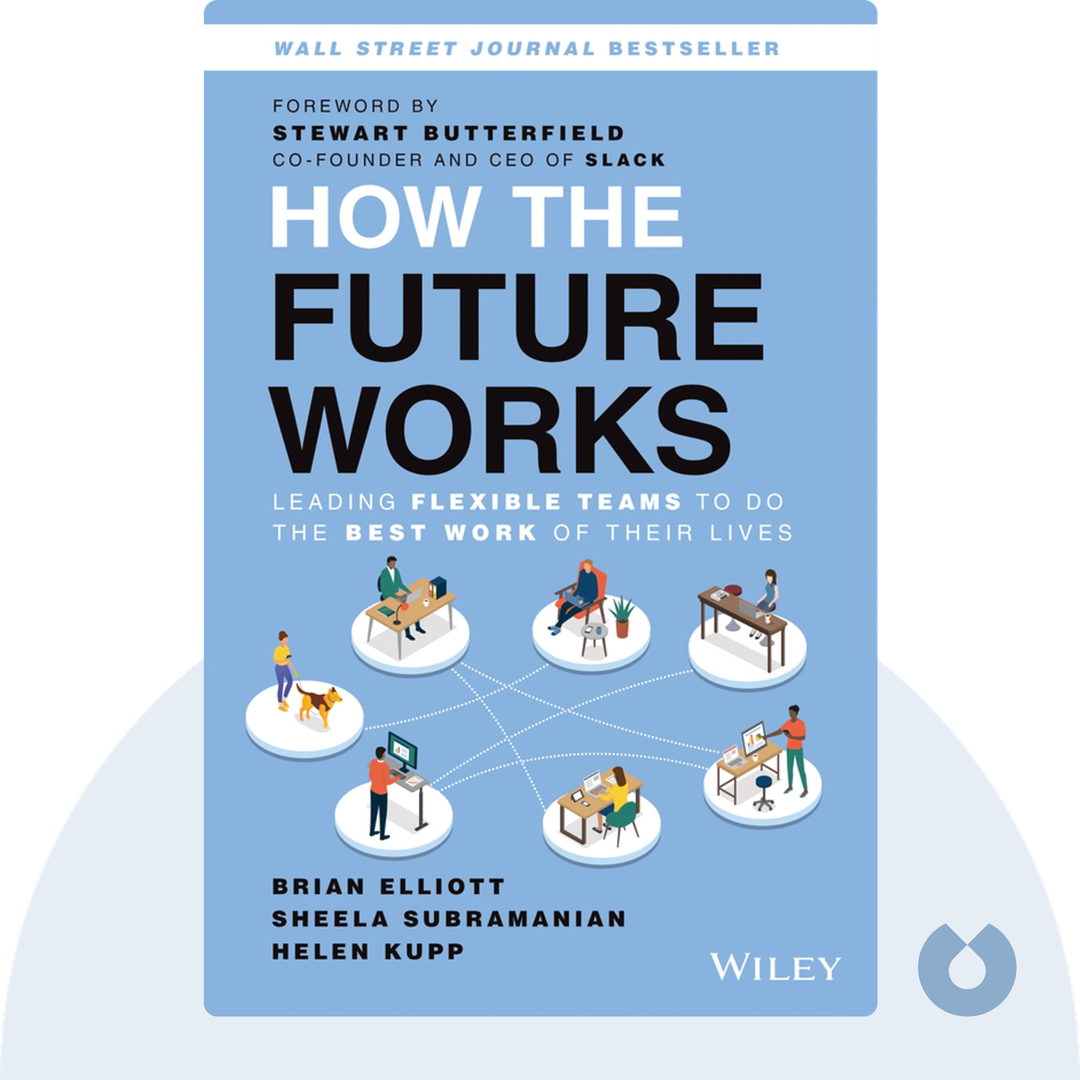
If You're Curious About These Questions...
You should listen to this audiobook
- What’s the secret to building a high-performing flexible work culture that actually attracts top talent instead of driving them away?
- Did you know that the 'old way' of working might be the single biggest risk to your company’s future growth?
- What if you could implement a step-by-step blueprint that turns flexible work from a management headache into your organization’s greatest strength?
Listen to How the Future Works — Free Audiobook
Loading player...
Key Takeaways from How the Future Works
- Learn why top-down, rigid remote work rules backfire, and discover how to establish overarching, mindset-driven principles tailored to your organization's specific goals.
- Understand how to set behavioral guardrails that protect remote employees' career progression and prevent offsite workers from feeling like second-class citizens.
- Discover the importance of executive role-modeling to enforce flexible policies, ensuring leaders adhere to the same remote-work expectations to clearly signal the new norm.
- Find out how to design Team-Level Agreements (TLAs) that establish core collaboration hours, providing both structure and flexibility tailored to specific departmental needs.
- Master the transition to flexible work by creating a diverse task force dedicated to experimenting with new practices and normalizing continuous learning across your organization.
Learning Tools
Reinforce what you learned from How the Future Works
Mind Map
How the Future Works
Core Premise+
Step 1: Core Principles+
Step 2: Guardrails & Expectations+
Step 3: Team-Level Agreements (TLAs)+
Step 4: Continuous Learning+
Step 5: Digital Connection+
Step 6: Manager Evolution+
Step 7: Evaluating Success+
Ultimate Benefits+
Quiz — Test Your Understanding
Question 1 of 8
Why did Tim Cook's 2021 flexible work policy at Apple face swift backlash from employees?
Question 2 of 8
What is the primary purpose of establishing 'guardrails' in a flexible work model?
Question 3 of 8
Why do the authors argue against implementing a 'blanket policy' for flexible work across an entire organization?
Question 4 of 8
How should teams structure their workday to balance flexibility with collaboration while preventing burnout?
Question 5 of 8
To successfully navigate the transition to flexible work, the authors recommend creating a task force. What is the primary role of this group?
Question 6 of 8
What did Slack’s Future Forum research reveal about employee connection during the pandemic?
Question 7 of 8
According to the book, how must the role of a manager shift in a flexible work environment?
Question 8 of 8
How should organizations evaluate employee success in a flexible work environment?
How the Future Works — Full Chapter Overview
- 1Recommendation
- 2Step 1: Define the principles that guide your flexible work strategy
- 3Step 2: Set guardrails to clarify behavioral expectations
- 4Step 3: Have each team create a work practices plan
- 5Step 4: Make continuous learning the norm
- 6Step 5: Enable meaningful digital connection
- 7Step 6: Upskill managers for the new workplace
- 8Step 7: Rethink how you measure success
- 9Final Summary
How the Future Works Summary & Overview
How the Future Works (2022) provides a blueprint that company leaders can use to implement flexible work policies. It offers a step-by-step guide detailing how to manage this transition effectively so that organizations can benefit from this new way of working.
Who Should Listen to How the Future Works?
- Leaders wanting to make flexible work strategies the norm
- Executives who are skeptical about flexible working models
- Managers who want their teams to transition successfully to flexible work arrangements
Books Similar to How the Future Works
Readers who enjoyed this also liked these titles.