If You're Curious About These Questions...
You should listen to this audiobook
- What's the secret to achieving sustainable weight loss without restrictive dieting?
- Are you curious about why so many popular diets fail to deliver long-term results?
- What if you could unlock the power of a plant-based diet to transform your health and wellbeing?
Listen to How Not to Diet — Free Audiobook
Loading player...
Key Takeaways from How Not to Diet
- Learn how to accurately assess your health by understanding the clinical difference between being overweight and obese using the Body Mass Index (BMI).
- Discover why the food industry's shift in the 1970s toward highly processed, calorie-dense foods is the true root cause of the modern obesity epidemic.
- Find out how plant-based fiber acts as a natural appetite suppressant and gut-health booster, and why it is a critical missing ingredient in most modern diets.
- Master the strategy of eating water-rich vegetables and fruits to naturally add bulk to your meals, keeping you full and satisfied without consuming excess calories.
- Understand the battle between your body's homeostatic and hedonic appetite systems, and see how highly palatable junk foods hijack your biology to trigger overeating.
Learning Tools
Reinforce what you learned from How Not to Diet
Mind Map
How Not to Diet
The Obesity Epidemic+
Diet Composition+
Behavioral Tweaks+
Quiz — Test Your Understanding
Question 1 of 9
According to the book, what was the primary cause of the sudden spike in obesity rates during the 1970s?
Question 2 of 9
How does dietary fiber act as a 'calorie discounter' for weight loss?
Question 3 of 9
Why is a low-glycemic diet recommended over a high-glycemic diet for weight loss?
Question 4 of 9
What does the author identify as the historical benchmark for a truly 'low-fat' diet?
Question 5 of 9
Why is reducing 'calorie density' more effective than simply eating smaller portions?
Question 6 of 9
What specific benefit do legumes (beans, lentils, chickpeas) provide for weight management?
Question 7 of 9
Why does the book recommend 'front-loading' your meals (eating a larger breakfast and a smaller dinner)?
Question 8 of 9
How does a lack of sleep negatively impact a weight-loss program?
Question 9 of 9
What counterintuitive 'actionable advice' does the author give to cut overall calorie intake?
How Not to Diet — Full Chapter Overview
- 1Recommendation
- 2Obesity is a normal bodily reaction to an abnormal situation: abundant high-calorie, processed foods.
- 3The modern food industry gives us more calories than we need.
- 4Fiber-rich foods are an important part of a weight-loss diet.
- 5A low-glycemic-load diet can help support weight loss.
- 6A genuinely low-fat diet works for weight loss, but it means less fat than you think.
- 7Drastically reducing added sugar is essential for weight loss.
- 8Weight loss isn’t only about smaller portions; it’s about lowering calorie density.
- 9Legumes are an important ingredient for a healthy life.
- 10A plant-based diet is a sustainable, proven path to weight loss.
- 11Increase weight loss by using accountability and front-loading.
- 12Drink enough water and get enough sleep to strengthen your weight-loss program.
- 13Final summary
How Not to Diet Summary & Overview
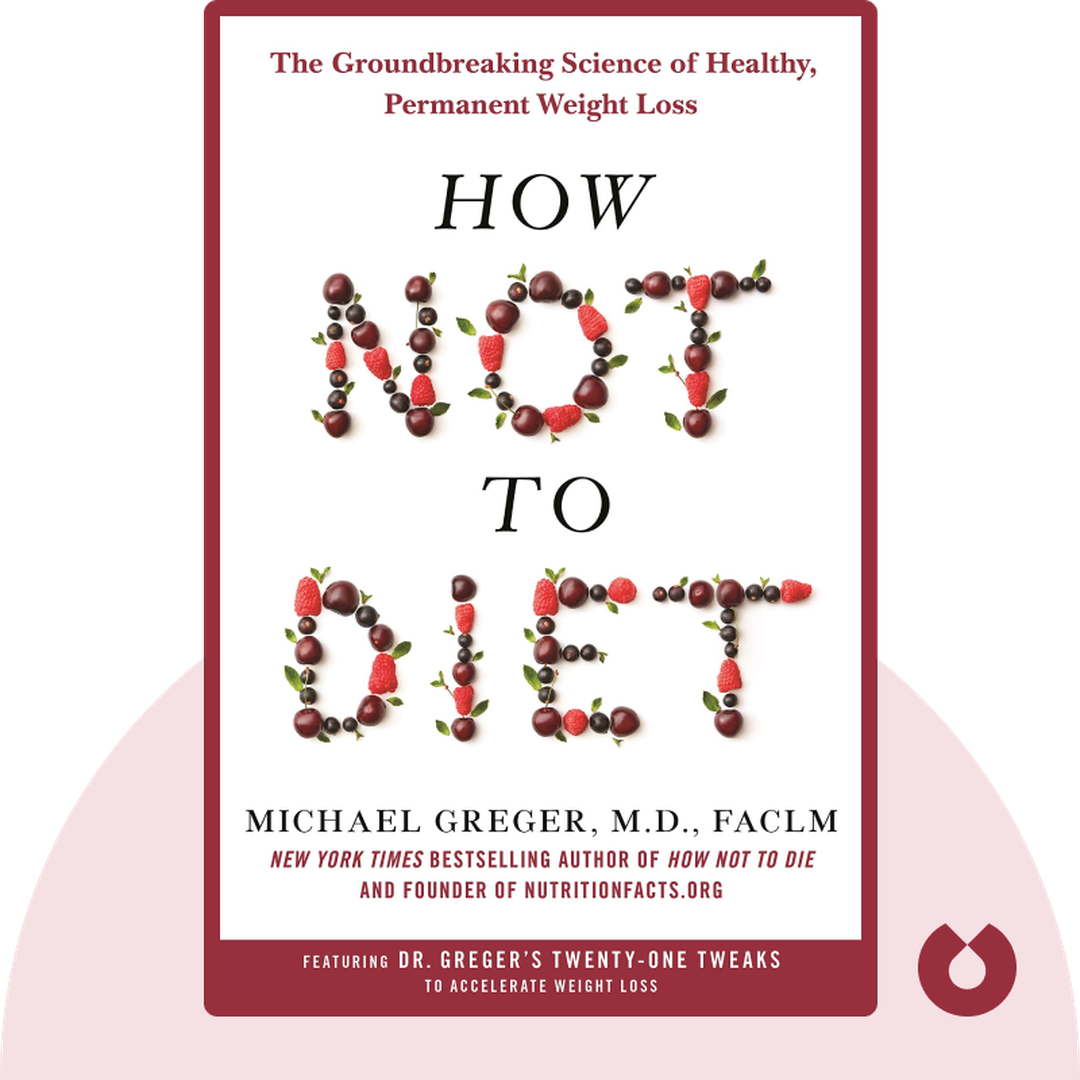
How Not to Diet (2019) explores how a healthy, plant-based diet can achieve effective, healthy, and sustainable weight loss. It also explores why so many people are overweight and offers a clear and detailed guide for tackling the issue. There are no quick-fixes or fad diets here, just rigorous science-based advice you can trust.
Who Should Listen to How Not to Diet?
- Dieters looking for a rigorous, evidence-based approach
- Anyone who wants to live a long, healthy life
- People who’ve tried and failed to diet in the past
Books Similar to How Not to Diet
Readers who enjoyed this also liked these titles.