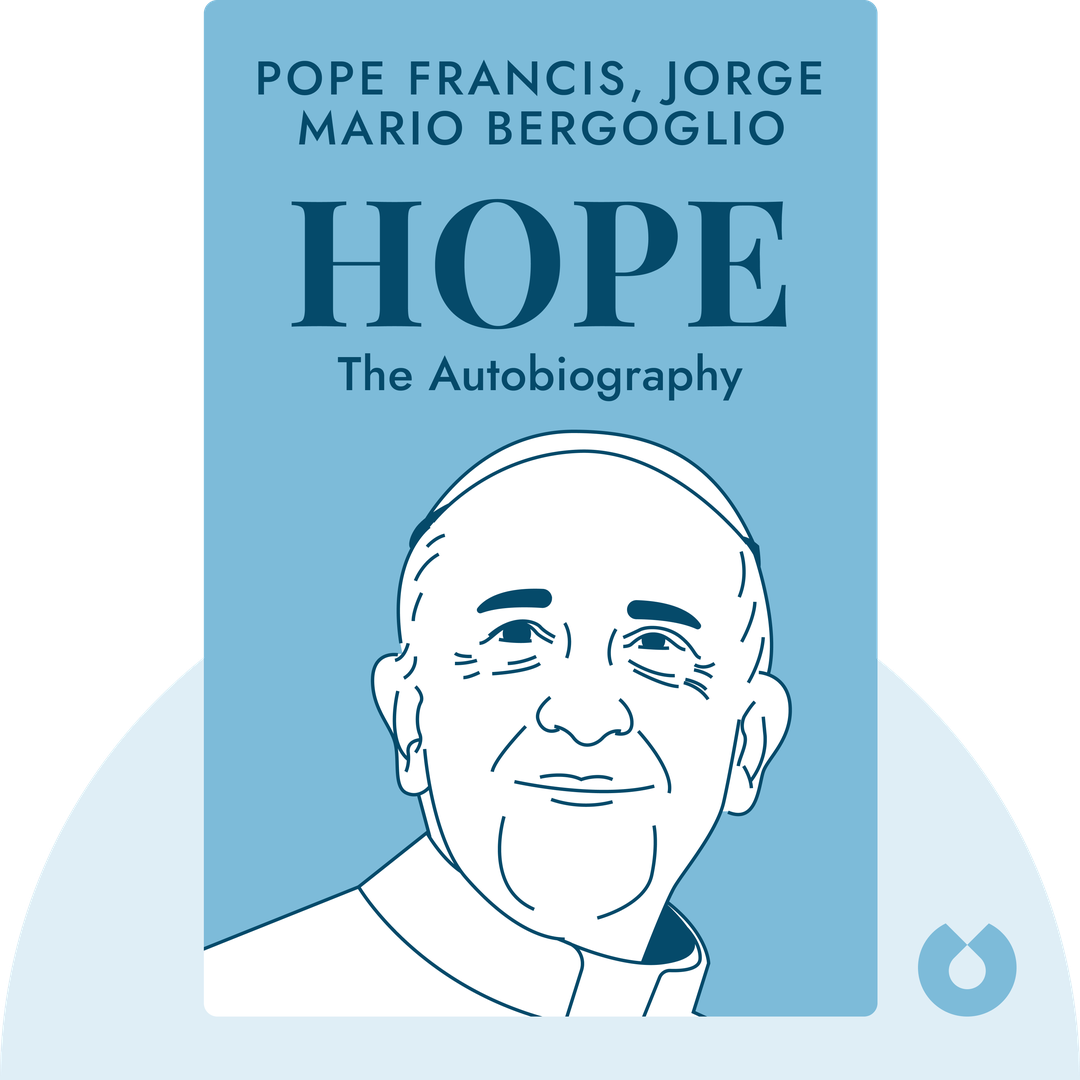
If You're Curious About These Questions...
You should listen to this audiobook
- Have you ever wondered how the humble streets of Buenos Aires prepared a young man to eventually lead one of the most influential institutions on Earth?
- What if you could step behind the Vatican’s walls to discover the raw, personal events that truly shaped Pope Francis’s radical spirituality?
- Are you curious about the private experiences and hidden challenges that changed the way the Pope views the future of faith and humanity?
Listen to Hope — Free Audiobook
Loading player...
Key Takeaways from Hope
- Discover how Jorge Bergoglio's journey from a working-class Argentine barrio to becoming the first Latin American Pope redefined the modern Catholic Church.
- Understand how his family's narrow escape from a deadly shipwreck and flight from fascist Italy shaped his deep empathy and humanitarian advocacy for displaced migrants.
- Learn how growing up alongside Jewish and Muslim neighbors in Buenos Aires inspired the Pope's enduring commitment to multiculturalism and interfaith dialogue.
- Witness how his profound compassion for the marginalized translates into action through his lifelong spiritual care for a local sex worker named La Porota.
- Find out how a spontaneous church confession sparked his divine calling, and how a Marxist colleague awakened his political consciousness before Argentina's brutal 'Dirty War'.
Learning Tools
Reinforce what you learned from Hope
Mind Map
Hope
Early Life & Heritage+
Spiritual Awakening & Resistance+
Ministry & Jesuit Values+
The Papacy & Vision+
Quiz — Test Your Understanding
Question 1 of 7
How did Jorge Bergoglio's family avoid the sinking of the SS Principessa Mafalda in 1927, an event he later viewed as divine providence?
Question 2 of 7
Before fully committing to the priesthood, Jorge Bergoglio worked in a chemistry laboratory. How did his colleague, Esther Ballestrino de Careaga, profoundly influence him?
Question 3 of 7
During Argentina's 'Dirty War', how did Jorge Bergoglio respond to the military junta's campaign of state terrorism?
Question 4 of 7
As Pope, Francis made the unprecedented decision to live in the Casa Santa Marta guesthouse rather than the Apostolic Palace. What early realization shaped this preference for community over solitude?
Question 5 of 7
During the 2013 Vatican conclave, what specific moment prompted Jorge Bergoglio to choose the papal name 'Francis'?
Question 6 of 7
Pope Francis advocates for a Church that is 'broken, wounded and dirty from being out on the streets.' Which of the following actions best reflects this vision and his selective use of liberation theology?
Question 7 of 7
How does Pope Francis justify his push for the 'demasculinization' of the Catholic Church?
Hope — Full Chapter Overview
- 1Recommendation
- 2An act of divine intervention
- 3Modest beginnings
- 4A spiritual calling
- 5A priest of the people
- 6The papal conclave
- 7Looking toward the future
- 8Final summary
Hope Summary & Overview
Hope (2025) tells, in his own words, the story of Pope Francis’s remarkable life. From the streets of Buenos Aires to the palaces of the Vatican, learn about the remarkable events that have shaped the life and spirituality of the head of the Catholic Church.
Who Should Listen to Hope?
- Catholics who want a deeply personal insight into the life of the Pope
- Skeptics open to having their assumptions about Pope Francis overturned
- Anyone with an interest in contemporary spirituality and religion
Books Similar to Hope
Readers who enjoyed this also liked these titles.