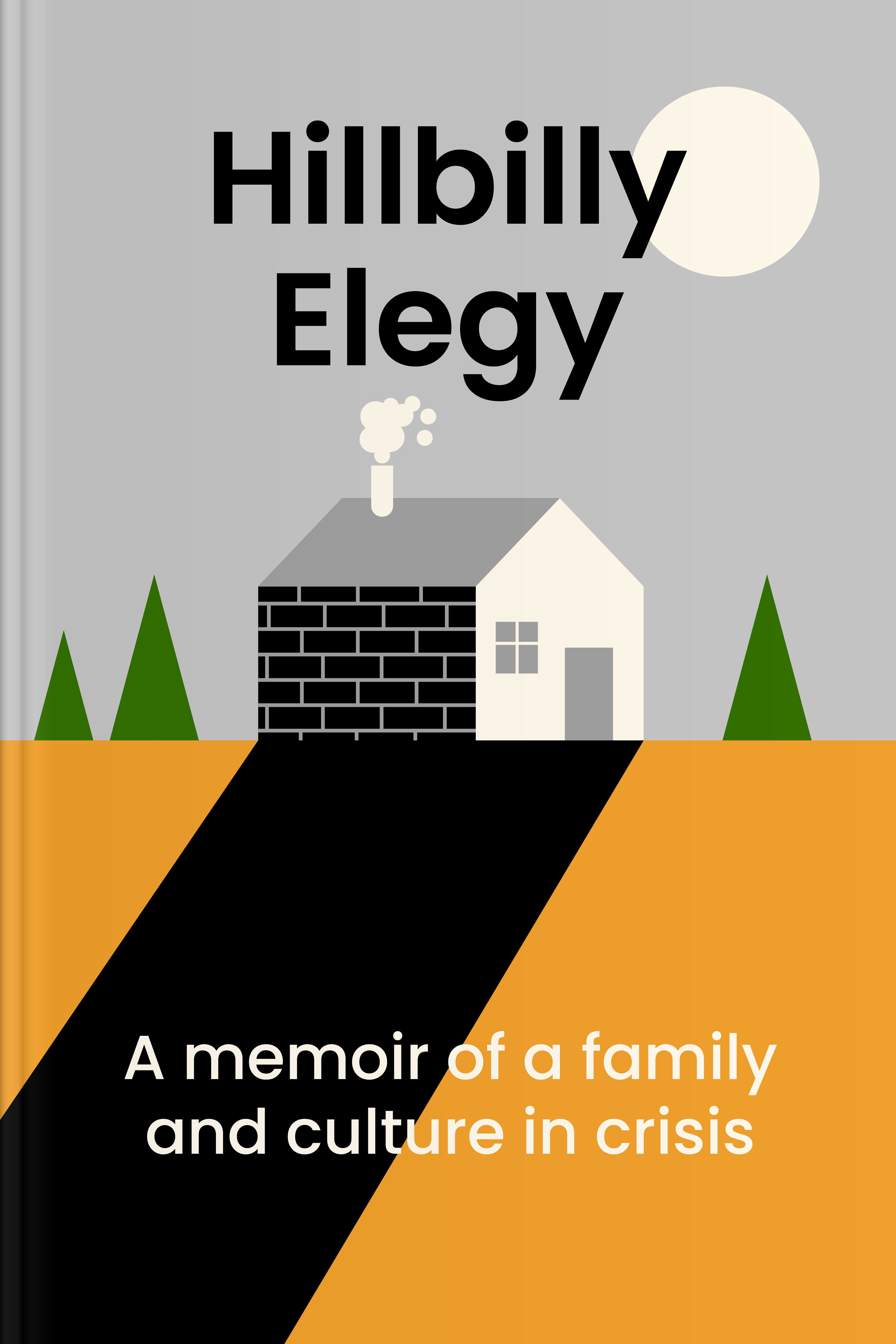
If You're Curious About These Questions...
You should listen to this audiobook
- Did you know that having just one stable, committed caregiver can be the secret catalyst that allows a child to overcome a cycle of generational trauma and poverty?
- Have you ever wondered why the 'American Dream' feels so out of reach for some, and what unspoken rules of 'social capital' are actually required to bridge the gap between working-class roots and professional success?
- Are you curious about how the hidden cultural 'baggage' of your upbringing might be silently shaping your professional life and your ability to feel at home in new environments?
Listen to Hillbilly Elegy — Free Audiobook
Key Takeaways from Hillbilly Elegy
- Understand why the American Dream is a demanding climb rather than a straight road, requiring a combination of hard work, a supportive environment, and personal healing.
- Discover how deep-rooted cultural traits, such as fierce family loyalty combined with a profound distrust of outsiders, can simultaneously define a community and restrict its upward mobility.
- Learn why relocating for better financial opportunities does not automatically erase the social stigma, cultural differences, or internal traumas that families carry with them.
- Realize how outward economic stability can mask private turbulence, as untreated addiction and domestic violence create hidden cycles of hardship.
- Recognize the lasting impact of childhood instability, and how growing up amidst chronic family conflict permanently shapes a person's beliefs about relationships, safety, and self-worth.
Learning Tools
Reinforce what you learned from Hillbilly Elegy
Mind Map
Quiz — Test Your Understanding
Hillbilly Elegy — Full Chapter Overview
- 1Recommendation
- 2J.D.’s grandparents grew up as middle-class “hillbillies” — a possibility that no longer exists today.
- 3J.D.’s mother was born into a troubled home and raised in poverty.
- 4A difficult upbringing profoundly shaped J.D.’s early years.
- 5As a teenager, J.D. moved constantly while his mother was institutionalized.
- 6Living with his grandmother changed J.D.’s life before he found stability in the military.
- 7The military helped J.D. succeed, but success also made him aware of feeling different.
- 8By escaping poverty, Vance offers us all a timeless lesson.
- 9Final summary
Hillbilly Elegy Summary & Overview
J.D. Vance’s story explores the complicated distance between the promise of the American Dream and the lived reality of many working-class white families in Appalachia and the Rust Belt. Through family history, painful childhood memories, and hard-earned growth, Vance shows how culture can hold both strengths and deep, stubborn struggles.
This narration walks through the roots of “hillbilly” identity, the stigma that follows families as they move, and the heavy cost of violence, addiction, and instability on children. It also highlights the stabilizing power of one committed caregiver, the value of discipline and work, and the often-unspoken role of “social capital” in professional success.
Who Should Listen to Hillbilly Elegy?
- Listeners interested in how family, culture, and community shape opportunity—and why hard work sometimes needs support to truly pay off.
- People navigating upward mobility who feel conflicted, out of place, or loyal to their roots while trying to build a different life.
- Anyone reflecting on childhood adversity and looking for a gentle, realistic reminder that healing and progress can happen with help.
Books Similar to Hillbilly Elegy
Readers who enjoyed this also liked these titles.