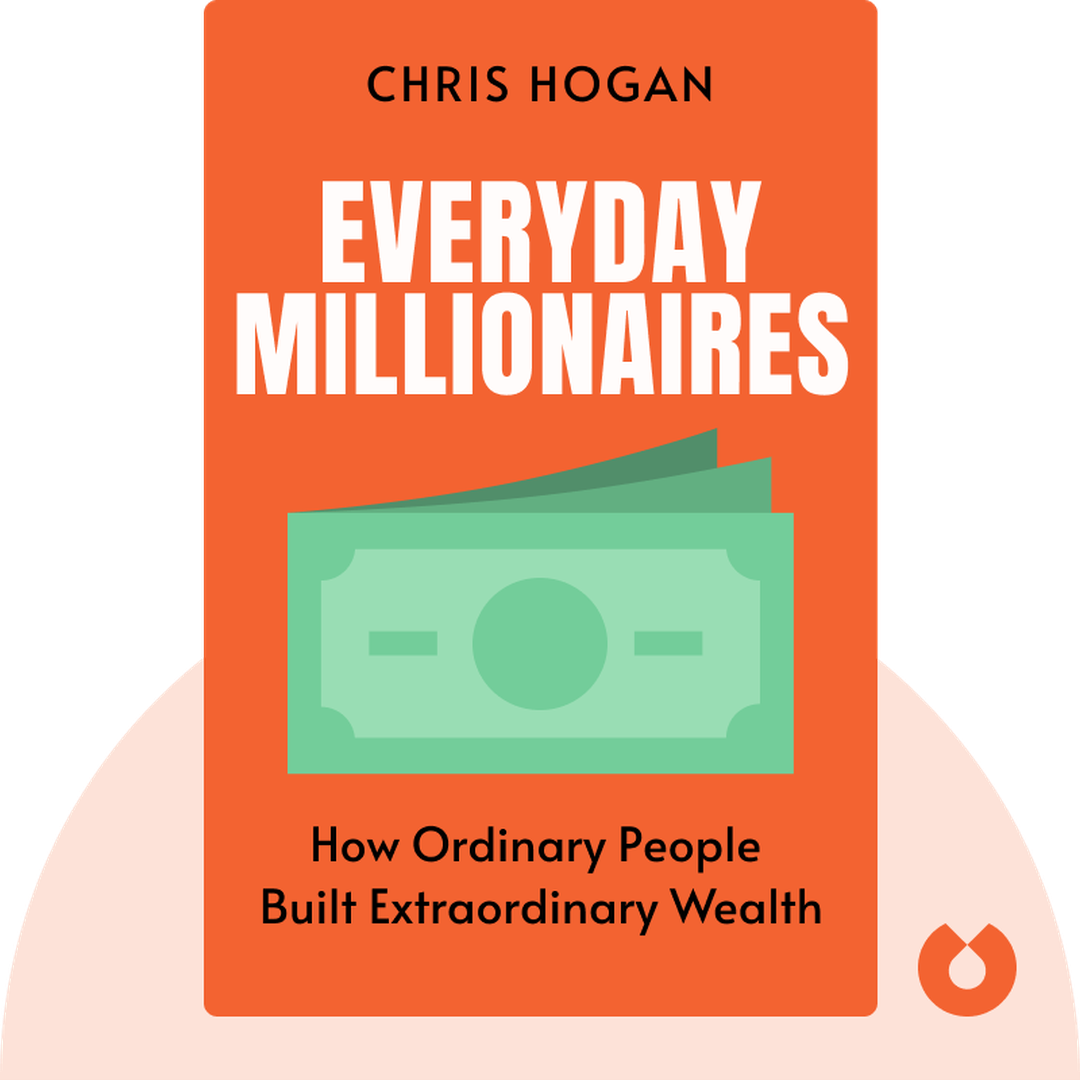
If You're Curious About These Questions...
You should listen to this audiobook
- Did you know that the vast majority of millionaires didn’t inherit a single cent, and many didn’t even start with a high-paying job?
- What’s the surprising secret shared by the largest group of millionaires ever studied—and why does it have almost nothing to do with luck?
- Have you ever wondered why some people with average incomes reach a seven-figure net worth while high-earners often struggle to stay ahead?
Listen to Everyday Millionaires — Free Audiobook
Loading player...
Key Takeaways from Everyday Millionaires
- Discover why an unshakeable belief in your ability to build wealth is the first crucial step to becoming a millionaire. Learn how to silence your doubters and use financial setbacks as motivation for your next big win.
- Realize that 79 percent of millionaires receive zero inheritance and rely entirely on hard work rather than luck. Learn how consistent discipline and sticking to a long-term financial plan will secure your future.
- Find out why successful millionaires avoid high-risk gambles like single stocks and crypto, as well as low-yield investments. Master the art of predictably growing your net worth using employer-sponsored retirement plans and diversified mutual funds.
- Understand that lasting wealth is a patient, long-term game rather than a get-rich-quick fantasy. Discover why 95 percent of everyday millionaires take over a decade of consistent investing to hit the million-dollar mark.
- Learn why you should never overpay for a brand-name education or rely on a flashy, high-paying career to get rich. Discover how everyday professionals quietly accumulate millions through smart saving, paying in cash, and avoiding debt.
Learning Tools
Reinforce what you learned from Everyday Millionaires
Mind Map
Everyday Millionaires
Mindset & Beliefs+
Busting Wealth Myths+
Taking Financial Responsibility+
Intentionality & Budgeting+
Goal Setting+
Investing Strategy+
Quiz — Test Your Understanding
Question 1 of 8
Why does the author use the example of distance runner Roger Bannister?
Question 2 of 8
According to the author's study, what is the reality regarding millionaires and inherited wealth?
Question 3 of 8
Which of the following best describes the typical investment strategy of the millionaires in the study?
Question 4 of 8
What did the study reveal about the educational and professional backgrounds of most millionaires?
Question 5 of 8
How does the author suggest you determine exactly 'where you are' financially before planning your journey to becoming a millionaire?
Question 6 of 8
How do most millionaires view the concept of living on a budget?
Question 7 of 8
What does the author identify as one of the most significant long-term financial goals that can transform a liability into a 100 percent asset?
Question 8 of 8
When investing the recommended 15 percent of your income toward retirement, what is the first step the author advises taking?
Everyday Millionaires — Full Chapter Overview
- 1Recommendation
- 2You won’t become a millionaire unless you believe you can—and once you do, take pride in it!
- 3Most wealthy people build their money through hard work, and they’ve earned it.
- 4Wealthy people don’t become wealthy by taking reckless risks.
- 5Most millionaires didn’t attend elite schools or hold high-paying jobs.
- 6For millionaires, the buck stops with them: they take responsibility for their own financial success.
- 7Millionaires keep control of their financial lives by being intentional.
- 8Millionaires set goals for themselves—and make sure they reach them.
- 9Millionaires’ consistency lets their money grow even while they sleep.
- 10Final summary
Everyday Millionaires Summary & Overview
Everyday Millionaires (2019) draws on the biggest study on millionaires ever conducted in the US to reveal an essential truth – becoming a millionaire is something anyone can do. It doesn’t matter what your background is, how much money you make now or how lucky you happen to be – it just takes practical knowledge and a commitment to following a plan.
Who Should Listen to Everyday Millionaires?
- Whoever believes they can’t get ahead
- Those who think all millionaires come from money
- Aspiring millionaires
Books Similar to Everyday Millionaires
Readers who enjoyed this also liked these titles.