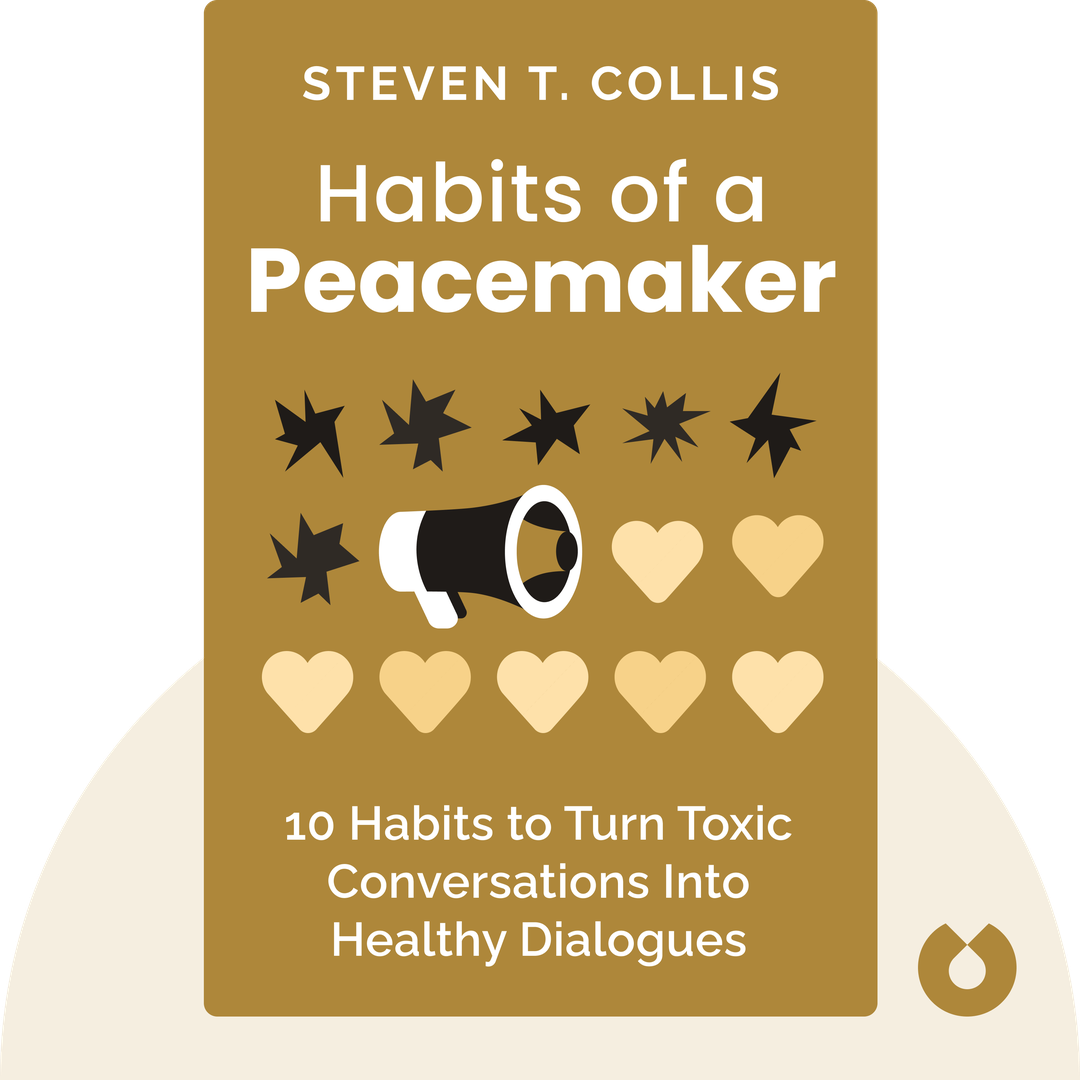
Habits of a Peacemaker
Start ListeningDownload Try free on iPhoneScan to start in 5 seconds
Categories:
If You're Curious About These Questions...
You should listen to this audiobook
- Have you ever wondered why some people can navigate the most heated disagreements without ever losing their cool or damaging a relationship?
- What if you could master a set of simple, daily habits that turn your most challenging conversations into opportunities for growth and peace?
- Are you curious about the specific techniques used by effective peacemakers to bridge deep ideological divides in both the office and at home?
Listen to Habits of a Peacemaker — Free Audiobook
Loading player...
Key Takeaways from Habits of a Peacemaker
- Master the art of intellectual humility by entering conversations without assuming you know everything, which prevents unnecessary conflict.
- Learn how to reframe difficult discussions by shifting your goal from winning the argument to finding collaborative solutions.
- Discover why escaping the dopamine traps of social media and seeking diverse sources is essential for forming well-rounded, thoughtful conclusions.
- Understand the power of assuming good intentions by asking sincere questions to uncover motivations rather than retaliating against criticism.
- Find out how to keep conversations productive by speaking softly, listening more, and refusing to feed into others' worst fears with aggressive responses.
Learning Tools
Reinforce what you learned from Habits of a Peacemaker
Mind Map
Habits of a Peacemaker
Humility & Lifelong Learning+
Empathy & De-escalation+
Challenging Your Own Views+
Connection & Humor+
Inner Peace & Uncertainty+
Quiz — Test Your Understanding
Question 1 of 8
What is the primary goal of 'reframing' a conversation, according to the first habit of a peacemaker?
Question 2 of 8
How does the author suggest handling catchphrases or slogans during a dialogue?
Question 3 of 8
When faced with someone who becomes overly emotional about a topic or refuses to discuss certain issues, what does the author recommend?
Question 4 of 8
According to the fifth habit, what should you do when you encounter a weak argument against your position?
Question 5 of 8
What does the author mean by avoiding 'toxic tribalism'?
Question 6 of 8
According to the book, what played a crucial role in helping the delegates draft the US Constitution despite their deep political differences?
Question 7 of 8
Which type of humor relies primarily on delivery methods, like facial expressions or tone, rather than the actual content of the joke?
Question 8 of 8
What is the core message of the tenth habit, 'embrace the discomfort of non-closure'?
Habits of a Peacemaker — Full Chapter Overview
- 1Recommendation
- 2Stay humble in conversations and keep learning for life
- 3Assume good intentions and avoid fueling conflict
- 4Look for opposing views and stay open to change
- 5Create personal connections and use appropriate humor to ease tension
- 6Cultivate inner peace and accept uncertainty with grace
- 7Final summary
Habits of a Peacemaker Summary & Overview
Habits of a Peacemaker (2024) provides practical habits to help individuals engage in productive, respectful conversations, even on divisive topics. It emphasizes building relationships through open dialogue and offers tools for managing challenging discussions with civility and understanding. By fostering these habits, you can bridge divides and bring peace to your personal and professional life.
Who Should Listen to Habits of a Peacemaker?
- Leaders seeking to improve communication in difficult situations
- Individuals wanting to resolve conflicts more effectively
- Professionals handling sensitive discussions in diverse environments
Books Similar to Habits of a Peacemaker
Readers who enjoyed this also liked these titles.