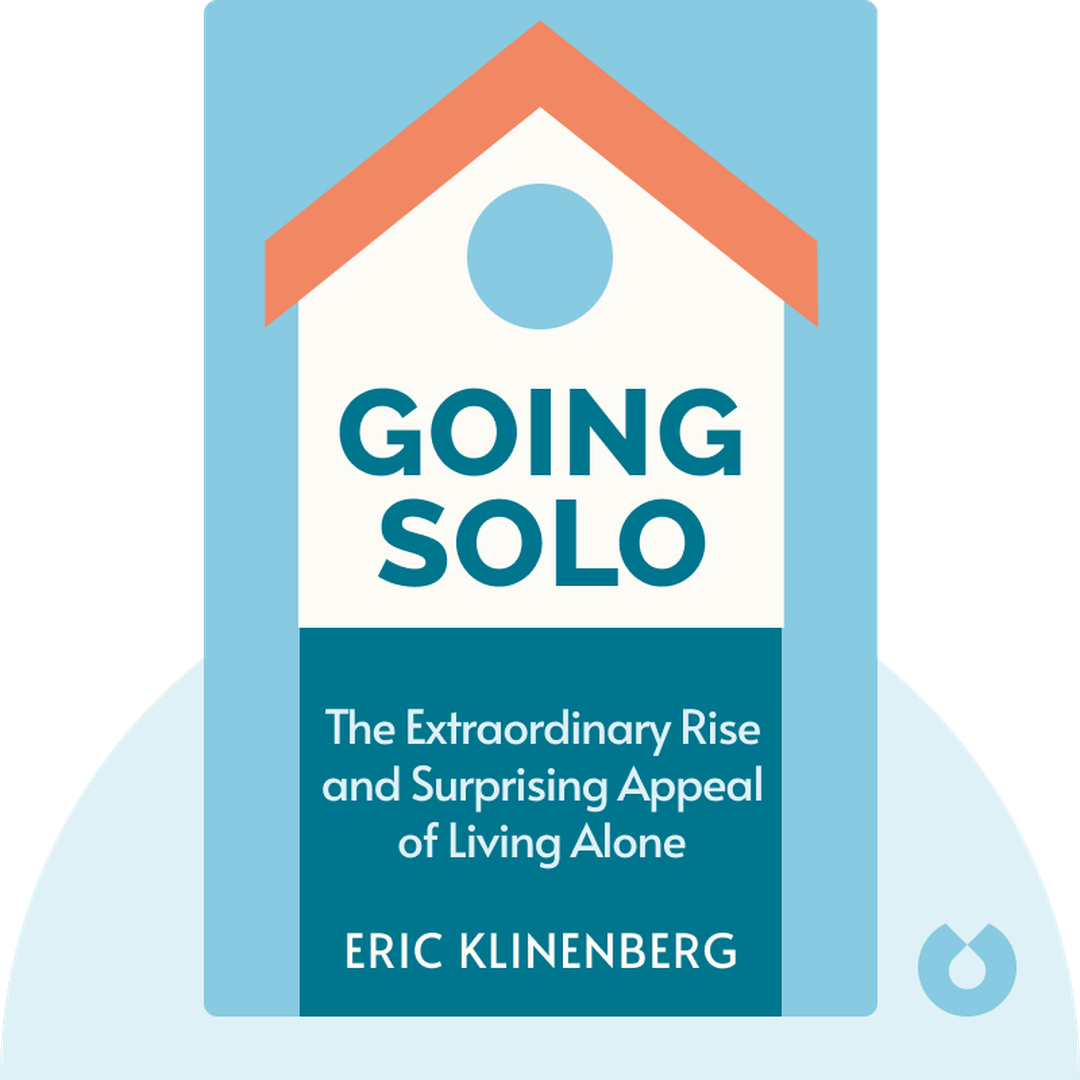
If You're Curious About These Questions...
You should listen to this audiobook
- What drew the 'founding fathers and mothers of singledom' to 1930s Greenwich Village, and how did it shape the modern solo-living movement?
- Why do many elderly women actively choose to live out their final days alone, while single men are significantly more vulnerable to severe social isolation?
- Why do Swedish parents frequently register their newborns for state-run single apartments, and what does this reveal about their country's unique approach to solo living?
Listen to Going Solo — Free Audiobook
Loading player...
Key Takeaways from Going Solo
- The dramatic increase in solo living since the 1950s was largely driven by women attaining financial independence in the workforce and the rise of communication technologies that mitigate loneliness.
- Urban centers like Greenwich Village pioneered the singleton lifestyle by offering a balance of private solitude and abundant public social spaces for individualists.
- Many elderly widows actively choose to live alone rather than remarry or move in with their children, as this independence helps them avoid becoming caretakers again and fosters a life-extending sense of purpose.
- Single men are significantly more vulnerable to isolation later in life than single women because they are often socialized to prioritize competition over building supportive, family-like social networks.
- Societies must adapt to the rise of solo living by investing in accessible assisted living and cooperative housing models, much like Sweden, to ensure aging singles remain socially connected and supported.
Learning Tools
Reinforce what you learned from Going Solo
Mind Map
Going Solo
The Rise of Single Living+
Urban Roots of Singledom+
Advantages of Going Solo+
Gender Differences in Isolation+
Societal Support & Solutions+
Quiz — Test Your Understanding
Question 1 of 6
What was a primary driver for the dramatic increase in adults living alone between 1950 and 2000?
Question 2 of 6
Why did early 'singletons' flock to urban neighborhoods like Greenwich Village in the 1930s?
Question 3 of 6
According to the text, why do many elderly widows choose to live alone rather than remarry?
Question 4 of 6
Why are single men more likely to experience social isolation compared to single women?
Question 5 of 6
What is a major reason why men living in Single Room Occupancy (SRO) dwellings often isolate themselves from neighbors?
Question 6 of 6
How does Sweden serve as a positive model for supporting aging singles?
Going Solo — Full Chapter Overview
- 1Recommendation
- 2The number of adults living alone, or “going solo,” has risen dramatically since 1950.
- 3Living alone as a lifestyle choice has strong roots in urban culture.
- 4Going solo offers many advantages at every stage of life.
- 5Single men are more likely than single women to become isolated.
- 6Society should change to better support aging singles.
- 7Final summary
Going Solo Summary & Overview
Going Solo (2012) explains the sociological factors that have led so many adults to live on their own. These blinks detail the history of solo living, describe the benefits of choosing such a lifestyle and explore the different conditions under which solo adults live.
Who Should Listen to Going Solo?
- Sociology students
- Newly single people
- Bachelors and bachelorettes everywhere
Books Similar to Going Solo
Readers who enjoyed this also liked these titles.