If You're Curious About These Questions...
You should listen to this audiobook
- Have you ever wondered why the 'Modern Portfolio Theory' used by most advisors is no longer considered modern—and what should replace it?
- What if you could gain access to the same exclusive investment opportunities that were once reserved only for the world’s largest institutions?
- Did you know that the secret to true financial success isn't just about beating the market, but about a fundamental shift in how we define investment goals?
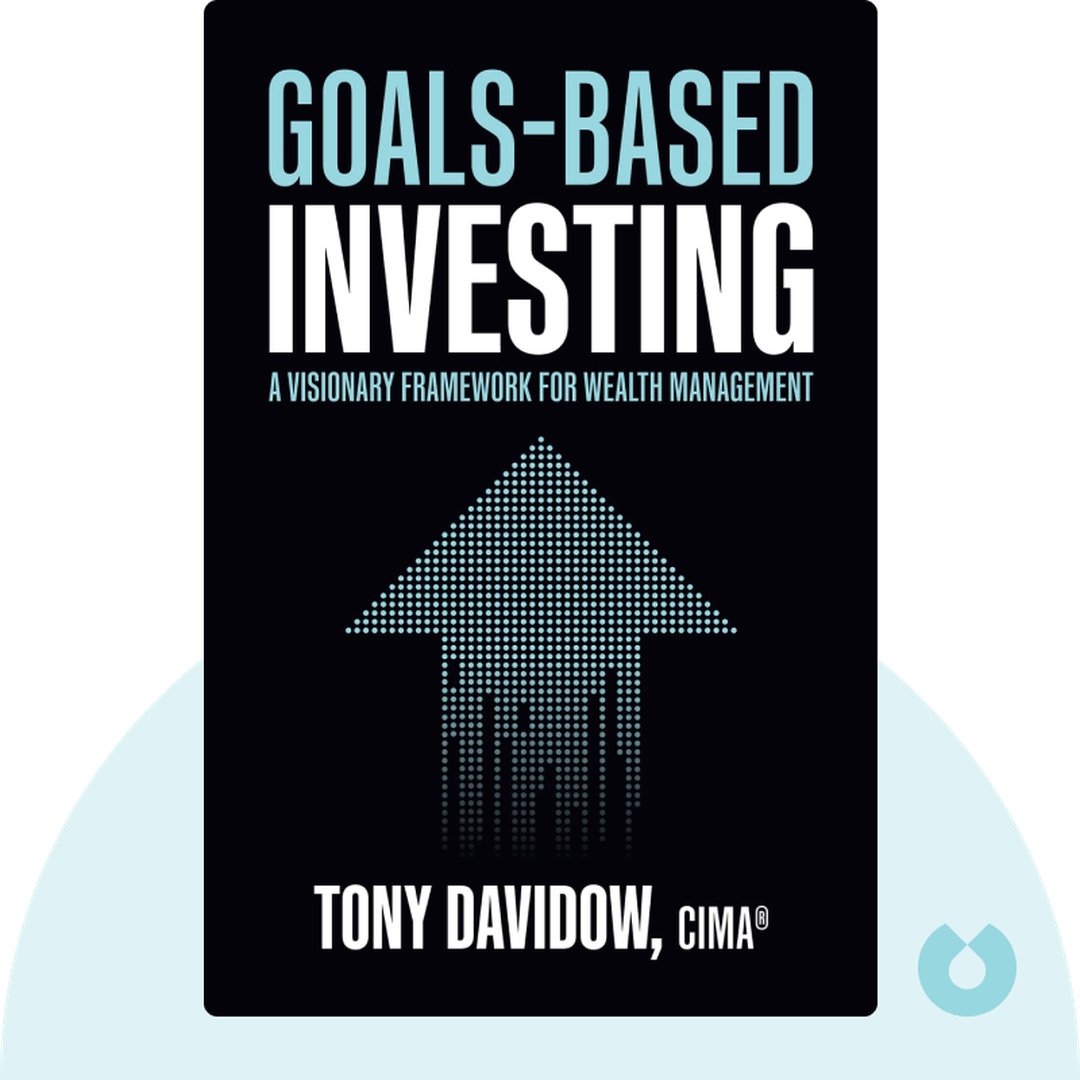
Listen to Goals-based Investing — Free Audiobook
Loading player...
Key Takeaways from Goals-based Investing
- Discover why financial advisors must continuously evolve their skills and embrace technology to avoid being replaced by AI in a rapidly changing industry.
- Understand the limitations of Modern Portfolio Theory and why assuming all investors are risk-averse leads to flawed wealth management.
- Learn how goals-based investing shifts the focus away from simply beating the market to prioritizing specific, long-term life objectives like wealth preservation and retirement.
- Recognize how common cognitive biases, such as loss aversion and herd mentality, drive irrational financial decisions for both investors and advisors.
- Master the art of client communication by using clear analogies, avoiding jargon, and utilizing investment policy statements to protect clients from emotional impulses.
Learning Tools
Reinforce what you learned from Goals-based Investing
Mind Map
Goals-based Investing
Industry Evolution+
Flaws of Traditional Models+
Goals-Based Framework+
Behavioral Finance+
Investment Vehicles+
The Future (Next 10 Years)+
Quiz — Test Your Understanding
Question 1 of 10
According to the text, what role do custodians like Schwab and Fidelity play in the financial-services industry?
Question 2 of 10
What is identified as a primary limitation of Modern Portfolio Theory (MPT)?
Question 3 of 10
How does goals-based investing fundamentally shift the focus of wealth management?
Question 4 of 10
An investor believes that a stock's strong performance today guarantees it will continue to perform well tomorrow. Which cognitive bias does this represent?
Question 5 of 10
Why does Tony Davidow use the analogy of making an omelet when explaining asset allocation to clients?
Question 6 of 10
According to the text, what is the current consensus regarding active and passive investment management?
Question 7 of 10
Which of the following is cited as a key reason for including alternative investments in a modern portfolio?
Question 8 of 10
How does ESG screening differ from traditional Socially Responsible Investing (SRI)?
Question 9 of 10
In the context of goals-based investing, why is it recommended to separate investments into different 'pots'?
Question 10 of 10
What prediction does the text make regarding the use of Artificial Intelligence (AI) in wealth management over the next decade?
Goals-based Investing — Full Chapter Overview
- 1Recommendation
- 2The financial services industry is constantly evolving.
- 3Goals-based investing addresses the limits of modern portfolio theory.
- 4Advisors and investors must recognize how cognitive biases can influence investment decisions.
- 5Active management still has a role, even with the rise of passive investing.
- 6Alternative investments and sustainable investing are increasingly appealing options.
- 7Goals-based investing starts with analyzing what you want your investments to achieve.
- 8Successful wealth advisors must adapt to the changes ahead over the next ten years.
Goals-based Investing Summary & Overview
Goals-Based Investing (2022) explains how the wealth management industry is transforming, how modern portfolio theory is no longer considered modern, and how product evolution and regulatory changes are making it easier for investors and advisors to access market segments that were once the exclusive domain of large institutes.
Who Should Listen to Goals-based Investing?
- Financial advisors who are lifelong learners
- High- and Ultra-high-net-worth investors and families
- Anyone interested in how goals-based investing works
Books Similar to Goals-based Investing
Readers who enjoyed this also liked these titles.