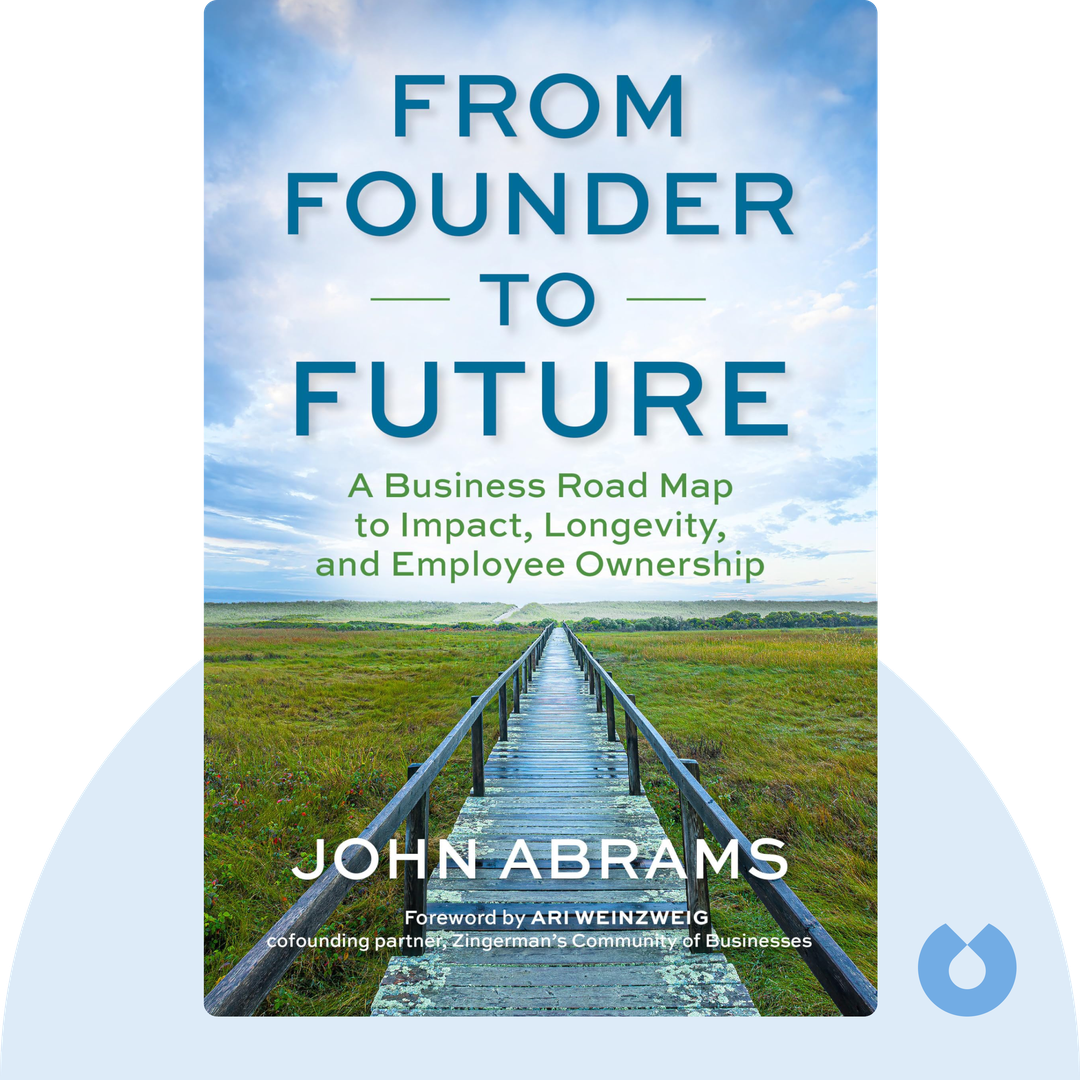
From Founder to Future
Start ListeningDownload Try free on iPhoneScan to start in 5 seconds
Categories:
If You're Curious About These Questions...
You should listen to this audiobook
- What’s the secret to stepping away from your business while ensuring its social mission and core values remain untouchable for generations to come?
- Did you know that the most resilient companies often replace traditional top-down hierarchies with a surprising model of democratic governance?
- Have you ever wondered how a mission-driven founder can successfully transfer ownership without selling out to the highest bidder?
Listen to From Founder to Future — Cinematic Audio Edition
Loading player...
Key Takeaways from From Founder to Future
- Learn how to successfully exit your small business while protecting its mission, culture, and long-term impact rather than selling to outside investors.
- Discover the five key transitions required to shift a company from a traditional founder-led model to a purpose-driven organization built for longevity.
- Understand why converting to a worker cooperative offers a practical succession plan that provides tax advantages, trains future leaders, and rewards loyal employees.
- Find out how implementing participatory governance and a democratic workplace culture can help your business survive economic downturns without resorting to layoffs.
- Explore the rapidly growing ecosystem of specialized legal experts, mission-driven lenders, and accelerators ready to finance and support your transition to employee ownership.
Learning Tools
Reinforce what you learned from From Founder to Future
Mind Map
From Founder to Future
The Succession Dilemma+
Five Key Legacy Transitions+
Worker Cooperatives+
Support Ecosystems+
Ownership Structures+
Designing the Future+
Quiz — Test Your Understanding
Question 1 of 7
What is one of the core transitions required for a small business to successfully move from a founder-led model to a purpose-driven, widely shared one?
Question 2 of 7
How does decision-making and ownership typically function in a worker cooperative?
Question 3 of 7
How has the landscape for transitioning a business to employee ownership changed over the last decade?
Question 4 of 7
What is the primary benefit of worker-owned businesses forming regional ecosystems, such as Mondragon in Spain or The Industrial Commons in the U.S.?
Question 5 of 7
According to the text, what is a notable vulnerability of Employee Stock Ownership Plans (ESOPs)?
Question 6 of 7
How does an Employee Ownership Trust (EOT) differ from an ESOP?
Question 7 of 7
To successfully set up the next generation and ensure a company's values outlast the founder, what three key areas must be intentionally designed?
From Founder to Future — Full Chapter Overview
- 1Recommendation
- 2How small businesses can create a lasting legacy
- 3Why worker co-ops are a smart succession path
- 4The expanding support system behind employee ownership
- 5Growing stronger together through shared ownership
- 6Preserving purpose while transitioning ownership
- 7Designing a future that can carry your values
- 8Final summary
From Founder to Future Summary & Overview
From Founder to Future (2025) explores how mission-driven business owners can successfully transition leadership, ownership, and governance to the next generation. It outlines practical strategies for embedding democratic management, preserving social purpose, and ensuring long-term organizational resilience. Drawing on real-world examples, it shows how companies can thrive beyond their founders.
Who Should Listen to From Founder to Future?
- Mission-driven founders planning business succession
- Aspiring leaders in employee-owned companies
- Purpose-oriented people exploring alternative ownership models
Books Similar to From Founder to Future
Readers who enjoyed this also liked these titles.