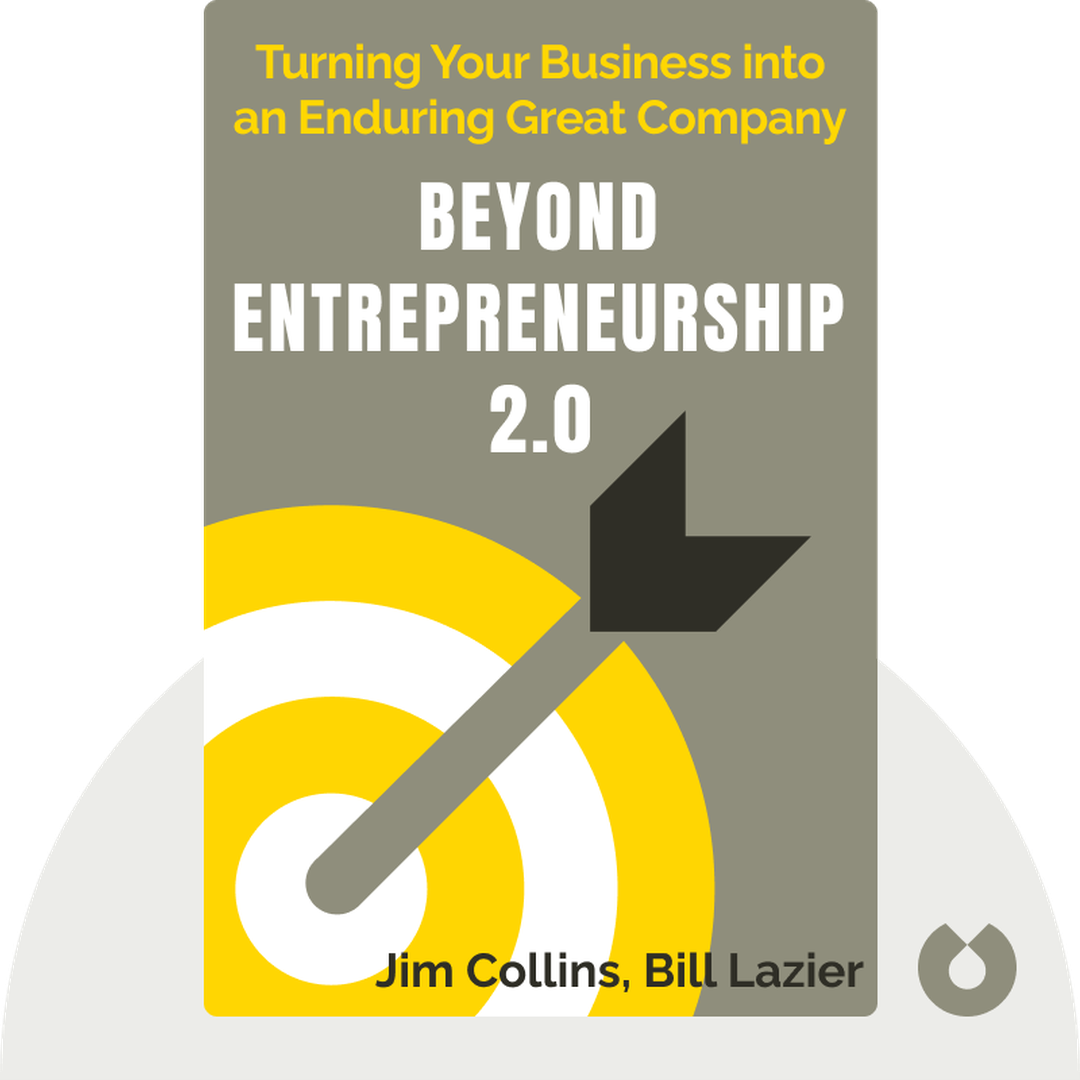
Beyond Entrepreneurship 2.0
Start ListeningDownload Try free on iPhoneScan to start in 5 seconds
Categories:
If You're Curious About These Questions...
You should listen to this audiobook
- Why do the most successful entrepreneurs prioritize deciding who is on their team before they even determine the final destination of their business?
- Why do researchers argue that experiencing early bad luck and failure is often more critical to a company's ultimate success than early good luck?
- How does adopting a 'SMaC' (Specific, Methodical, and Consistent) mindset help transform an ambitious, abstract business vision into concrete reality?
Listen to Beyond Entrepreneurship 2.0 — Free Audiobook
Loading player...
Key Takeaways from Beyond Entrepreneurship 2.0
- Understand why you must prioritize your team over your destination by ensuring 100 percent of your key decision-making roles are filled with the right people.
- Learn how to evaluate your workforce effectively by knowing exactly when to develop an employee's skills and when to replace someone who treats their role as just a job.
- Discover the seven essential qualities of effective leadership, and learn why turning just one of them into your personal superpower will create a multiplying effect across your company.
- Master the art of crafting a laser-focused company vision that clearly communicates the 'why' behind your work to guide your team through tough challenges and decisions.
- Find out how to construct an overarching strategy by combining authentic core beliefs, an infinite organizational purpose, and a well-defined, inspiring mission.
Learning Tools
Reinforce what you learned from Beyond Entrepreneurship 2.0
Mind Map
Beyond Entrepreneurship 2.0
People First+
Leadership+
Vision Framework+
Return on Luck+
Cultivating Discipline+
Simple Strategy+
Innovation Engine+
Execution & Hard Work+
Quiz — Test Your Understanding
Question 1 of 9
What is the first thing an enterprise should decide when starting out, according to the book?
Question 2 of 9
How should a leader approach the seven essential leadership qualities?
Question 3 of 9
What is the key difference between a company's 'purpose' and its 'mission'?
Question 4 of 9
What did Jim Collins and Morton Hansen discover about the role of luck in the success of iconic entrepreneurs?
Question 5 of 9
How does the book suggest leaders cultivate 'disciplined thinking'?
Question 6 of 9
Which of the following is one of the three guiding principles for strategic thinking mentioned in the text?
Question 7 of 9
What does the book recommend doing to reward and retain innovative employees who do not want to manage others?
Question 8 of 9
In the context of executing a business strategy, what does the acronym SMaC stand for?
Question 9 of 9
What does the acronym BHAG stand for in the context of setting a company mission?
Beyond Entrepreneurship 2.0 — Full Chapter Overview
- 1Recommendation
- 2Great business ideas need great people.
- 3Leadership lays the groundwork for success – or failure.
- 4Get sharply focused on your vision.
- 5You can’t control luck, but you can make the most of it.
- 6To succeed in business, begin by building discipline.
- 7Good strategy keeps things simple.
- 8Innovation starts with ideas.
- 9Hard work is the real secret to success.
- 10Final summary
Beyond Entrepreneurship 2.0 Summary & Overview
Beyond Entrepreneurship 2.0 (2020) updates Jim Collins and Bill Lazier’s essential 1992 business handbook, Beyond Entrepreneurship for the entrepreneurs, visionaries, and innovators of today. This new edition combines the timeless business advice and strategy of the original text, supplemented with cutting-edge insights and case studies pertinent to today’s business world.
Who Should Listen to Beyond Entrepreneurship 2.0?
- Office drones who want to break out of their nine-to-five
- Fledgling start-up founders wondering where to, well, start
- Successful entrepreneurs looking to scale up to the big time
Books Similar to Beyond Entrepreneurship 2.0
Readers who enjoyed this also liked these titles.