Theme Song
If You're Curious About These Questions...
You should listen to this audiobook
- Have you ever wondered why two people can look at the exact same problem and see two completely different worlds?
- What if the secret to solving complex global challenges isn't gathering more data, but changing the mental lens through which you view it?
- Did you know that your ability to 'frame' a situation is the one human skill that even the most advanced artificial intelligence can't replicate?
Listen to Framers — Free Audiobook
Loading player...
Key Takeaways from Framers
- Understand how unconscious frames shape your perception of the world and learn to actively change them to better interpret complex issues.
- Discover why the uniquely human ability to reframe problems is essential for solving future crises, rather than relying solely on artificial intelligence or gut instinct.
- Learn how framing choices carry massive real-world consequences by examining how different perspectives on the same crisis can lead to vastly different outcomes.
- Master the skill of making well-reasoned causal inferences to understand how different parts of a system relate, allowing you to build highly effective frames.
- Find out how consciously applying a new frame to a stagnant problem can unlock innovative solutions and help you see possibilities that are not yet visible.
Learning Tools
Reinforce what you learned from Framers
Mind Map
Framers
The Power of Framing+
Three Components of Frames+
Reframing Strategies+
Frame Pluralism+
Execution & Timing+
Quiz — Test Your Understanding
Question 1 of 8
According to the text, why can't we rely solely on artificial intelligence to solve all our future problems?
Question 2 of 8
What are the three core components that make up a frame?
Question 3 of 8
How did New Zealand's specific framing of the COVID-19 pandemic affect its response compared to Britain?
Question 4 of 8
What is the primary benefit of using 'counterfactuals' when making decisions?
Question 5 of 8
According to the text, why are constraints actually helpful when trying to solve a problem?
Question 6 of 8
When Ingvar Kamprad founded IKEA, he applied the concept of disposable, inexpensive consumer goods to the furniture industry. Which reframing strategy does this represent?
Question 7 of 8
What does the comparison between Boston's Route 128 and Silicon Valley illustrate about organizational success?
Question 8 of 8
Why does the author advise to 'time your reframes carefully'?
Framers — Full Chapter Overview
- 1Recommendation
- 2Solving Future Problems Requires the Human Ability to Frame
- 3Frames Shape Every Part of Our Lives
- 4Sound Causal Reasoning Helps Us Frame Better
- 5Counterfactuals Let Us Imagine Alternate Realities
- 6Constraints Usefully Limit the Number of Possible Frames
- 7Choose a Reframing Strategy for the Situation at Hand
- 8Frame Pluralism Supports Individual, Organizational, and Societal Progress
- 9Final summary
Framers Summary & Overview
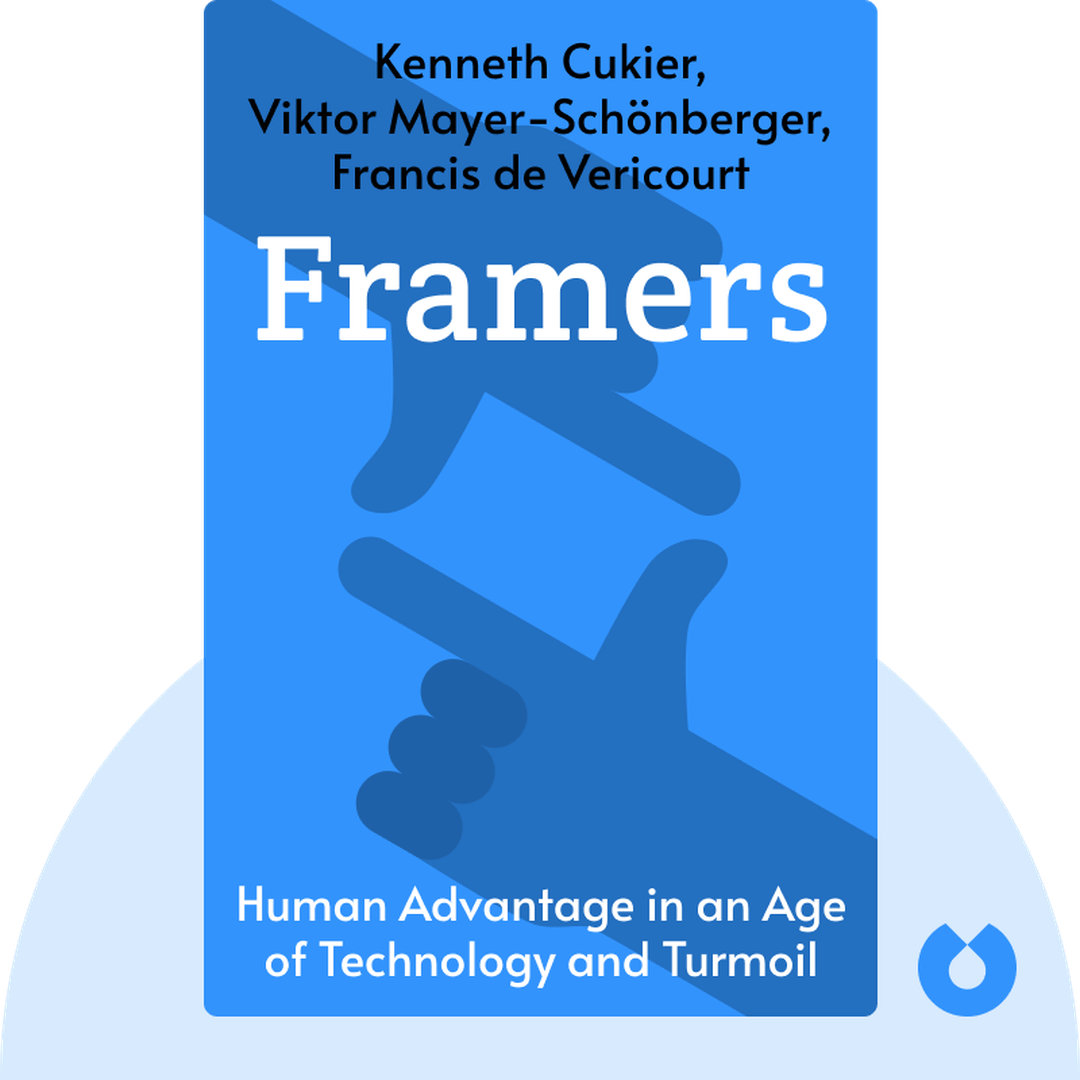
Framers (2021) takes a bird’s eye view of the issues facing our world today, from pandemics to political polarization, and presents a visionary solution. That solution lies with framing – the conscious or unconscious act of viewing the world through a particular lens. By recognizing and rethinking the frames we use, we can optimize our attitudes toward the world and give ourselves a leg up in the face of major social, economic, and scientific challenges.
Who Should Listen to Framers?
- Abstract thinkers concerned about global issues
- Decision-makers who tend to over-rely on their gut instincts
- Innovators struggling to bring their vision into reality
Books Similar to Framers
Readers who enjoyed this also liked these titles.