Theme Song
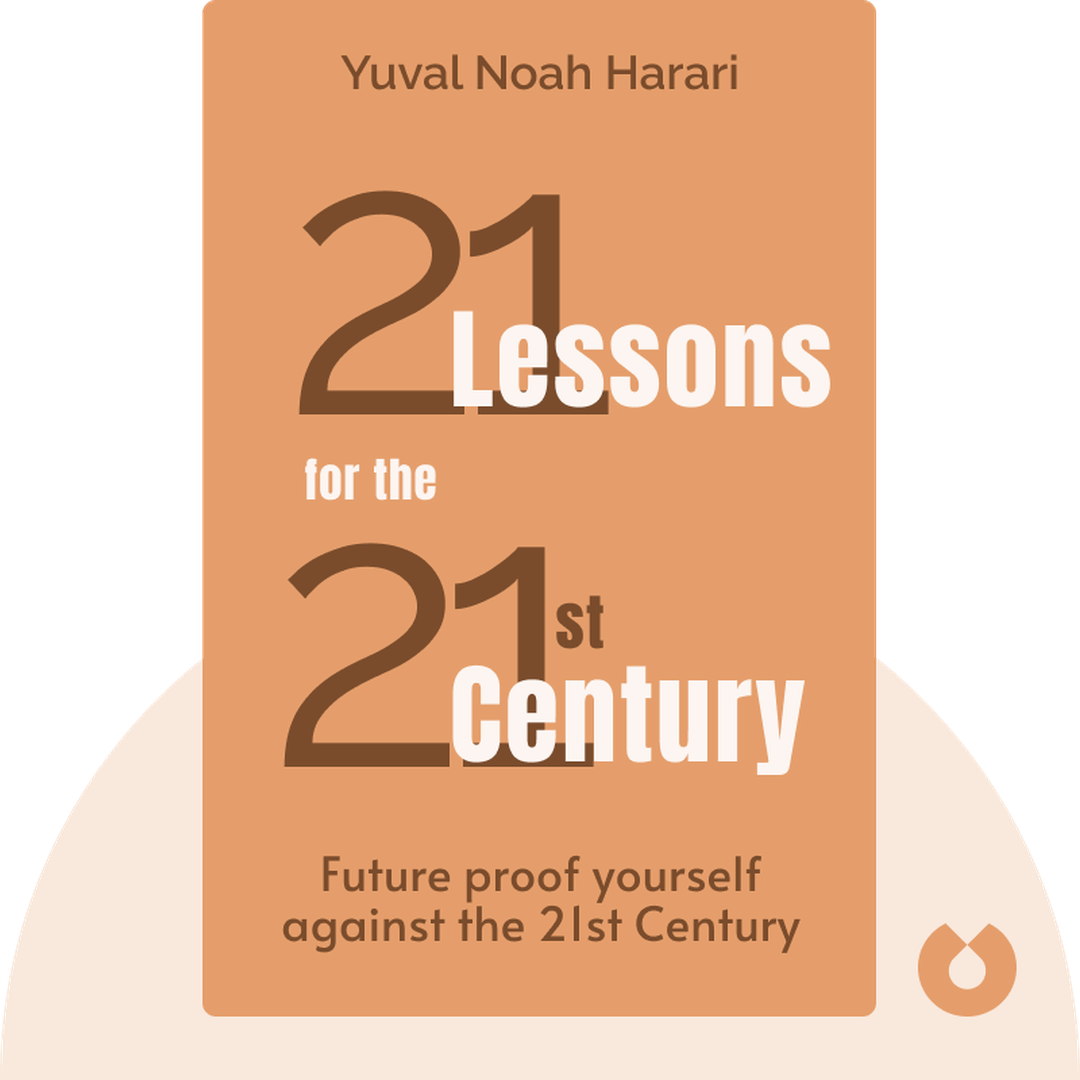
21 Lessons for the 21st Century
Start ListeningDownload Try free on iPhoneScan to start in 5 seconds
Categories:
If You're Curious About These Questions...
You should listen to this audiobook
- How do small terrorist organizations act like a 'fly in a china shop' to trick powerful governments into doing their destructive work for them?
- Why are the cognitive abilities we once thought were uniquely human, such as intuition in law and banking, highly vulnerable to being replaced by algorithms?
- In an age where information is constantly at our fingertips, why is the 'knowledge illusion' making us more ignorant than our Stone Age ancestors?
Listen to 21 Lessons for the 21st Century — Cinematic Audio Edition
Loading player...
Key Takeaways from 21 Lessons for the 21st Century
- The fear of becoming economically irrelevant due to artificial intelligence and automation is a primary driver behind modern political upheavals like Brexit.
- Because human intuition is essentially rapid probability calculation, artificial intelligence will soon outperform humans in cognitively demanding fields like law and finance.
- Terrorist groups achieve their goals not through massive physical destruction, but by manipulating powerful nations into disproportionate and disastrous overreactions.
- Modern humans suffer from the 'knowledge illusion,' falsely believing they understand complex systems simply because they have access to the expertise of others.
- Twenty-first-century schools must shift their focus from cramming students with facts to teaching them critical thinking skills to navigate an overwhelming flood of misinformation.
Learning Tools
Reinforce what you learned from 21 Lessons for the 21st Century
Mind Map
21 Lessons for the 21st Century
Technological Disruption & Politics+
AI, Automation & Work+
Immigration & Globalization+
Terrorism & Asymmetric Warfare+
Human Ignorance & Rationality+
21st-Century Education+
Power & Truth+
Quiz — Test Your Understanding
Question 1 of 7
According to the text, how has the primary fear of ordinary workers changed from the twentieth century to the twenty-first century?
Question 2 of 7
What recent neuroscientific discovery suggests that artificial intelligence could eventually replace professions requiring 'human intuition,' such as law and banking?
Question 3 of 7
How does the author suggest the debate over immigration in the European Union should be handled?
Question 4 of 7
In the context of terrorism, what does the analogy of the 'fly in a china shop' illustrate?
Question 5 of 7
What is 'the knowledge illusion' described in the text?
Question 6 of 7
According to the text, why is the traditional schooling method of cramming students with information now 'hopelessly antiquated'?
Question 7 of 7
Why does the author argue that powerful leaders are often less well-informed than the average person?
21 Lessons for the 21st Century — Full Chapter Overview
- 1Recommendation
- 2Computer technology is disrupting our financial, economic, and political systems.
- 3New breakthroughs in neuroscience are allowing computers to take over our jobs.
- 4Polarized immigration debates threaten to tear the European Union apart.
- 5Terrorist groups like al-Qaeda are experts at manipulation.
- 6People in the twenty-first century are far more ignorant than we realize.
- 7Twenty-first-century schools should teach less information and more critical thinking.
- 8Final summary
21 Lessons for the 21st Century Summary & Overview
21 Lessons for the 21st Century (2018) is a hard-hitting investigation of civilization’s most pertinent challenges. Humankind is moving deeper into uncharted technological and social territory. These blinks explore how best to navigate our lives in this century of constant change, using fascinating examples from current affairs along the way.
Who Should Listen to 21 Lessons for the 21st Century?
- Current affairs enthusiasts
- History buffs looking for fresh insights
- Big-picture thinkers wanting a new perspective on the world’s challenges
Books Similar to 21 Lessons for the 21st Century
Readers who enjoyed this also liked these titles.