If You're Curious About These Questions...
You should listen to this audiobook
- Did you know that shifting between four distinct mathematical 'lenses' can reveal hidden solutions to your most complex everyday problems?
- Have you ever wondered why some strategies work perfectly in theory but fail in the real world—and how the science of 'interactive' thinking can fix that?
- What if you could harness the power of chaotic and complex systems to make smarter, more confident decisions in an unpredictable world?
Listen to Four Ways of Thinking — Free Audiobook
Loading player...
Key Takeaways from Four Ways of Thinking
- Discover how to navigate life's complexities by flexibly switching between statistical, interactive, chaotic, and complex modes of thinking depending on the situation.
- Understand the limitations of statistical data by critically questioning whether broad, generalized trends actually apply to your unique circumstances before making decisions.
- Learn why you cannot force others to change, and discover how altering your own responses can successfully shift the entire dynamic of a relationship.
- Master the art of conflict resolution by looking past individual disagreements to identify and discuss the underlying behavioral rules that govern your interactions.
- Find out why responding to bad habits with extreme restrictions often creates more chaos, and how implementing small, incremental adjustments leads to sustainable change.
Learning Tools
Reinforce what you learned from Four Ways of Thinking
Mind Map
Four Ways of Thinking
Core Premise+
Statistical Thinking+
Interactive Thinking+
Chaotic Thinking+
Complex Thinking+
Integration+
Quiz — Test Your Understanding
Question 1 of 6
What is a key limitation of statistical thinking highlighted in the text?
Question 2 of 6
According to the interactive way of thinking, what is the most effective approach to improving a struggling relationship?
Question 3 of 6
When dealing with chaotic behaviors like overindulgence, what strategy does the text recommend?
Question 4 of 6
How does the physics concept of entropy apply to chaotic thinking in everyday life?
Question 5 of 6
Based on Andrey Kolmogorov's ideas mentioned in the text, how should we understand 'complexity'?
Question 6 of 6
What does the African philosophy of Ubuntu illustrate about complex thinking?
Four Ways of Thinking — Full Chapter Overview
- 1Recommendation
- 2Thinking with statistics
- 3Thinking through interaction
- 4Thinking through chaos
- 5Thinking in complexity
- 6Final summary
Four Ways of Thinking Summary & Overview
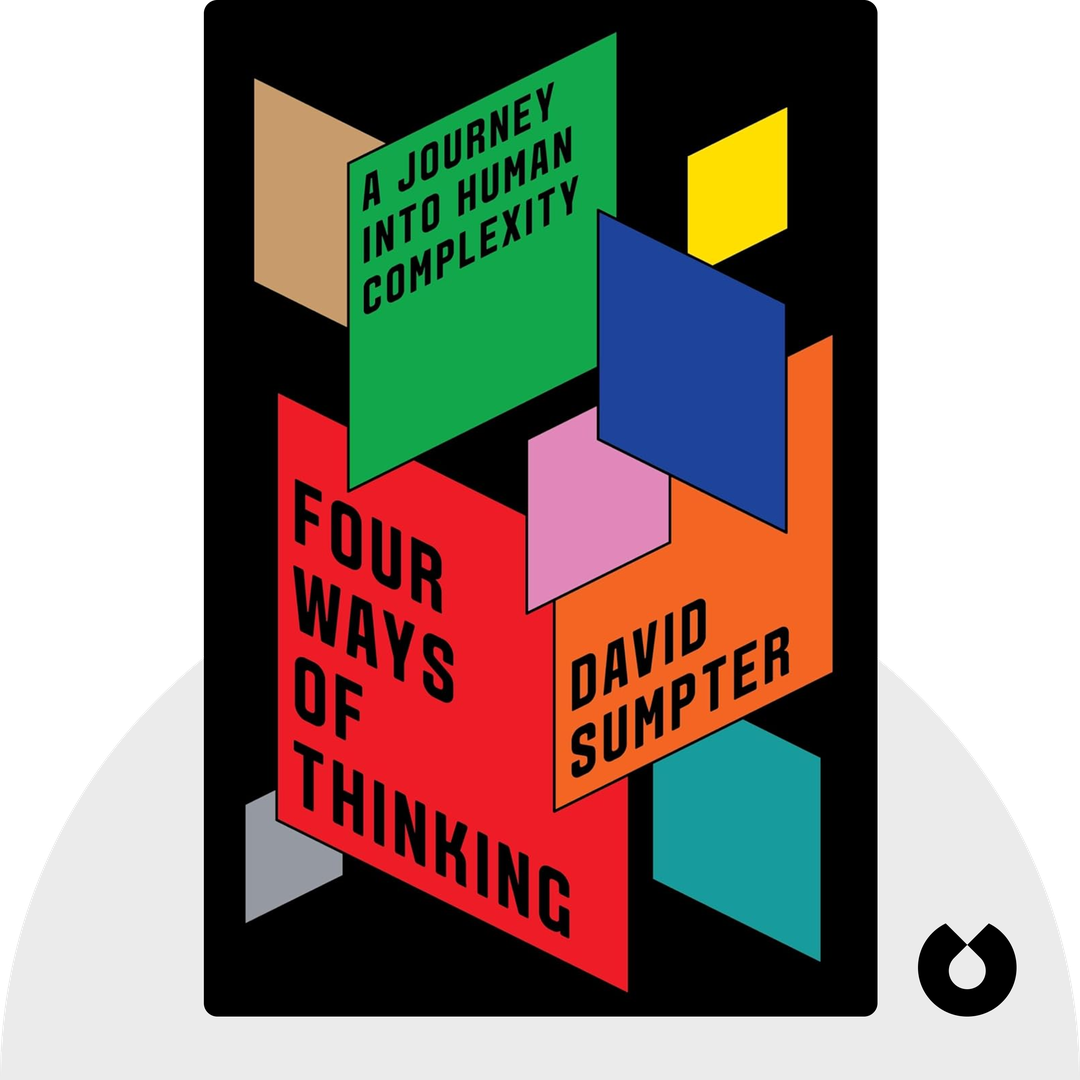
Four Ways of Thinking (2023) explores how mathematical concepts shape the way we approach problems and make decisions in everyday life. It delves into four distinct modes of thinking – statistical, interactive, chaotic, and complex – revealing how each perspective offers uniquely valuable insights. Through practical examples, it demonstrates how combining these methods can deepen our understanding of the world.
Who Should Listen to Four Ways of Thinking?
- Mathematicians interested in practical applications of math
- Analysts and scientists seeking diverse problem-solving approaches
- Anyone looking to enhance their critical thinking and decision-making skills
Books Similar to Four Ways of Thinking
Readers who enjoyed this also liked these titles.