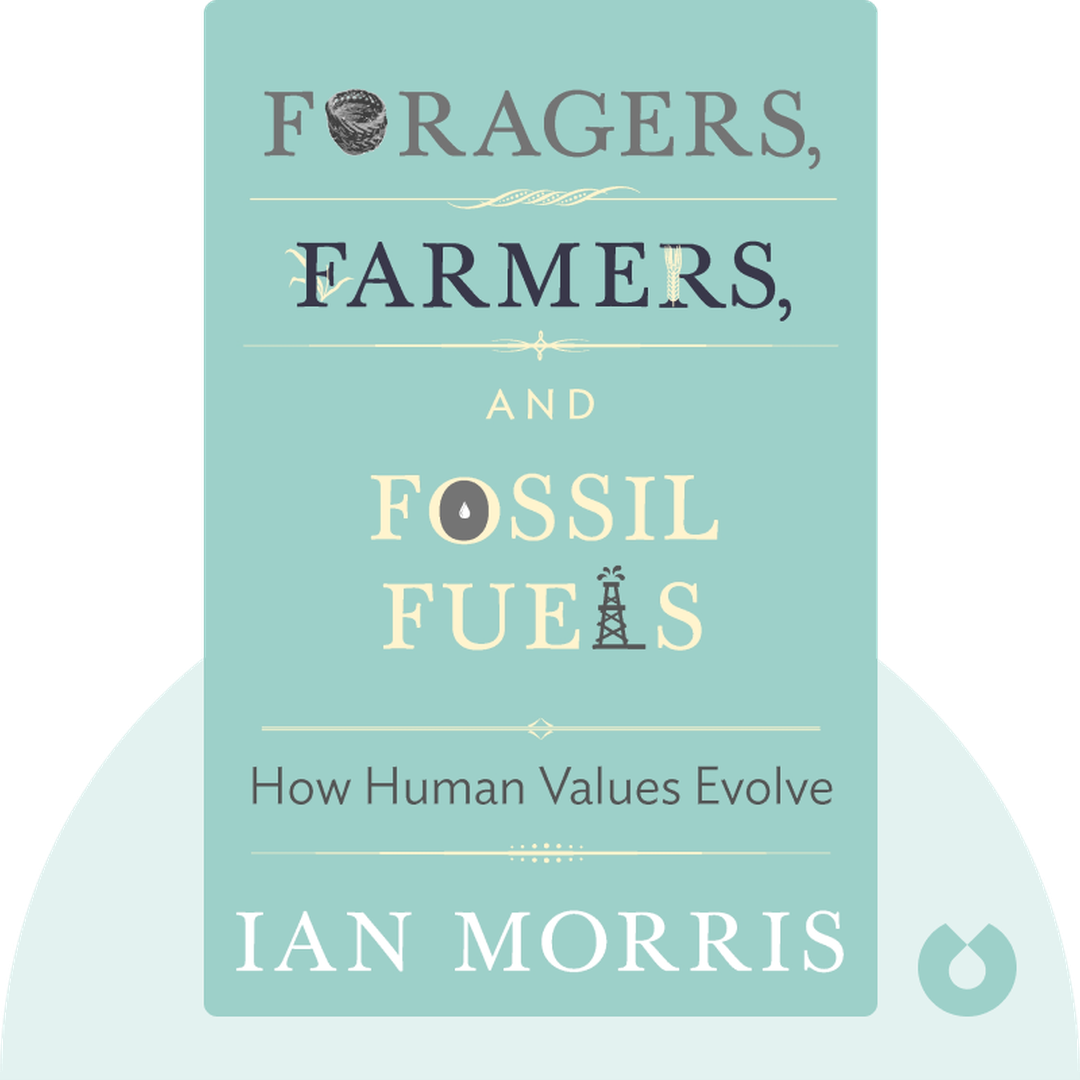
Foragers, Farmers, and Fossil Fuels
Start ListeningDownload Try free on iPhoneScan to start in 5 seconds
Categories:
If You're Curious About These Questions...
You should listen to this audiobook
- Did you know that your most deeply held beliefs about right and wrong might actually be determined by the way your society captures energy?
- Have you ever wondered why human history shifted from egalitarian foragers to hierarchical farmers, and then back to democracy—and what energy had to do with it?
- Are you curious about how our concepts of justice and morality could fundamentally change as we transition into the next era of energy production?
Listen to Foragers, Farmers, and Fossil Fuels — Free Audiobook
Loading player...
Key Takeaways from Foragers, Farmers, and Fossil Fuels
- Discover how the primary method a society uses to capture energy fundamentally dictates its moral systems, shaping everything from cultural traditions to religious beliefs.
- Understand why human values evolve much like our genes, naturally adapting over time to ensure that societies utilizing specific energy systems can survive and flourish.
- Learn why early foraging communities championed strict wealth equality and shared resources, yet accepted high rates of lethal violence to quickly eliminate threats without centralized governments.
- Find out how the agricultural revolution increased human caloric intake but birthed deeply hierarchical societies that relied on large families and forced labor to sustain backbreaking work.
- Realize that modern ideals like democracy and gender equality are largely byproducts of our fossil-fuel age, and see how future energy breakthroughs could drastically reshape our morals.
Learning Tools
Reinforce what you learned from Foragers, Farmers, and Fossil Fuels
Mind Map
Foragers, Farmers, and Fossil Fuels
Core Thesis+
Foragers (Hunter-Gatherers)+
Farmers (Agrarian Societies)+
Fossil Fuel Users (Modern Era)+
The Future+
Quiz — Test Your Understanding
Question 1 of 7
According to the author, what is the most fundamental source that determines a society's moral values?
Question 2 of 7
Why did foraging societies experience high levels of violence despite being highly egalitarian?
Question 3 of 7
How did the shift to farming impact gender roles and social hierarchy?
Question 4 of 7
Why did farming societies generally look more negatively on violence compared to foraging societies?
Question 5 of 7
What is one major reason why fossil-fuel societies tend to value gender equality more than farming societies?
Question 6 of 7
Which of the following accurately describes the trend of wealth inequality (measured by the Gini coefficient) across the three stages of human society?
Question 7 of 7
What does the 'Soothing Scenario' predict regarding the future of global values?
Foragers, Farmers, and Fossil Fuels — Full Chapter Overview
- 1Recommendation
- 2Our values may have evolved alongside our methods of capturing energy.
- 3Foragers rejected inequality and hierarchy, but accepted violence as part of life.
- 4Farming brought more energy, more children, and the first large-scale societies.
- 5Farming societies were deeply hierarchical and viewed violence more negatively than foragers did.
- 6Fossil fuel societies thrived by harnessing enormous amounts of energy.
- 7Fossil fuel societies value equality and favor peace over violence.
- 8We don’t know exactly how technological advances will change our values – but we can be sure they will.
- 9Final summary
Foragers, Farmers, and Fossil Fuels Summary & Overview
Foragers, Farmers, and Fossil Fuels (2015) argues that the values we hold most dear stem from one fundamental source: energy. While anthropologists have spent centuries attempting to understand differences between cultures, few have attempted to explain those differences. These blinks do just that.
Who Should Listen to Foragers, Farmers, and Fossil Fuels?
- History and philosophy enthusiasts
- Futurists wondering how and why our values and ethical concerns may soon change
- Anyone curious about how moral systems work
Books Similar to Foragers, Farmers, and Fossil Fuels
Readers who enjoyed this also liked these titles.