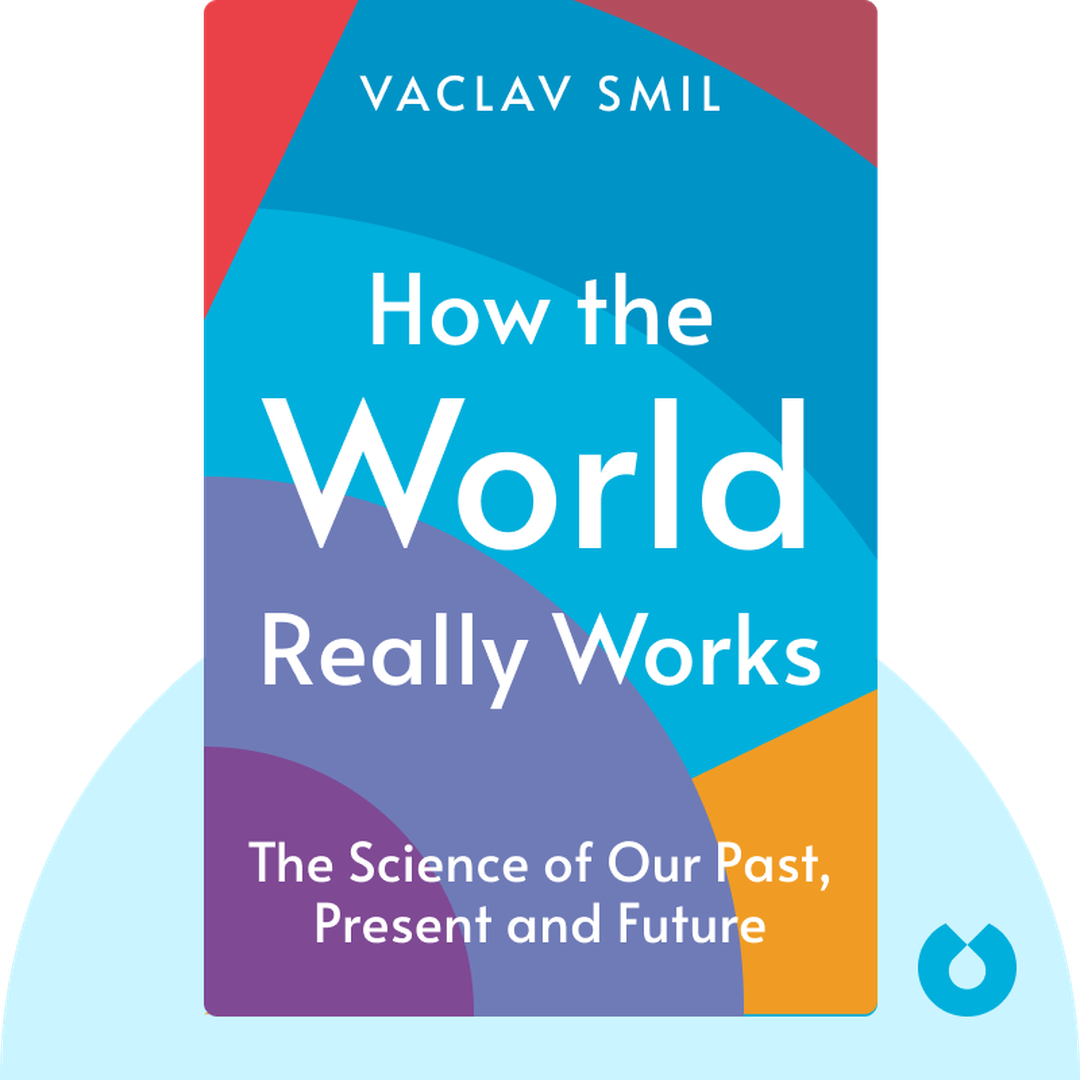
How the World Really Works
Start ListeningDownload Try free on iPhoneScan to start in 5 seconds
Categories:
If You're Curious About These Questions...
You should listen to this audiobook
- Have you ever wondered how much fossil fuel is actually hidden inside the food on your dinner plate?
- What are the four 'pillars' of modern civilization that we simply cannot live without, and why is replacing them so difficult?
- Did you know that despite our high-tech digital world, we’ve never been more dependent on the physical realities of energy and materials that most of us don't understand?
Listen to How the World Really Works — Cinematic Audio Edition
Loading player...
Key Takeaways from How the World Really Works
- Discover why understanding the fundamental workings of the world, such as energy and food production, is vital for making informed decisions in a modern democracy.
- Learn how the entire history of life on Earth is defined by energy conversions, beginning with simple microbes that transformed solar radiation into breathable oxygen.
- Trace humanity's evolutionary dominance back to our mastery of 'extrasomatic' energy, which began with the controlled use of fire to harness energy outside the human body.
- Understand how the historical transition to utilizing fossil fuels revolutionized human existence, providing the abundant power necessary to feed and sustain the modern world.
- Grasp the foundational physics of energy as the ability to do work, and discover how the first law of thermodynamics dictates that energy is never destroyed, only converted.
Learning Tools
Reinforce what you learned from How the World Really Works
Mind Map
How the World Really Works
Why Fundamentals Matter+
History of Energy Conversions+
Physics of Energy+
Food Production & Fossil Fuels+
Agricultural Revolution+
The Role of Electricity+
Quiz — Test Your Understanding
Question 1 of 6
Why does Vaclav Smil argue that it is essential for the general public to understand fundamental processes like energy and food production?
Question 2 of 6
According to the text, what was humanity's first 'extrasomatic' use of energy?
Question 3 of 6
Based on the first law of thermodynamics described in the text, what happens to the kinetic energy of a box sliding down a ramp as friction slows it down?
Question 4 of 6
What is identified in the text as the most important indirect energy input in modern farming?
Question 5 of 6
How did the massive reduction in human labor required for farming primarily impact global society?
Question 6 of 6
Despite its profound importance to modern life and the service sector, what surprising statistic about electricity is mentioned in the text?
How the World Really Works — Full Chapter Overview
- 1Recommendation
- 2The story of life on Earth is the story of energy conversions.
- 3Energy is the capacity to do work.
- 4Fossil fuels transformed agriculture.
- 5The agricultural revolution fueled urbanization.
- 6Electricity keeps the modern world moving.
- 7Final summary
How the World Really Works Summary & Overview
How the World Really Works (2022) tackles a paradox at the heart of the modern world: we’ve never had so much information at our fingertips and never known so little about how things actually work. Of course, we can’t be experts in everything. But, Vaclav Smil argues, it’s our duty as citizens to be informed about the basics – the big questions that shape our societies and their futures.
Who Should Listen to How the World Really Works?
- History and science enthusiasts
- Anyone interested in how their food gets made
- Those wondering what energy actually is
Books Similar to How the World Really Works
Readers who enjoyed this also liked these titles.